Cold emails are one of the best ways to reach new clients, partners, or employers. But there’s a catch: before you can send one, you need the right email address. And that’s rarely easy.
Most people start with a Google or LinkedIn search, typing things like:
- [name] + email
- [name] + contact information
- site:companywebsite.com + [name] + email
It takes time, and it often leads nowhere. That’s why sales, recruiting, and marketing teams use email finders: tools that find (almost) anyone’s professional email address in seconds.
But there are dozens of email finder tools out there, and their pricing and credit systems are all different. So we compared the 9 best email finders of 2026 on free plans, features, and real costs.
- Mailmeteor — best free email finder, no signup required
- Hunter — best for finding emails by company domain
- Snov.io — best all-in-one finder, verifier, and outreach platform
- Findymail — best for verified-only results at volume
- Kaspr — best for finding emails and phone numbers on LinkedIn
- RocketReach — best for large contact database searches
- ZeroBounce — best for verification, with an email finder included
- Clearout — best budget option for finding and verifying in bulk
- Datanyze — best for light prospecting with technographic data
Here’s what we’ll cover:
- Email finder tools compared
- What to look for in an email finder
- The 9 best email finder tools
- Which email finder is right for you?
Sounds good? Then let’s dive in.
Email finder tools compared
| Tool | Best for | Free plan | Paid plans from | Bulk search |
|---|---|---|---|---|
| Mailmeteor | Free one-off lookups | ✅ Free, no signup | Free | ❌ |
| Hunter | Domain search | ✅ 50 credits/mo | $34/mo (annual) | ✅ |
| Snov.io | All-in-one outreach | ✅ 50 credits (trial) | $29.25/mo (annual) | ✅ |
| Findymail | Verified results at volume | ⚠️ Trial only | $49/mo | ✅ |
| Kaspr | LinkedIn + phone numbers | ✅ Limited credits | $49/user/mo (annual) | ✅ |
| RocketReach | Large database | ✅ 5 lookups/mo | $33/mo (annual) | ✅ |
| ZeroBounce | Verification + finding | ✅ 10 finder queries/mo | $99/mo | ✅ |
| Clearout | Budget bulk finding | ⚠️ 100 credits (one-time) | $16/mo (annual) | ✅ |
| Datanyze | Light prospecting | ⚠️ 90-day trial | $21/mo (annual) | ❌ |
What to look for in an email finder
Not all email finders work the same way. Before you pick one, check these five things ⤵️
- How credits are counted. One “credit” doesn’t always mean one email. Some tools charge several credits per email found, or 10 credits for a phone number.
- Whether you’re charged for failed searches. The best tools only charge you when they actually find a valid email.
- Built-in verification. A found email isn’t always a deliverable one. Tools that verify results before showing them save you bounces.
- Bulk search. If you’re building lists, you need to upload a CSV or search a whole domain, not one name at a time.
- Where it works. Some finders live in a Chrome extension on LinkedIn, others in a web app or an API. Pick the one that fits how you prospect.
Now let’s look at each tool.
The 9 best email finder tools
1. Mailmeteor
4.9/5 ⭐️ on the Google Workspace Marketplace.
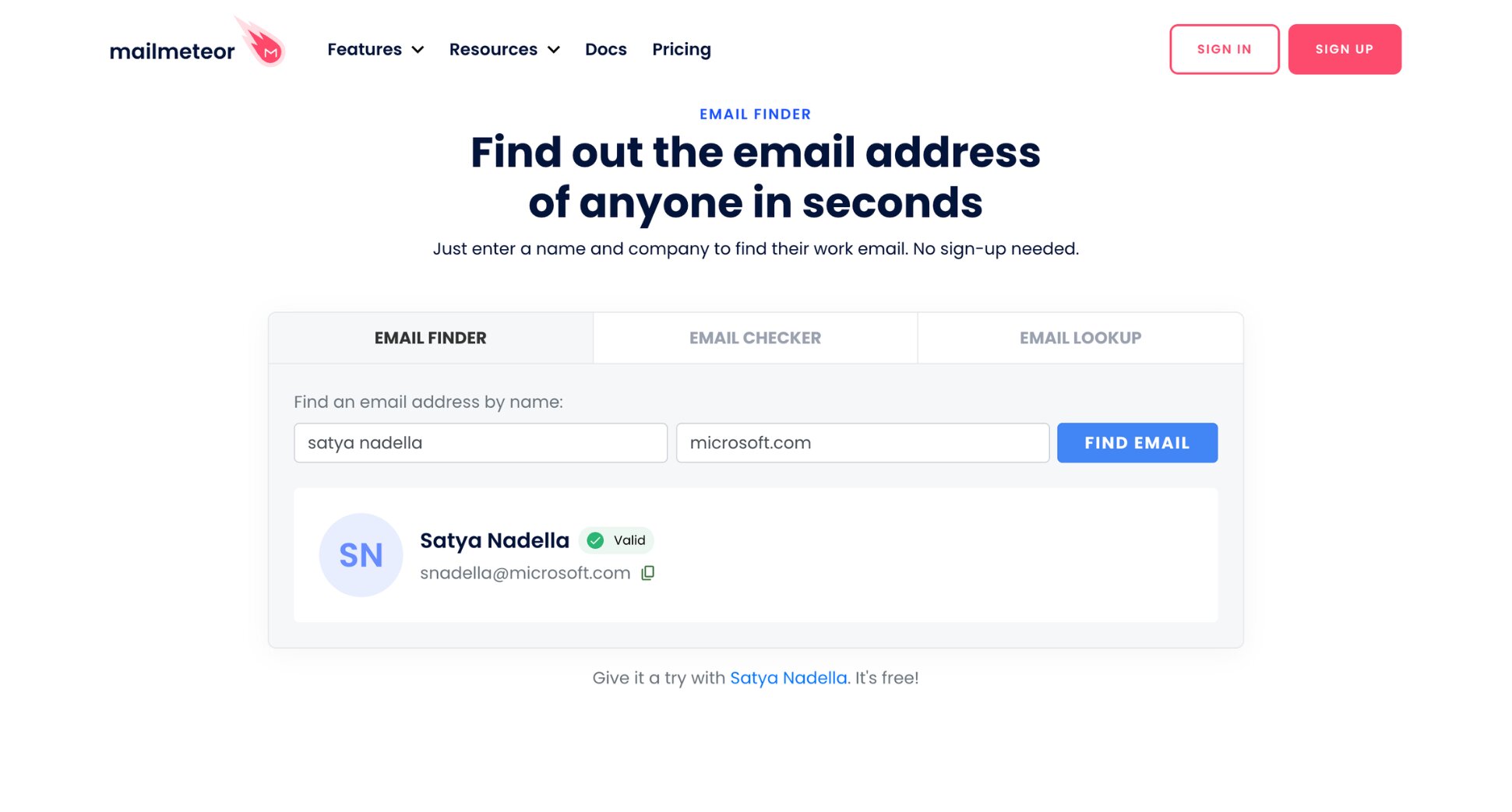
Mailmeteor’s Email Finder is a free tool that finds someone’s professional email address from their name and company. Type both in, and the tool looks for the most likely address — then verifies it before showing you the result. No account, no credit card.
If the Email Finder doesn’t return a verified result, you can try the Email Permutator. It generates every likely combination of an email address based on a first name, last name, and domain. Paste the list into a new Gmail message and hover over each address: if one shows a profile picture, you’ve found a valid email.
Once you have your list, Mailmeteor’s built-in email verification, BounceShield, checks every address before you send, so your cold emails don’t bounce.
Pros of Mailmeteor:
✔️ Completely free, with no signup required.
✔️ Verifies results before showing them.
✔️ Very easy to use.
Cons of Mailmeteor:
❌ One lookup at a time — no bulk search or API.
❌ Protected by fair-use limits, so it’s not built for large lists.
❌ Doesn’t always find a result for unconventional email formats.
Mailmeteor pricing:
The Email Finder and Email Permutator are free to use. You can also create a Mailmeteor account (it’s free!) to send up to 50 personalized emails a day to the contacts you’ve found.
2. Hunter
4.4/5 ⭐️ on G2.
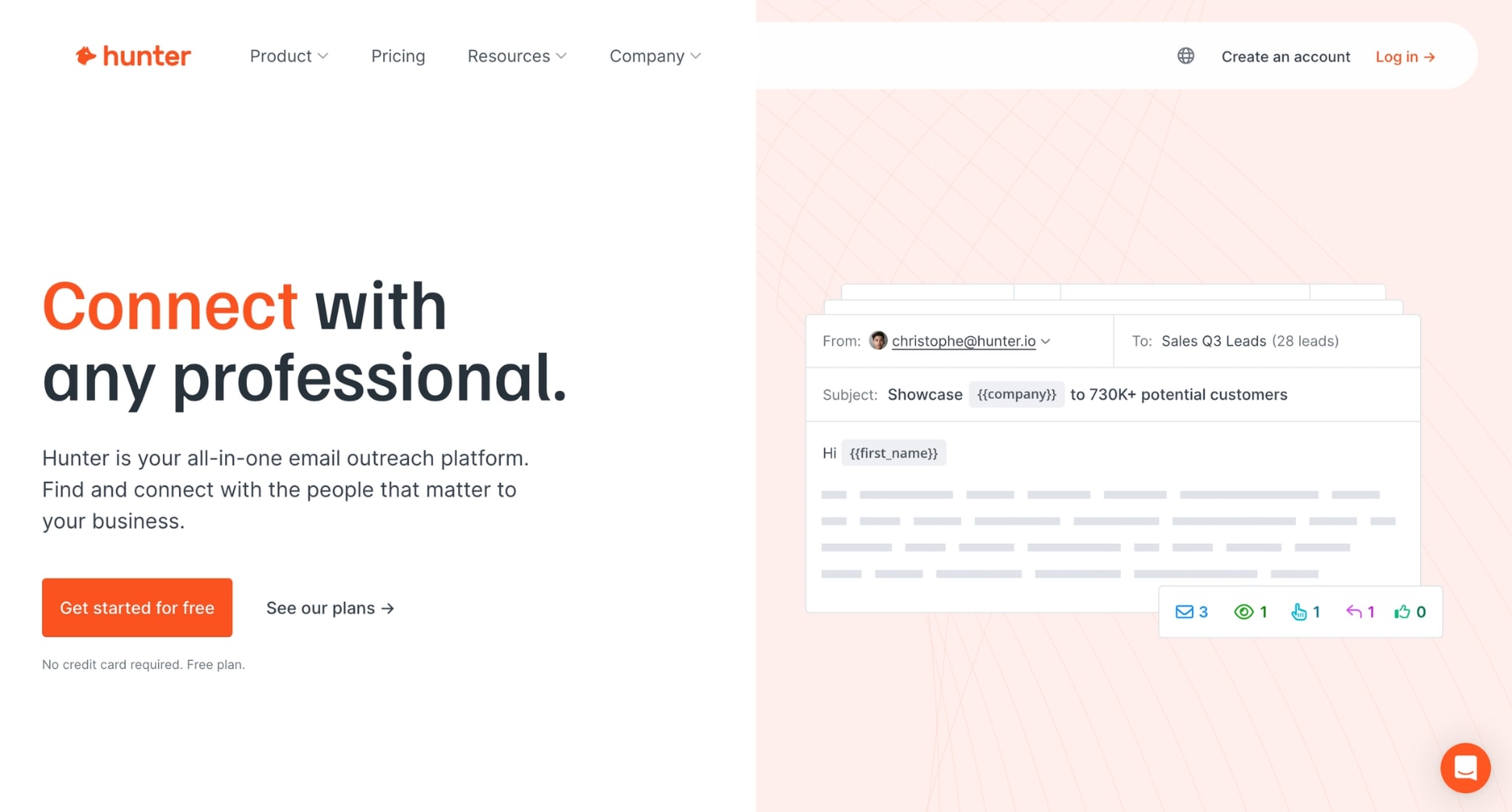
Hunter is one of the best-known email finders. Its Domain Search shows every email address it has found for a company, along with the email format the company uses. You can also look up one person by name and company, verify addresses, and send cold email campaigns from the same platform.
Pros of Hunter:
✔ Domain Search shows a company’s email format at a glance.
✔ Bulk email finding and verification.
✔ Email finder API and Chrome extension.
Cons of Hunter:
❌ Credits are shared across finding, verifying, and campaigns, so they go fast.
❌ Weaker coverage for small or very new companies.
❌ No phone numbers.
Hunter pricing:
- Free: 50 credits a month.
- Starter: 2,000 credits a month for $34/month billed annually ($49 billed monthly).
- Growth: 10,000 credits a month for $104/month billed annually ($149 billed monthly).
- Scale: 25,000 credits a month for $209/month billed annually ($299 billed monthly).
3. Snov.io
4.6/5 ⭐️ on G2.
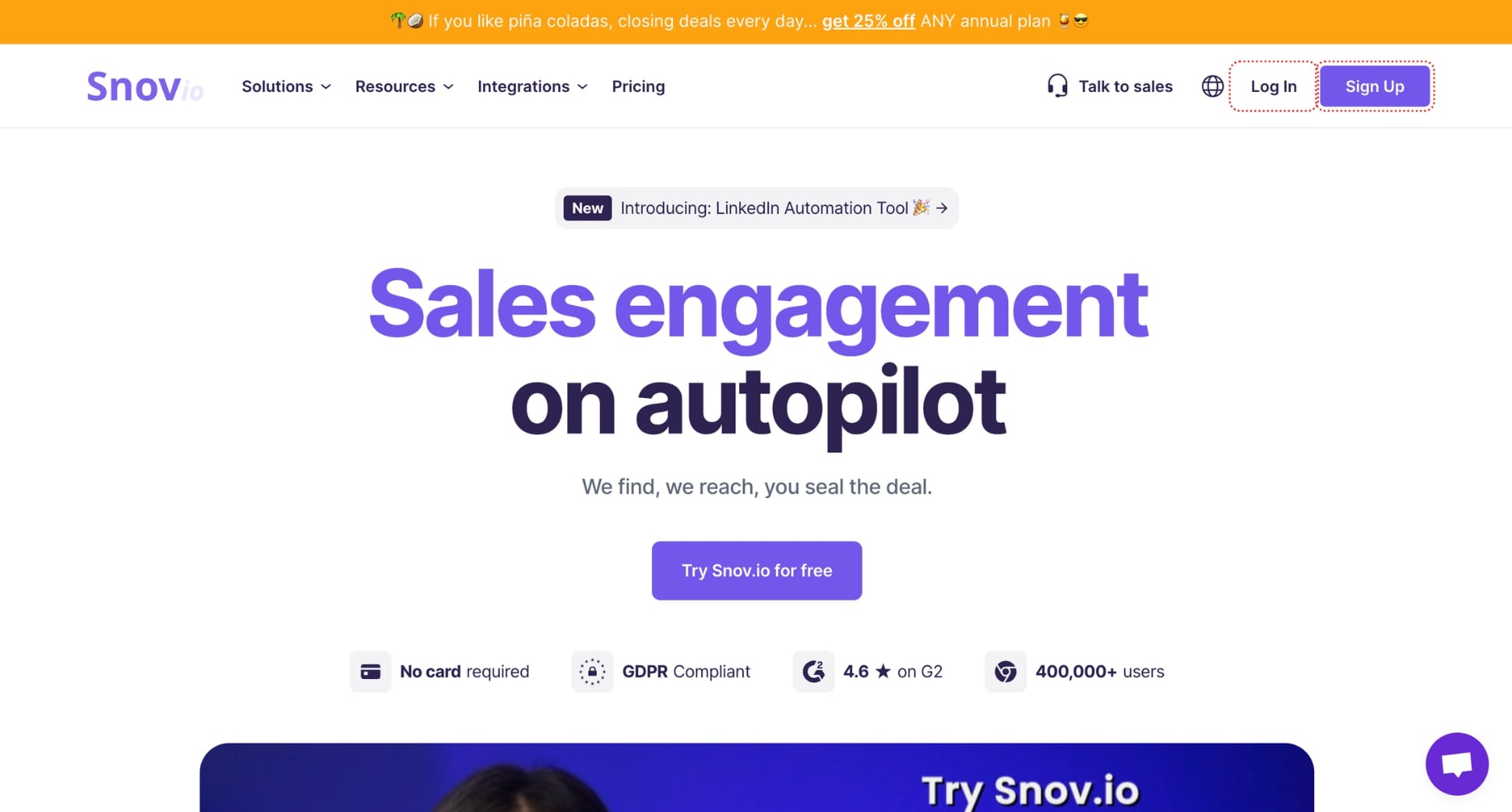
Snov.io is a complete prospecting and cold email platform. You can search for emails by domain, by company, or by name, and filter leads by job title, location, or industry. Once you’ve built your list, you can send email sequences, schedule follow-ups, and track results from the same tool.
Pros of Snov.io:
✔ Domain search, database search, and LinkedIn search.
✔ Built-in email verification, sequences, and CRM.
✔ Unlimited team seats on paid plans.
Cons of Snov.io:
❌ Steep learning curve.
❌ Two separate limits — credits and campaign recipients — make plans harder to compare.
❌ Starter’s 1,000 credits run out quickly if you also verify emails.
Snov.io pricing:
- Trial: 50 credits and 100 recipients for free.
- Starter: 1,000 credits a month for $29.25/month billed annually ($39 billed monthly).
- Pro S: 5,000 credits a month for $74.25/month billed annually ($99 billed monthly).
- Pro M: 20,000 credits a month for $141.75/month billed annually ($189 billed monthly).
4. Findymail
4.8/5 ⭐️ on G2.
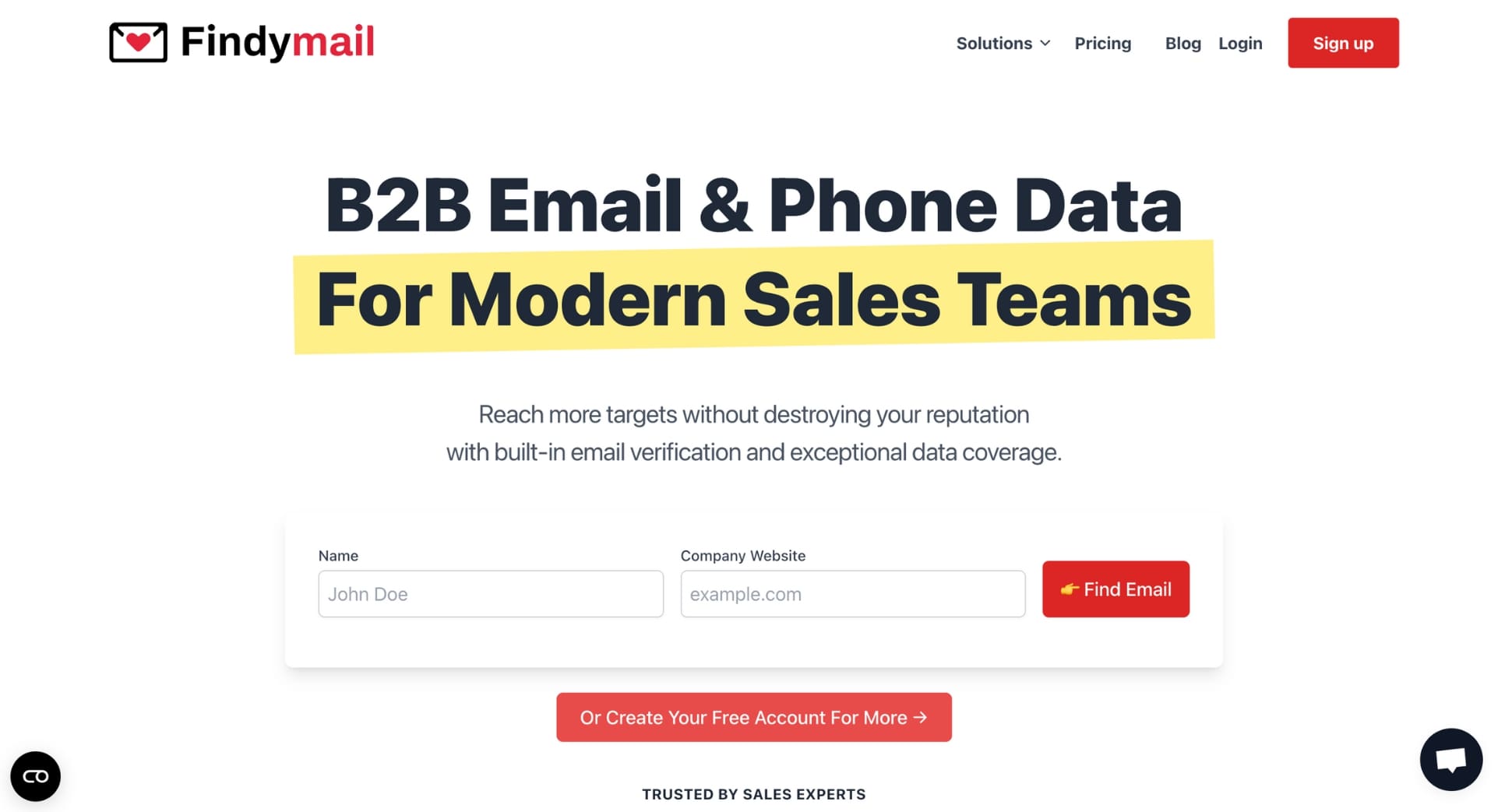
Findymail focuses on accuracy: it only returns emails it has verified, and you’re only charged when it finds a valid address. That makes it popular with outbound teams who care about deliverability. It integrates with email sequencers like Lemlist and Woodpecker, and with CRMs like HubSpot and Pipedrive.
Pros of Findymail:
✔ Only charges for verified emails.
✔ Integrates well with popular sequencers and CRMs.
✔ User-friendly interface with bulk search.
Cons of Findymail:
❌ No free plan — just a small trial.
❌ Phone numbers cost 10 credits each.
❌ Can be pricey for occasional users.
Findymail pricing:
- Free trial: 10 email finder credits and 10 verification credits.
- Basic: 1,000 credits a month for $49/month.
- Starter: 5,000 credits a month for $99/month.
- Business: 15,000 credits a month for $249/month.
Annual billing gives you roughly two months free.
5. Kaspr
4.4/5 ⭐️ on G2.
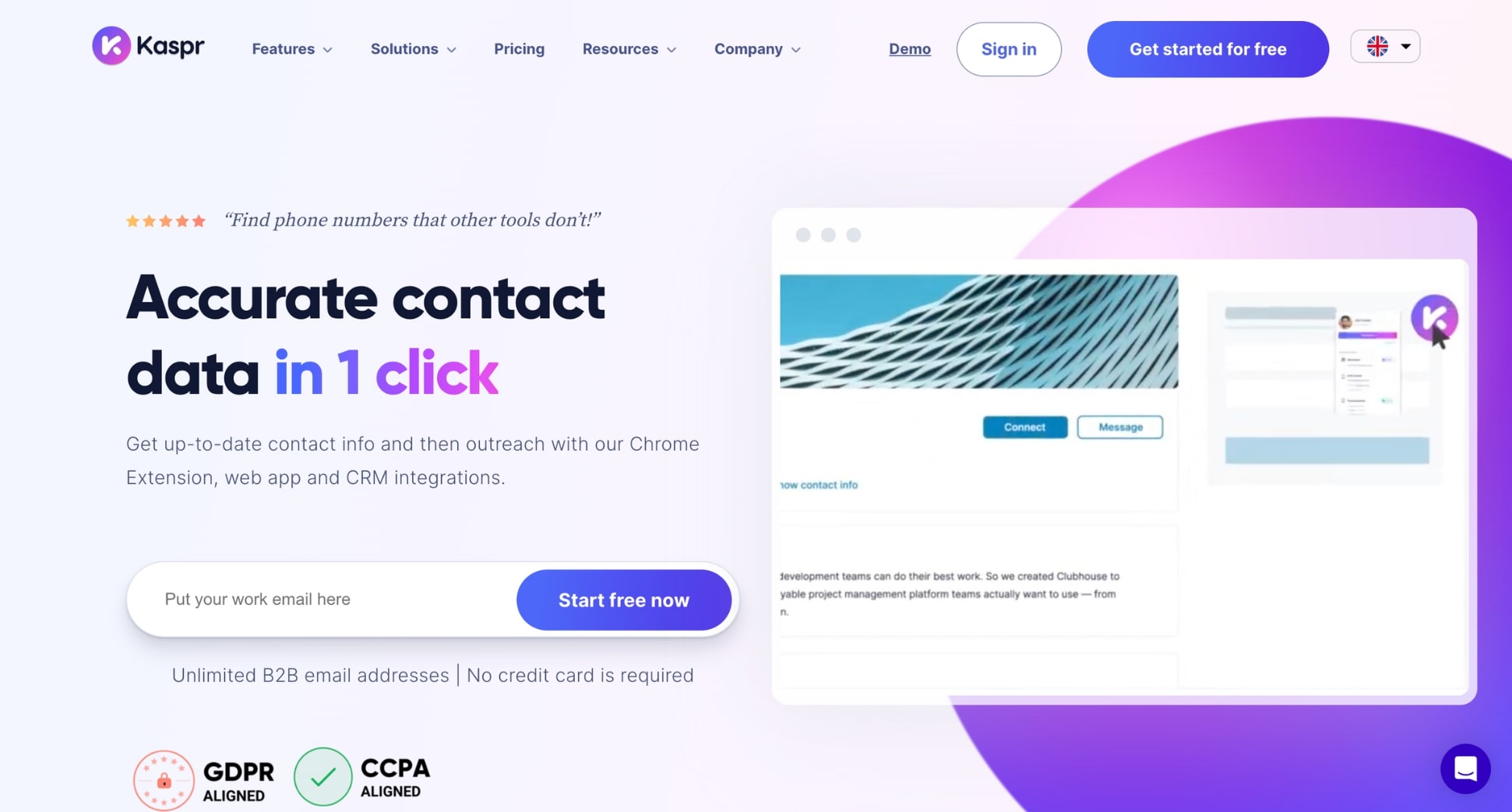
Need more than emails? Kaspr is a Chrome extension that finds B2B contact details — email addresses and phone numbers — right from LinkedIn, Sales Navigator, and Recruiter Lite. It’s especially popular with European sales teams.
Pros of Kaspr:
✔ Find contact details directly on LinkedIn and Sales Navigator.
✔ Unlimited B2B email credits on paid plans.
✔ Phone numbers included.
Cons of Kaspr:
❌ Four different credit types (B2B email, direct email, phone, export) are confusing.
❌ Phone credits are capped on every plan.
❌ Per-user pricing adds up for teams.
Kaspr pricing:
- Free: a small monthly allowance of email and phone credits.
- Starter: $49/user/month billed annually ($65 billed monthly), with 100 phone credits a month.
- Business: $79/user/month billed annually ($99 billed monthly), with 200 phone credits a month.
- Organization: custom pricing, annual billing, 5 users minimum.
6. RocketReach
4.5/5 ⭐️ on G2.
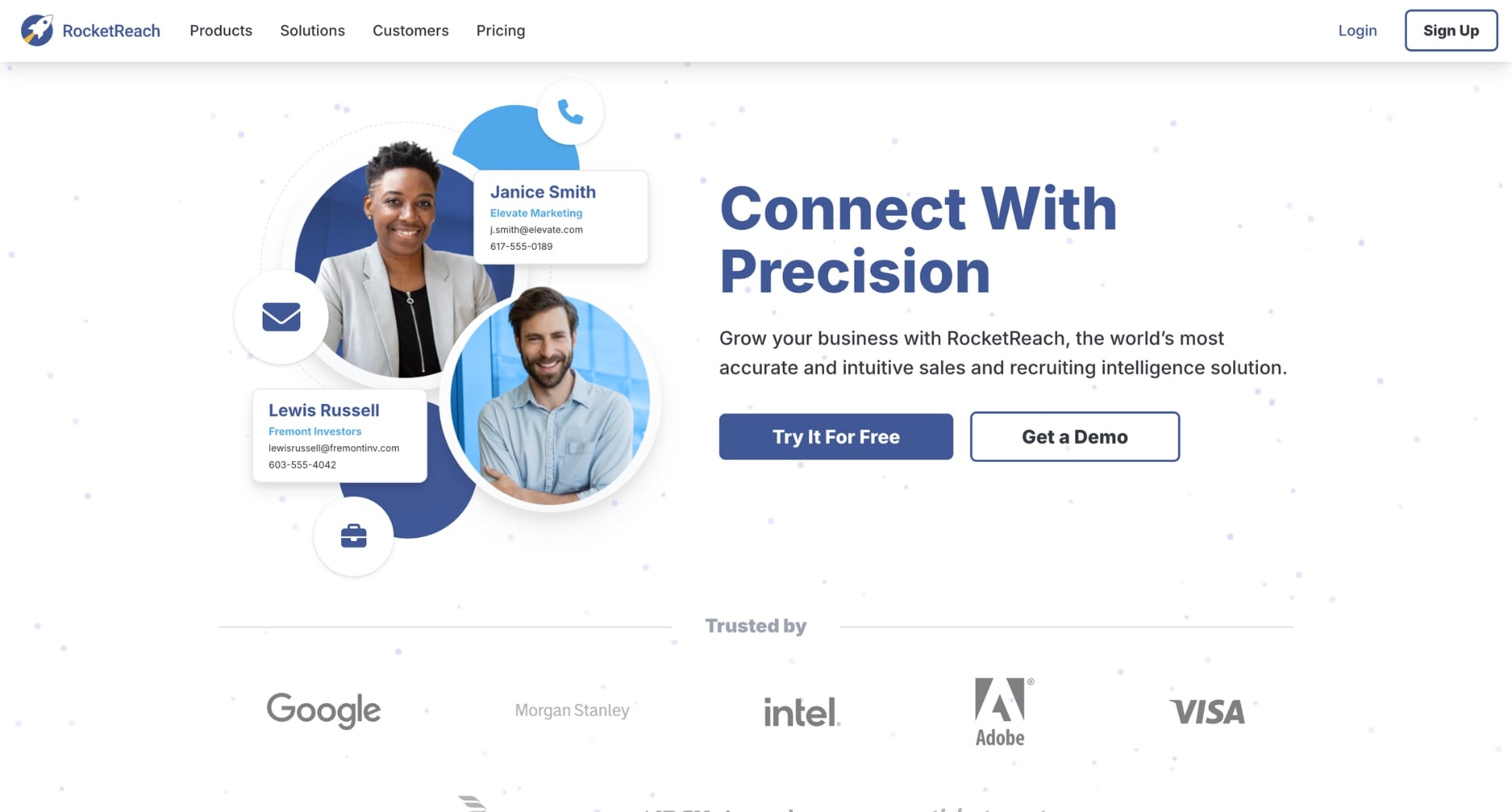
RocketReach gives you access to a large database of professional contact information, including email addresses, phone numbers, and social profiles. Search by name, company, or job title, and use advanced filters to build targeted lists.
Pros of RocketReach:
✔ Large database with advanced search filters.
✔ Integrates with CRMs like HubSpot and Salesforce.
✔ Phone numbers on Pro and Ultimate plans.
Cons of RocketReach:
❌ The Essentials plan only includes emails, not phone numbers.
❌ Exports are capped, even on plans with unlimited lookups.
❌ Monthly billing is much more expensive than annual.
RocketReach pricing:
- Free: 5 lookups a month.
- Essentials (email only): $33/month billed annually ($69 billed monthly).
- Pro (email + phone): $75/month billed annually ($119 billed monthly).
- Ultimate: $142/month billed annually ($209 billed monthly).
7. ZeroBounce
4.6/5 ⭐️ on G2.
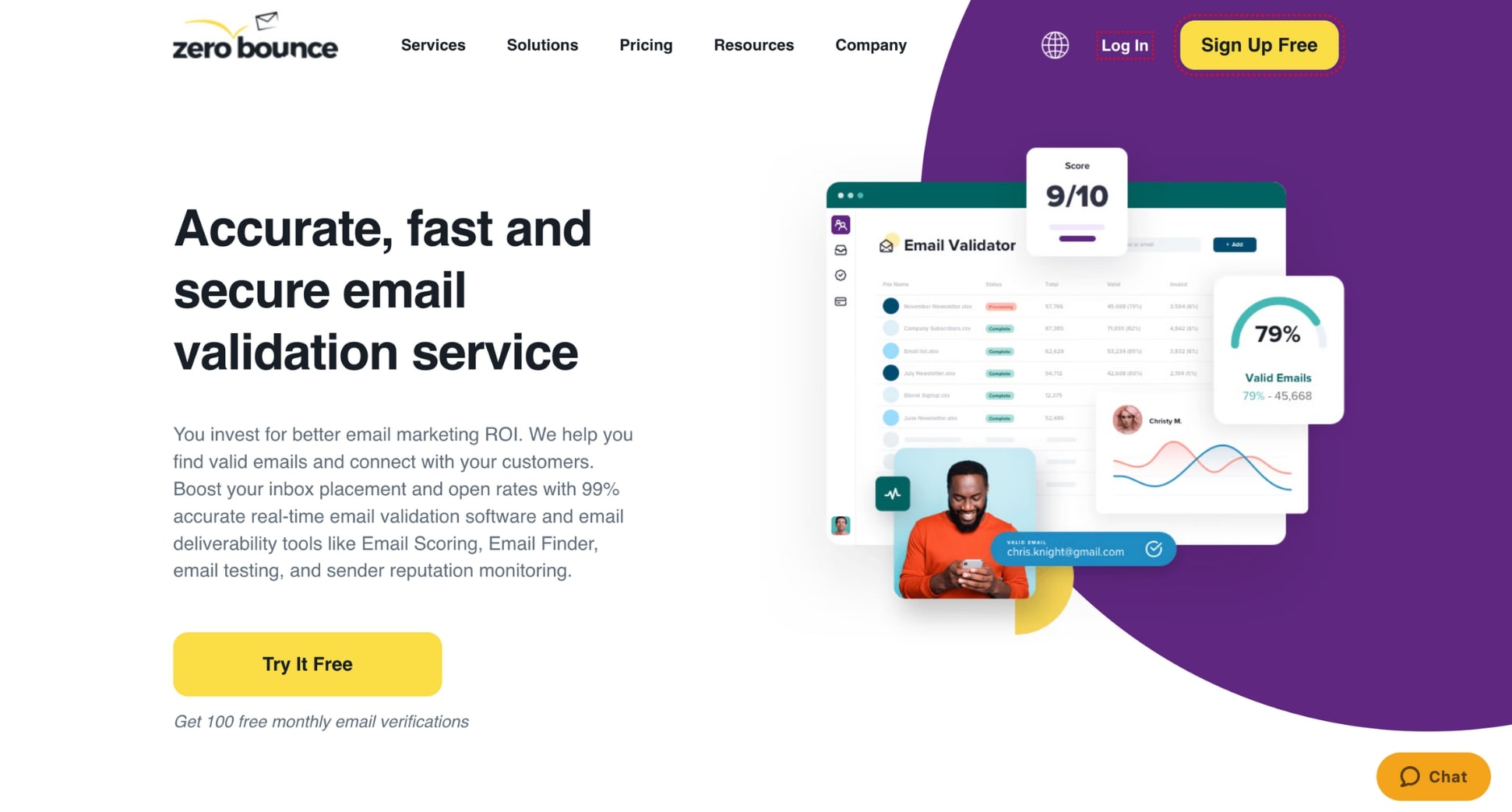
ZeroBounce is first and foremost an email verification platform: it cleans your email lists and flags risky addresses before you send. It also includes an Email Finder and Domain Search, so you can find new contacts and verify them in the same place.
Pros of ZeroBounce:
✔ Accurate bulk email verification.
✔ Email Finder and Domain Search included.
✔ Credits never expire.
Cons of ZeroBounce:
❌ Each successful Email Finder search uses 20 credits.
❌ Better as a verifier than as a finder.
❌ Not the most budget-friendly option for finding emails.
ZeroBounce pricing:
- Free: 100 verification credits and 10 Email Finder searches a month.
- Pay as you go: from $39 for 2,000 credits.
- ZeroBounce ONE: 10,000 credits a month for $99/month.
Get 15% off your 1st purchase with this special code.
8. Clearout
4.7/5 ⭐️ on G2.
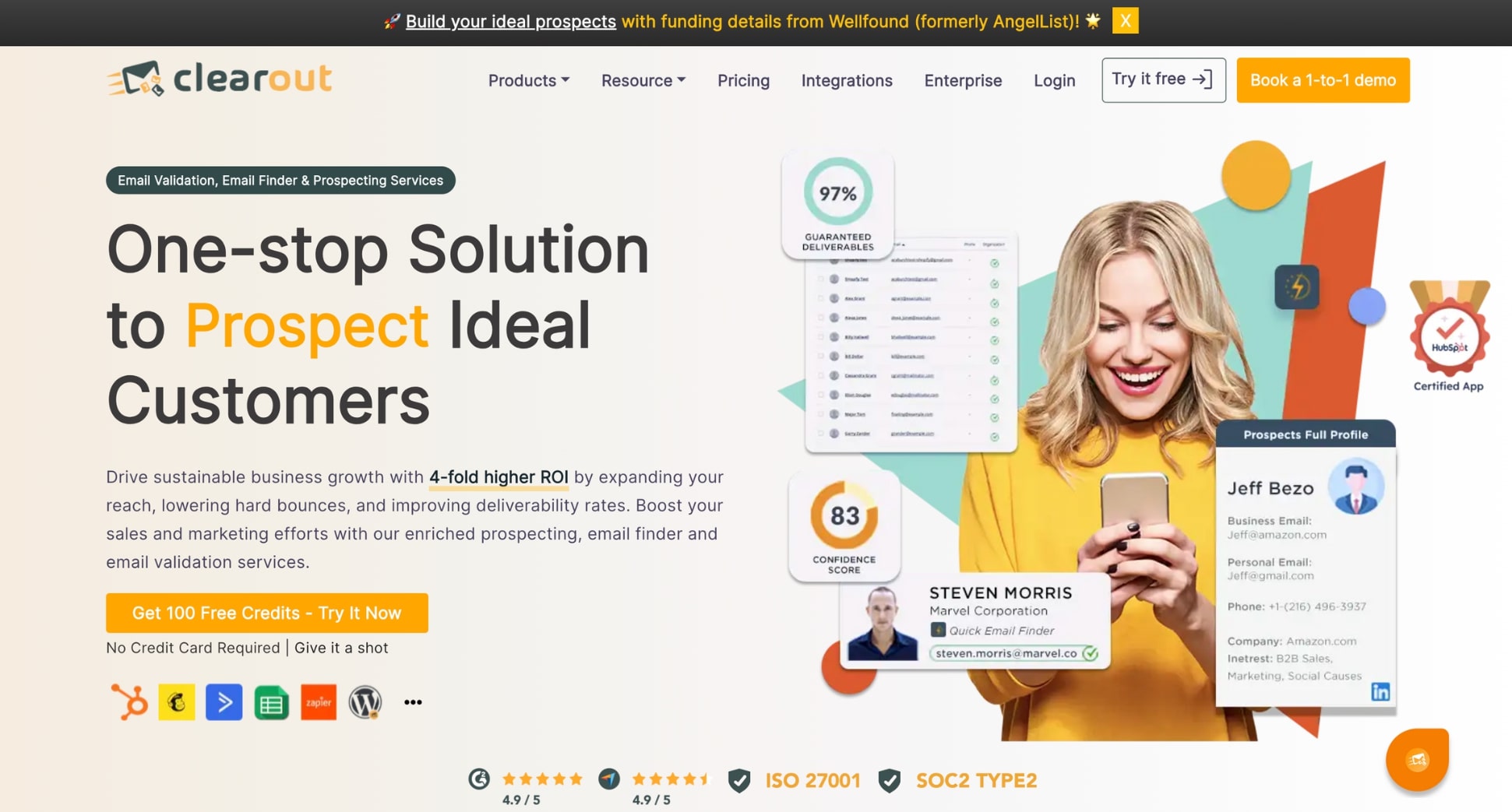
Clearout is an email verification platform with an email finder built in. You can find emails one by one or in bulk by uploading a list of names and companies. It also integrates with Google Sheets and has an API.
Pros of Clearout:
✔ Bulk email finder.
✔ Confidence score on every result.
✔ Unused credits roll over.
Cons of Clearout:
❌ Each email found uses 4 credits (2 for role-based addresses like info@).
❌ The interface feels a bit clunky.
❌ Limited features beyond verification and finding.
Clearout pricing:
- Free: 100 credits, one time.
- Starter: 3,000 credits a month for $16/month billed annually ($23 billed monthly).
- Pay as you go: from $40 for 5,000 credits.
Get 250 free credits: create a free Mailmeteor account, go to our partner page, and select Clearout.
9. Datanyze
3.8/5 ⭐️ on Capterra.
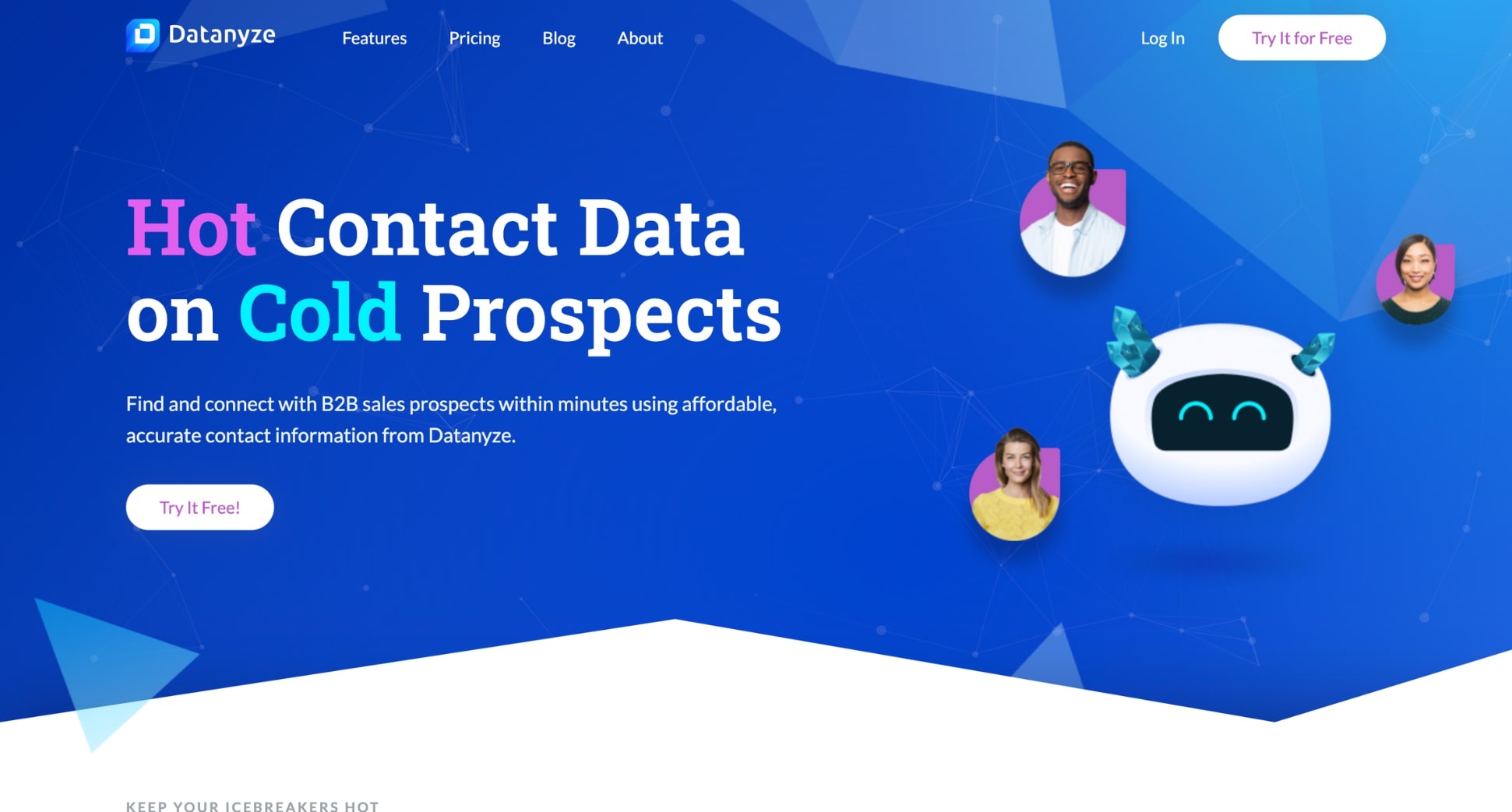
Datanyze is a Chrome extension that reveals B2B contact data — email addresses and phone numbers — while you browse LinkedIn and company websites. It also tracks which technologies companies use, and suggests icebreakers based on your prospects’ recent activity.
Pros of Datanyze:
✔ Find contact data directly on LinkedIn.
✔ Technographic data on companies.
✔ No steep learning curve.
Cons of Datanyze:
❌ Low credit allowances — 80 a month on the entry plan.
❌ Unused credits don’t roll over.
❌ The free trial only lasts 90 days.
Datanyze pricing:
- Nyze Lite: 10 credits a month for 90 days, free.
- Nyze Pro 1: 80 credits a month for $21/month billed annually ($29 billed monthly).
- Nyze Pro 2: 160 credits a month for $39/month billed annually ($55 billed monthly).
Which email finder is right for you?
It depends on how many emails you need and how you prospect ⤵️
| If you need to… | Use |
|---|---|
| Find a few emails for free, without signing up | Mailmeteor |
| Find every email at a company | Hunter |
| Find emails and run cold email campaigns in one tool | Snov.io |
| Get verified-only emails at volume | Findymail |
| Find emails and phone numbers on LinkedIn | Kaspr |
| Search a large contact database with filters | RocketReach |
| Verify a big list and find a few missing emails | ZeroBounce |
| Find emails in bulk on a tight budget | Clearout |
| Reveal a handful of contacts while browsing LinkedIn | Datanyze |
Whatever you choose, use these tools in line with data protection laws like the GDPR, and take advantage of free plans and trials to test data quality before you pay.
From email address to reply
Finding the right email address is just the first step. Next, you need to send a message that feels personal, follow up with people who don’t answer, and keep track of the ones who do.
That’s where Mailmeteor comes in:
🔍 A free Email Finder to look up professional addresses in seconds
✅ BounceShield to verify every address before you send
📬 Mail merge to send personalized cold emails from Gmail or Outlook
🔁 Automatic follow-ups that stop as soon as someone replies
📋 Pipelines to see who replied, who’s waiting, and who needs a nudge
Try Mailmeteor for free today (it’s free!) and turn the emails you’ve found into real conversations.
FAQs
What is the best free email finder?
Mailmeteor’s Email Finder is completely free and doesn’t require an account — just enter a name and company. For more volume, Hunter offers 50 free credits a month, and ZeroBounce includes 10 free Email Finder searches a month.
How do email finder tools work?
Most email finders combine two methods. They search their own database of publicly available professional emails, and they guess likely email formats (like [email protected]) based on patterns at that company. The best tools then verify the address with the mail server before showing it to you.
Are email finder tools accurate?
Accuracy varies by tool and by company. Results are usually reliable for well-known companies with standard email formats, and less reliable for small businesses, new companies, or unusual formats. Always verify emails before sending a campaign to avoid bounces.
Is it legal to use an email finder?
In most countries, yes — as long as you use the data responsibly. If you’re emailing people in the EU, the GDPR applies: you need a legitimate reason to contact them, you must tell them how you got their data if asked, and you should always include an easy way to opt out.
How can I find someone’s email address for free?
Try Mailmeteor’s free Email Finder first. You can also check the person’s LinkedIn profile or company website, search Google for “[name] + email”, or use Mailmeteor’s Email Permutator to generate likely addresses and test them in Gmail.
What’s the difference between an email finder and an email verifier?
An email finder looks for someone’s email address based on their name and company. An email verifier checks whether an address you already have is valid and can receive email. Many tools, like Hunter, ZeroBounce, and Clearout, do both.