Sending the same email to multiple people shouldn’t mean copy-pasting addresses into To or CC every time. Yet that’s exactly how many Gmail users still handle group emails — even though it’s slow, error-prone, and hard to maintain.
The good news? Gmail does let you create group emails. The bad news? The feature isn’t actually inside Gmail — it lives in Google Contacts (or Google Groups), which makes it easy to miss and confusing to use at first.
In this step-by-step guide, you’ll learn how to create a group email in Gmail the right way, when Gmail groups make sense, and when you should consider a more powerful alternative:
- What is a group email in Gmail?
- Why create Gmail groups?
- How to create an email group in Gmail
- How to send a group email in Gmail
- Gmail group limitations
- The best alternative to Gmail groups for emailing
Sounds good? Then let’s get started.
What Is a Group Email in Gmail?
A group email in Gmail lets you send the same message to multiple recipients at once without manually typing every email address. Instead of adding people one by one in the To, CC, or BCC fields, you create a recipient group in Google Contacts or Google Groups and send your email to that group.
When you send a group email via Google Contacts, Gmail automatically expands the group into individual addresses and delivers the message as a regular email to each person. It’s a faster, cleaner, and more reliable alternative to stacking addresses in CC or BCC — especially when you email the same people regularly.
Why Create Gmail Groups?
Recipient lists and email groups are known as contact groups in Gmail, creating one can be incredibly useful. Here’s why:
- Better communication: Organizing your contacts in groups will make your life easier if you need to send updates, announcements, or a newsletter to a specific group of people, such as family members, colleagues, or a project team.
- Time management: Gmail groups can help you save time. Especially if you need to communicate with the same set of people regularly. Instead of typing each email address manually, you can simply type the name of the group.
- Email management: You can create Gmail filters to automatically organize emails related to a specific group. This makes it a lot easier to manage your emails and keep your inbox organized.
- Collaborative projects: Having a designated group can help you make everyone feel involved in a project. It gives people a space where they can share their ideas and reduces the risk of leaving someone out.
- Tailored information: Gmail groups allow you to send different emails to each group based on their specific interests and needs, ensuring that each segment of your audience and each recipient gets the right information.
If you’re serious about using Gmail like a pro to save hours of work, check out our short free course with 15+ tips and features to up your email game.
Now that you know more about the benefits of email groups, let’s see how you can create one in your Gmail account.
How to Create an Email Group in Gmail
There are two ways for you to create email groups in Gmail. You can either use Google Contacts or Google Groups. Both methods have their pros and cons. So let’s explore each one in more detail.
Method 1: With Google Contacts
You can use Google Contacts to easily organize your contacts into groups thanks to a feature called Labels.
In this section, we’ll show you how to create a group (or label) in Google Contacts and add multiple contacts to it.
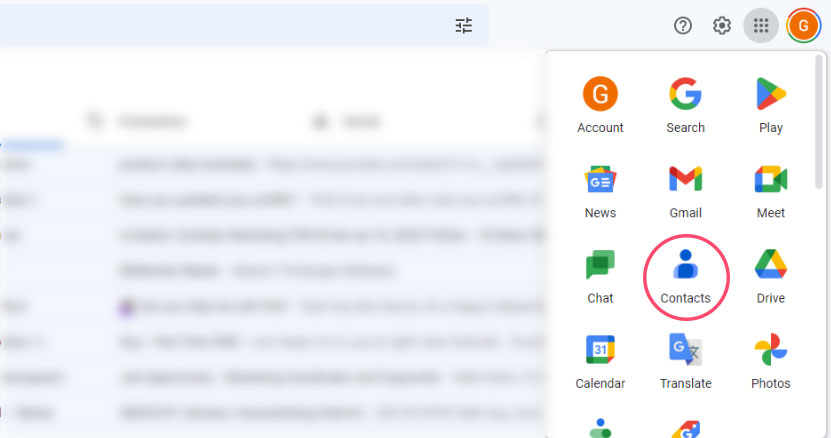
Step 1: Open Google Contacts
When logged in to your Gmail account, click on the top right menu, and select Contacts. Alternatively, you can follow this link to open the Contacts app: https://contacts.google.com/u/0/.
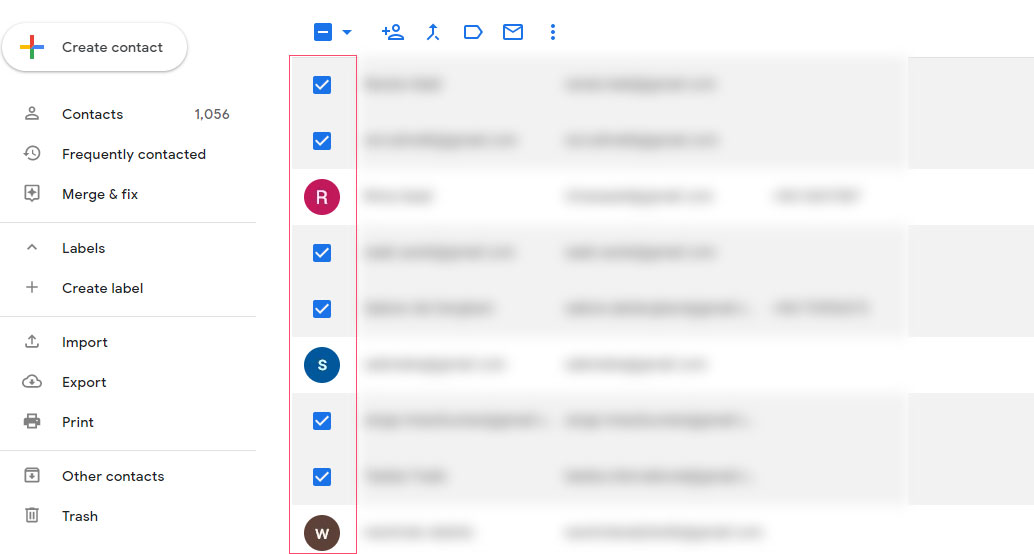
Step 2: Select your contacts
Mark all the contacts you want to add to the email group you are about to create. You can also create new contacts or import them.
Step 3: Create a Group label
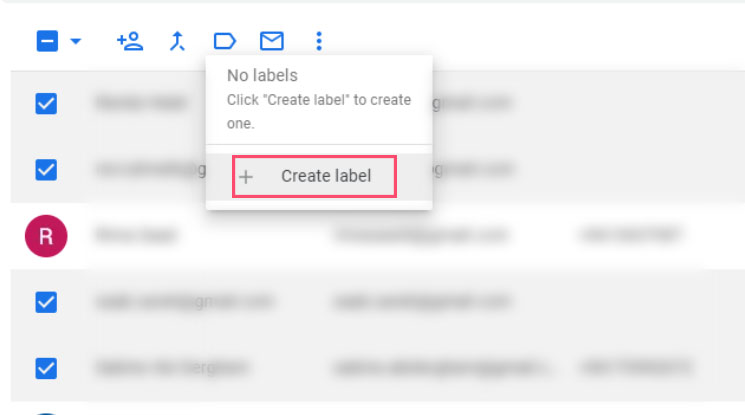
In the top menu bar, click on the label icon (middle), and select Create label.
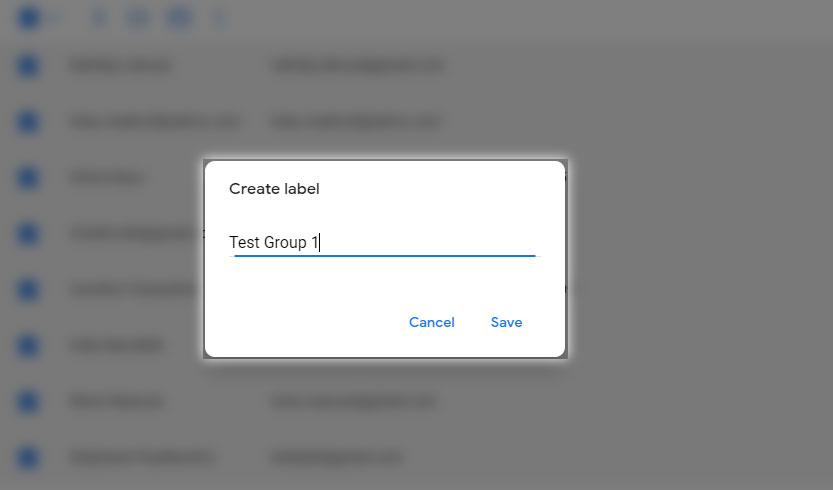
Step 4: Name Your Gmail Group
You can then name your new email group. In this example, we used “Test Group 1” as the name of our Gmail group.
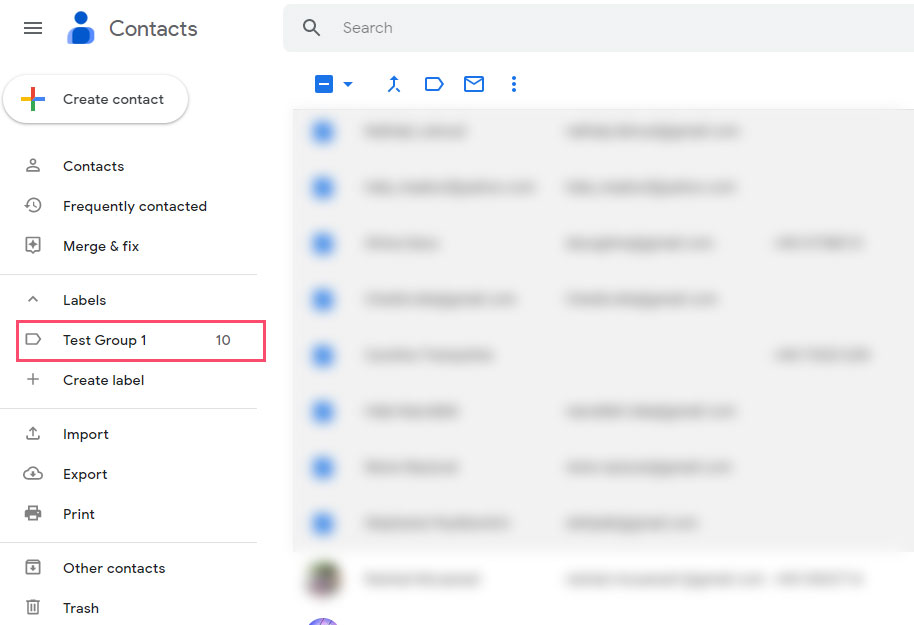
And voilà. You’ve just created your first email group in Gmail. You can now find your group in the left menu of your Contacts app.
Using Google Contacts to create Gmail groups is the ideal solution for personal or small business use where you frequently email the same people.
Method 2: With Google Groups
If you’re looking for a powerful platform to host group discussions and manage members, Groups is your best option.
In this section, we’ll show you how to create an email group with Google Groups and invite some members to join.
Step 1: Open Google Groups
For starters, go to the Google Groups website and sign in to your account.
Step 2: Create your Google group
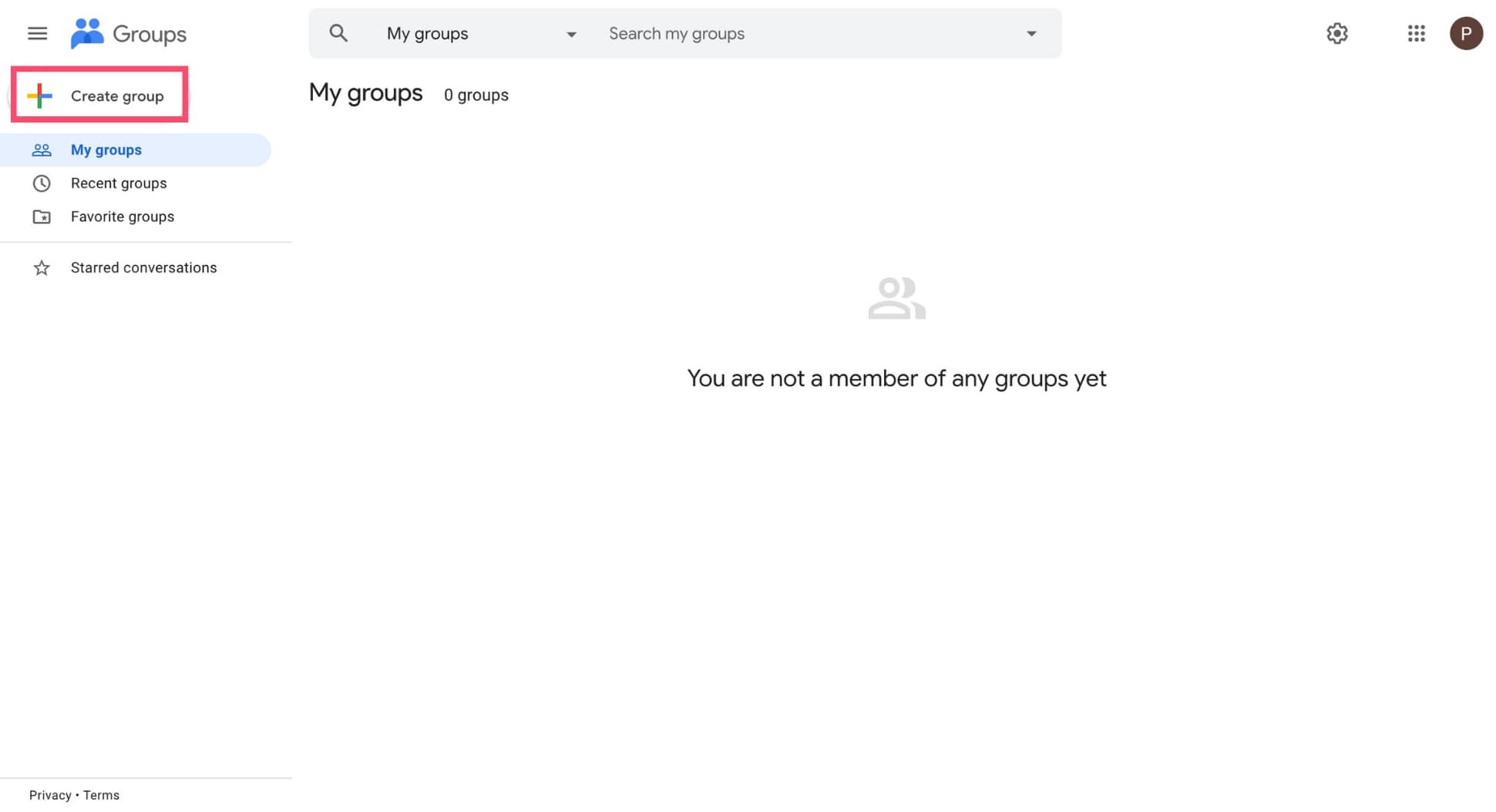
Click the Create group button (in the top-left corner of your screen).
Step 3: Name your Google group
Then enter the name of your email group. You can also edit the email of your group and add a group description. Once you’re done, click Next.
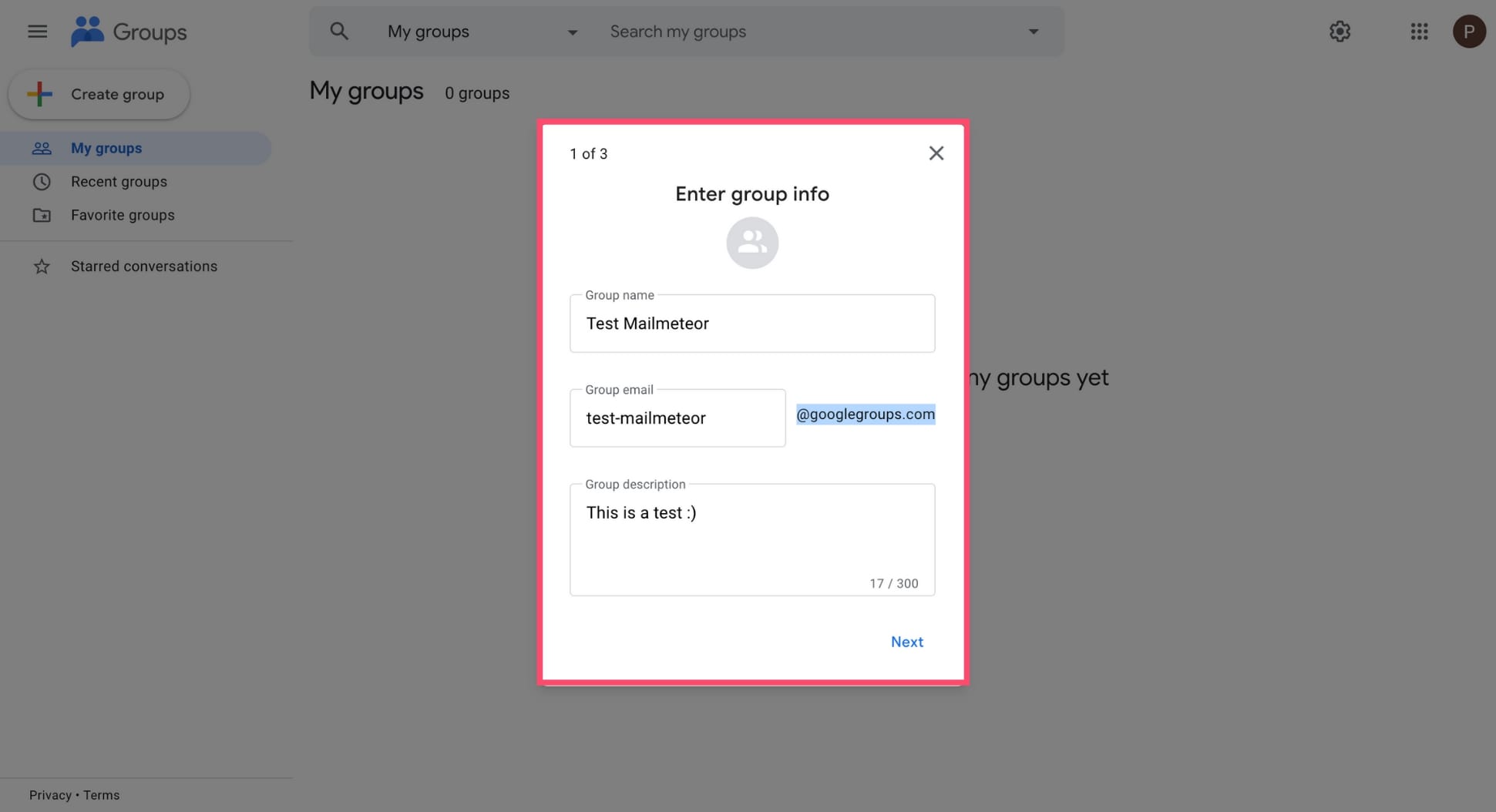
Google will create a new email for your group ([email protected]). So you need to find an email address that’s not already taken.
Step 4: Choose your privacy settings
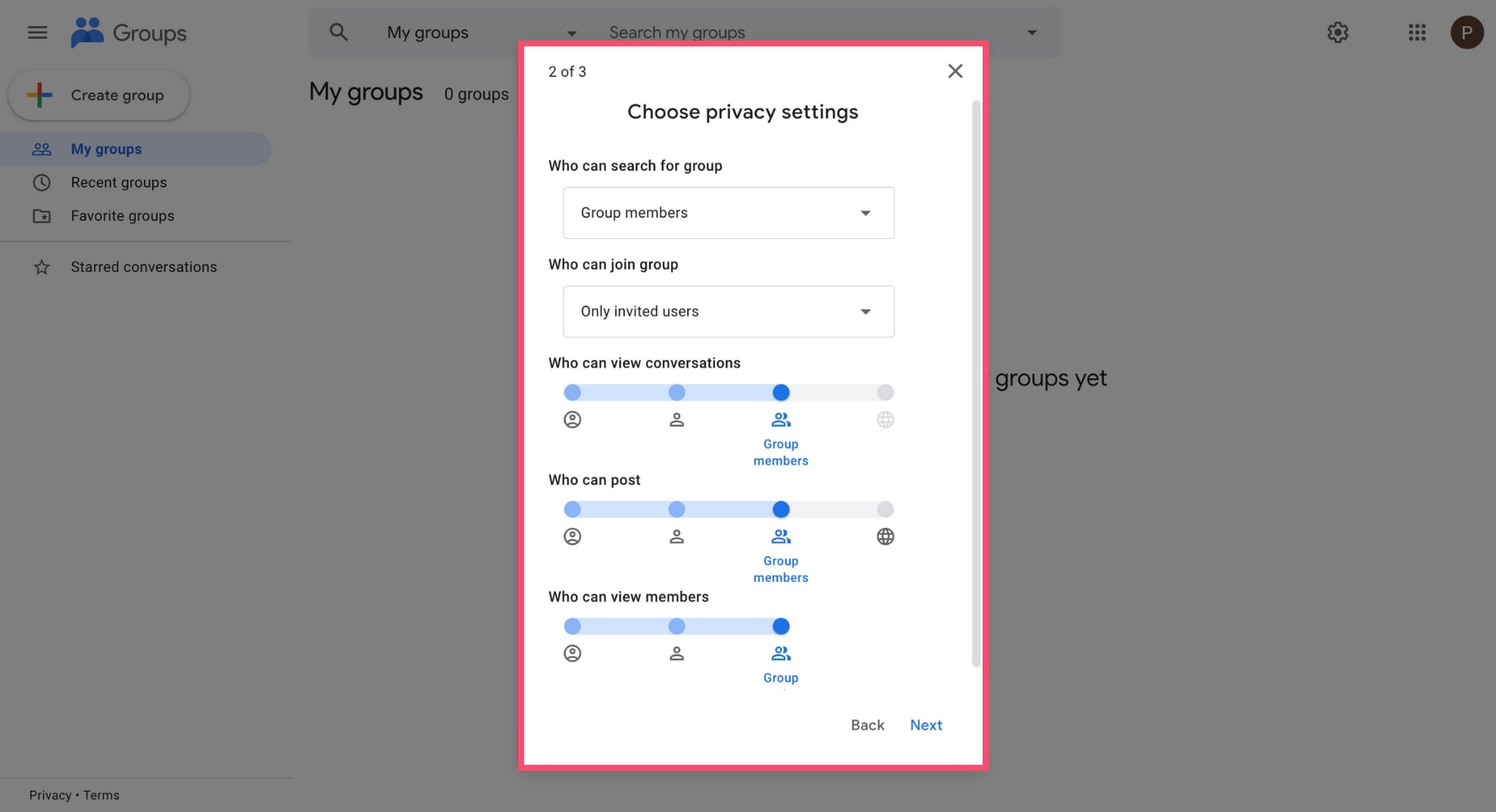
Configure the privacy settings of your email group. Google lets you define:
- Who can search for your group
- Who can join your group
- Who can view conversations
- Who can post
- And who can view the members of your group
Once you’re happy with your settings, click Next.
Step 5: Invite members
You can now invite members to join your group. To do so, simply type the email address of your contacts. You can then write a short note to explain the purpose of your group and why you’re inviting them to join. To confirm, click Create group.
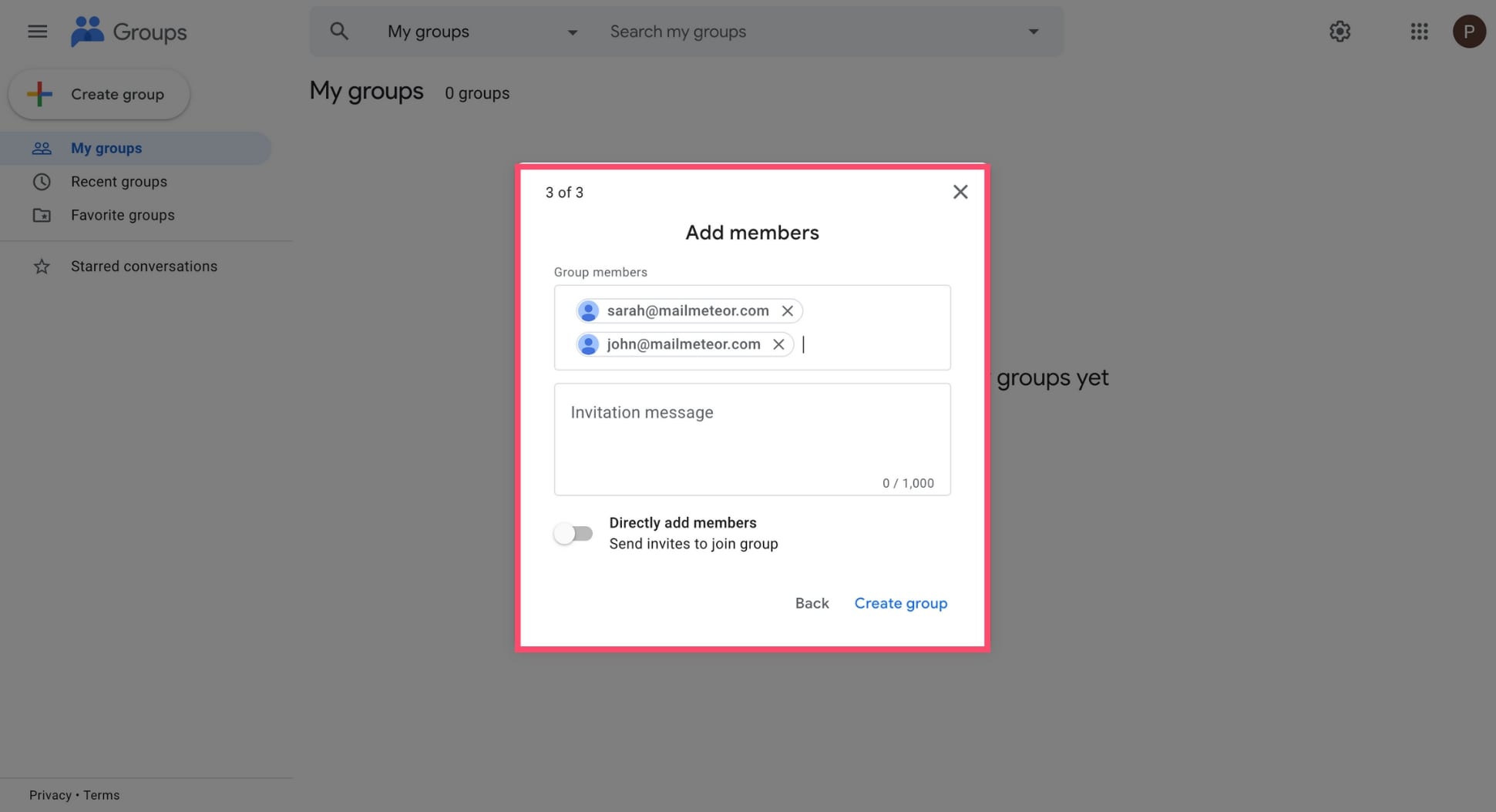
And that’s it. Your group is now ready. You can send emails to your group members, add or remove members, share files, and more. You will find your new email group in the left-hand panel of the Google Groups app.
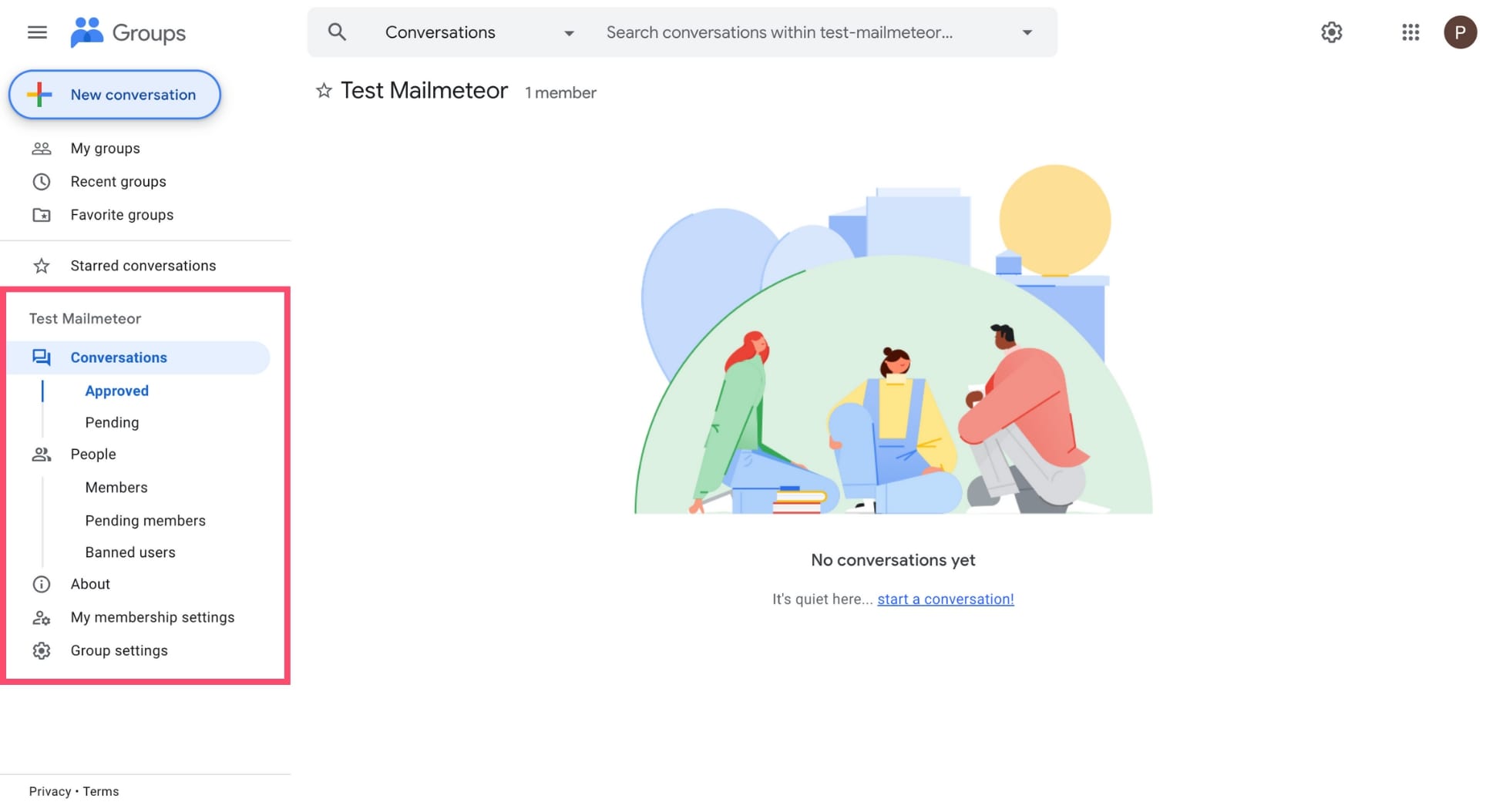
Google Contacts vs Google Groups: Which Should You Use?
Both Google Contacts and Google Groups let you email multiple people at once — but they’re built for very different use cases. Choosing the right one depends on why you’re sending group emails.
Here’s how they compare:
| Feature | Google Contacts | Google Groups |
|---|---|---|
| Best for | Simple group emails | Group discussions & communities |
| Setup complexity | Very easy | More complex |
| Where it lives | Google Contacts | Separate Google Groups app |
| Recipient approval | Not required | Required (invite-based) |
| Personal 1:1 emails | ✅ Yes | ❌ No |
| Ongoing conversations | ❌ No | ✅ Yes |
| Ideal for newsletters or updates | ✅ Yes | ⚠️ Limited |
Use Google Contacts if you want to:
- Send the same email to a list of people quickly
- Reuse the same recipient list without retyping addresses
- Keep things simple (family, clients, small teams)
- Manage everything directly from Gmail
For most users, Google Contacts is the best and simplest way to create a group email in Gmail.
Use Google Groups if you want to:
- Create a shared discussion space (like a forum or mailing list)
- Let members reply to the entire group
- Manage permissions, moderation, and archives
- Run an organization-wide or community mailing list
Google Groups is powerful — but if your goal is just sending group emails, it often adds unnecessary complexity.
How to Send a Group Email in Gmail
Now that you’ve created your group, it’s time to send an email to all its members. The process is pretty much the same whether you created your email group with Contacts or Groups. Here’s how to send group emails in Gmail.
Step 1: Compose your email
Sign in to your Gmail account, click Compose, and write your email as you normally would.
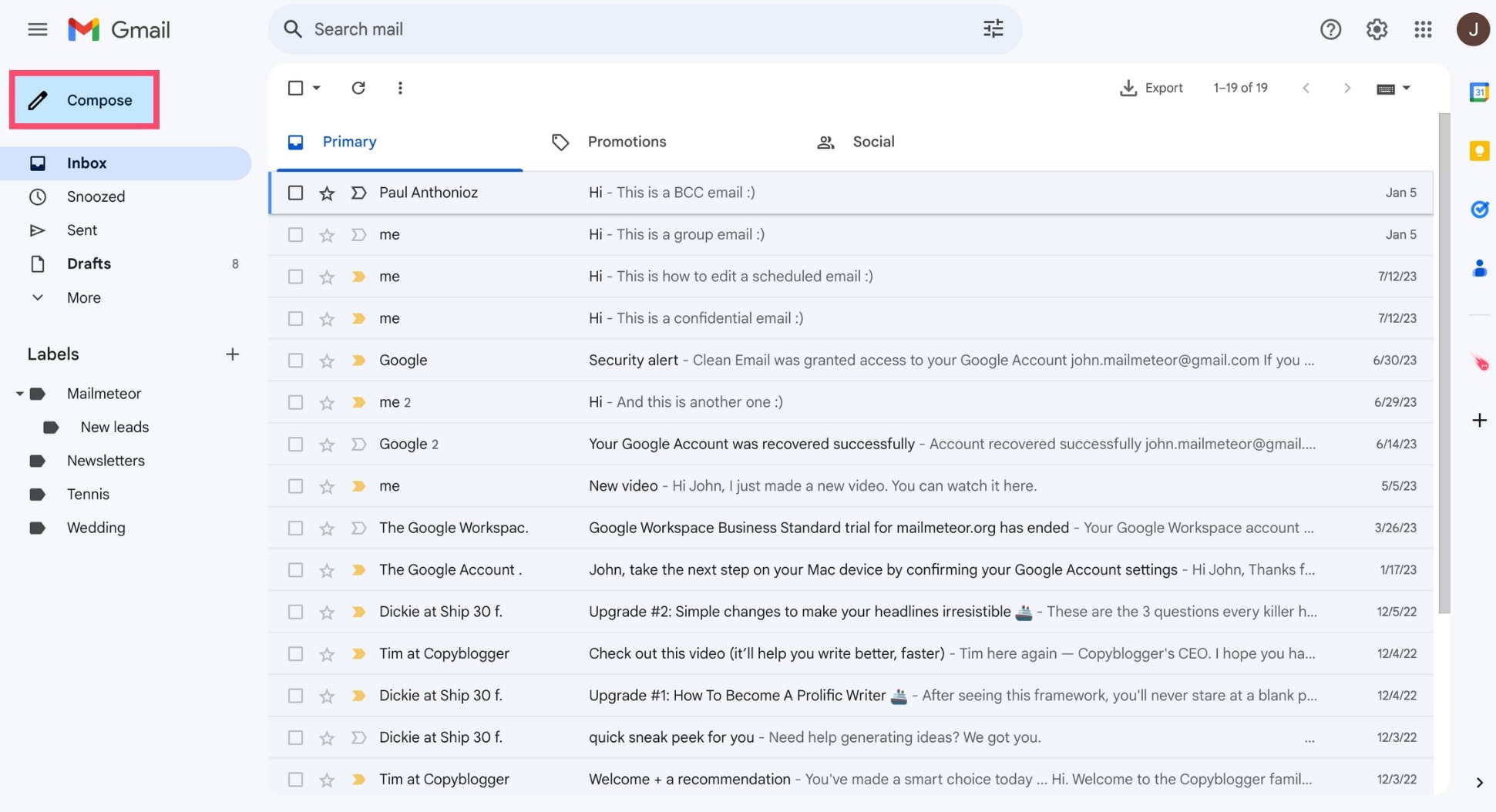
Step 2: Enter the name of your email group in the “To” field
Once your content is ready, and you’ve written a catchy subject line, go to your “To” field and start typing your group’s name.
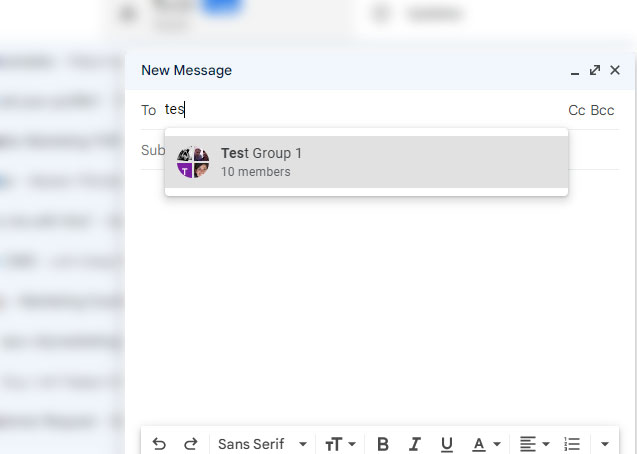
Step 3: Send your group email
Select your group, or multiple groups (you can also add individual addresses, and CCs) and press Send.
Group Emailing Limitations
After creating a recipient group in Gmail, you now have the ability to send emails to bundled groups of addresses instead of having to manually select each recipient, one at a time.
While this will surely save you heaps of time and headaches when sending group emails, both of these methods do have their own limitations.
Frequent Changes
For starters, you’ll have to update the contacts included in your groups manually.
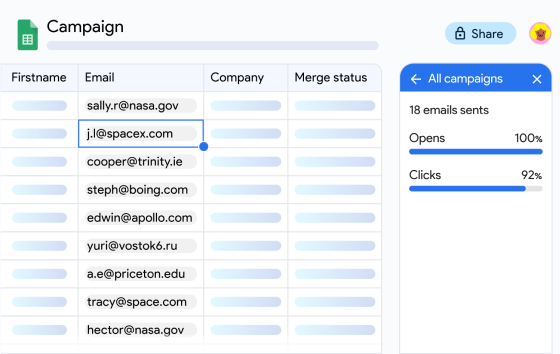
Making edits to contacts and their info can get complicated as you move in and out of pages and layers. But with tools like Mailmeteor, you can manage your contacts from Google Sheets with columns that can be filtered and segmented to your heart’s desire.
Replies and Follow-ups
After your first email, if you’re expecting responses or plan to sequence your emails, Gmail groups are definitely not for you.
Because every email sent to a group will be sent to everyone, not a single individual. Following up with everyone in a group will confuse some of your contacts, and it just adds to the clutter. What’s more, Gmail doesn’t support the ability to set up email sequences, at all.
Limited Personalization
Although you can customize the content of your emails for specific groups of contacts, you can’t personalize down to each contact.
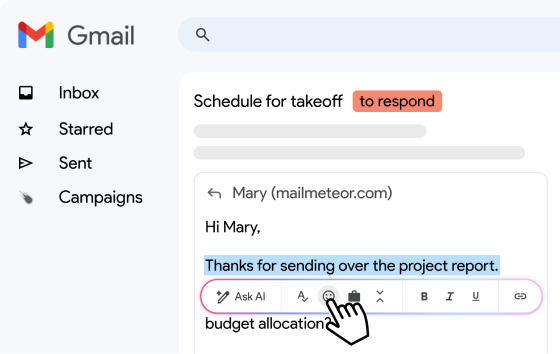
You can work around this by using the somewhat limited Gmail Multi-Send feature (if you’re eligible), or better yet just install the Mailmeteor add-on to start personalizing your group emails within minutes.
The Best Alternative to Gmail Groups for Emailing
Gmail groups are useful for basic group emails — but they quickly show their limits as soon as you need personalization, follow-ups, or better control over your recipients.
If you want to send individualized emails at scale, track engagement, or follow up automatically without spamming everyone in the same thread, a mail merge tool is a far better option.
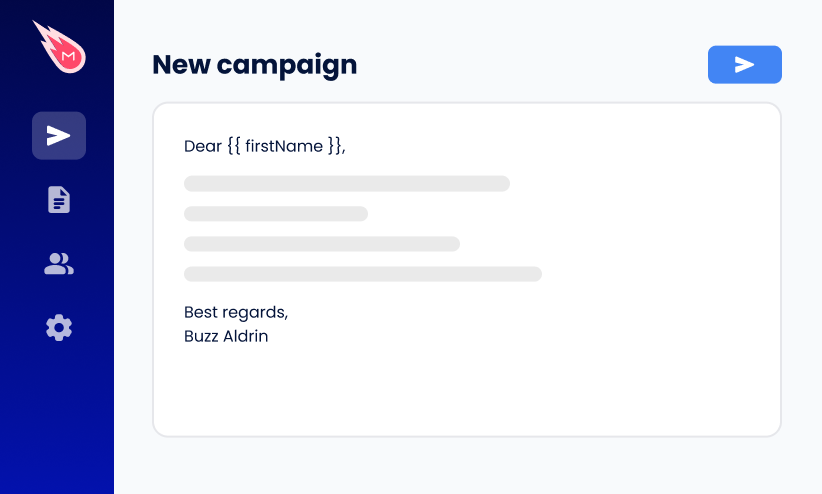
With a solution like Mailmeteor, you don’t send one email to a group — you send one personalized email per recipient, directly from your Gmail account. Each person receives their own message, with their name, company, or any custom data filled in automatically.
Unlike with Gmail groups:
- Replies stay private and don’t clutter everyone’s inbox
- You can personalize each message beyond just the subject line
- You can schedule automatic follow-ups if someone doesn’t reply
- You can track opens and clicks in real time
In short, Gmail groups are fine for simple announcements. But if you’re emailing clients, leads, partners, or large lists — and want to stay efficient, professional, and organized — a mail merge tool like Mailmeteor is the smarter, more scalable alternative.
Our free plan lets you email a group of up to 50 recipients per day. And if you need to email larger groups? You can switch to one of our paid plans to send up to 2,000 messages a day with unlimited contacts and campaigns.
Frequently Asked Questions
How do I create a group email list in Gmail?
To create a group email list in Gmail, you can use the Contacts app to create an email group. Alternatively, you can use a mail merge such as Mailmeteor.
How do I send a group email but not show all recipients?
You can send group emails without showing all the recipients by typing the name of your email group in the “BCC” field instead of using the “To” field.
How many emails can be in a Gmail group?
Gmail lets you create as many email groups as you want. And you can add as many contacts as you want to your groups. However, you won’t be able to send a single email to a total of more than 500 recipients. To contact more people, you can subscribe to an email marketing platform, like Mailmeteor.
What is the difference between Google Contacts and Google Groups?
Google Contacts lets you manage your contacts and organize them into groups thanks to a feature called “labels”. This is a simple way to send group emails to a set of contacts in Gmail.
Google Groups is a dedicated app that works kind of like a forum. You can use it to host your group discussions, manage group members, archive messages, and more. This option is best for large groups or organizations.
Can Gmail groups send personalized emails?
No. Gmail groups send the same message to everyone in the group. You can’t personalize emails for each recipient (like adding names or custom fields). To send personalized group emails, you’ll need a mail merge tool like Mailmeteor.
Is Google Groups the same as a mailing list?
Not exactly. Google Groups is closer to a discussion forum where members can reply to everyone. It works for group conversations, but it’s not ideal for sending simple group emails or announcements.