Want to unsubscribe from bulk emails and finally stop receiving unwanted marketing messages? Whether you’re dealing with newsletters, promotional emails, commercial campaigns, or mass marketing blasts, this guide shows you how to unsubscribe from bulk emails in Gmail, Outlook, and Yahoo — even when there’s no visible unsubscribe link.
Is your inbox flooded with bulk email campaigns you never read? You’re not alone. A study published in the ACM Digital Library found that the average person is subscribed to 93 email lists — yet most marketing emails are never opened. Instead of endlessly deleting, archiving, or ignoring these messages, it’s time to remove yourself from unwanted email lists properly.
But what if there’s no unsubscribe button? What if companies keep sending bulk emails after you opt out? Below, you’ll learn 4 proven methods to stop bulk emails permanently — whether you’re using Gmail, Outlook, or Yahoo Mail.
TL;DR: How to Unsubscribe From Bulk Emails
To unsubscribe from bulk emails:
- Use the unsubscribe link (or Gmail’s Unsubscribe button when available).
- Block the sender if they ignore your request.
- Create filters to automatically delete future emails.
- Use an unsubscribe service for mass clean-up.
Below, you’ll find step-by-step instructions for Gmail, Outlook, and Yahoo Mail.
What are bulk emails?
Bulk emails are commercial or marketing messages sent to large groups of recipients at once. They typically include:
- Newsletters
- Promotional offers
- Product announcements
- Automated marketing campaigns
- Sales outreach emails
- Event invitations
Unlike personal emails, bulk emails are usually sent using email marketing software and distributed to mailing lists.
Under email marketing regulations like CAN-SPAM and GDPR, legitimate bulk email senders must provide a clear unsubscribe mechanism.
However, not all companies follow best practices — and some spam senders ignore unsubscribe requests entirely.
Why unsubscribe from bulk emails?
Unsubscribing from bulk emails isn’t just about cleaning up your inbox. It’s about reducing email overload and stopping unwanted marketing communications for good. By removing yourself from email lists you no longer need, you can:
- Improve productivity – Fewer promotional emails means fewer distractions.
- Reduce inbox clutter – Stop bulk email campaigns before they pile up.
- Protect your privacy – Limit how many companies store and use your email address.
- Free up storage space – Large inboxes can impact Gmail and Outlook storage limits.
- Regain control of your email subscriptions – Decide which mailing lists actually deserve your attention.
But here’s the catch. Unsolicited emails can be incredibly tough to deal with. And not even spam filters have won the battle against junk mail.
Fortunately, there are (at least) 4 ways to deal with unwanted email subscriptions. Let’s go through each of them and see which one works best for you, shall we?
Method #1: Use unsubscribe links
The easiest way to unsubscribe from an email is to use the unsubscribe links or buttons located in the footer of most newsletters and promotional emails.
On Gmail
Gmail makes it super easy to unsubscribe from emails. This email service has a built-in unsubscribe feature that lets you opt out from promotions or newsletters in just a few clicks. Here’s how it works.
Step 1: Sign in to your Gmail account.
Step 2: Open a message from the sender you want to unsubscribe from.
Step 3: Next to the sender’s name, click Unsubscribe.
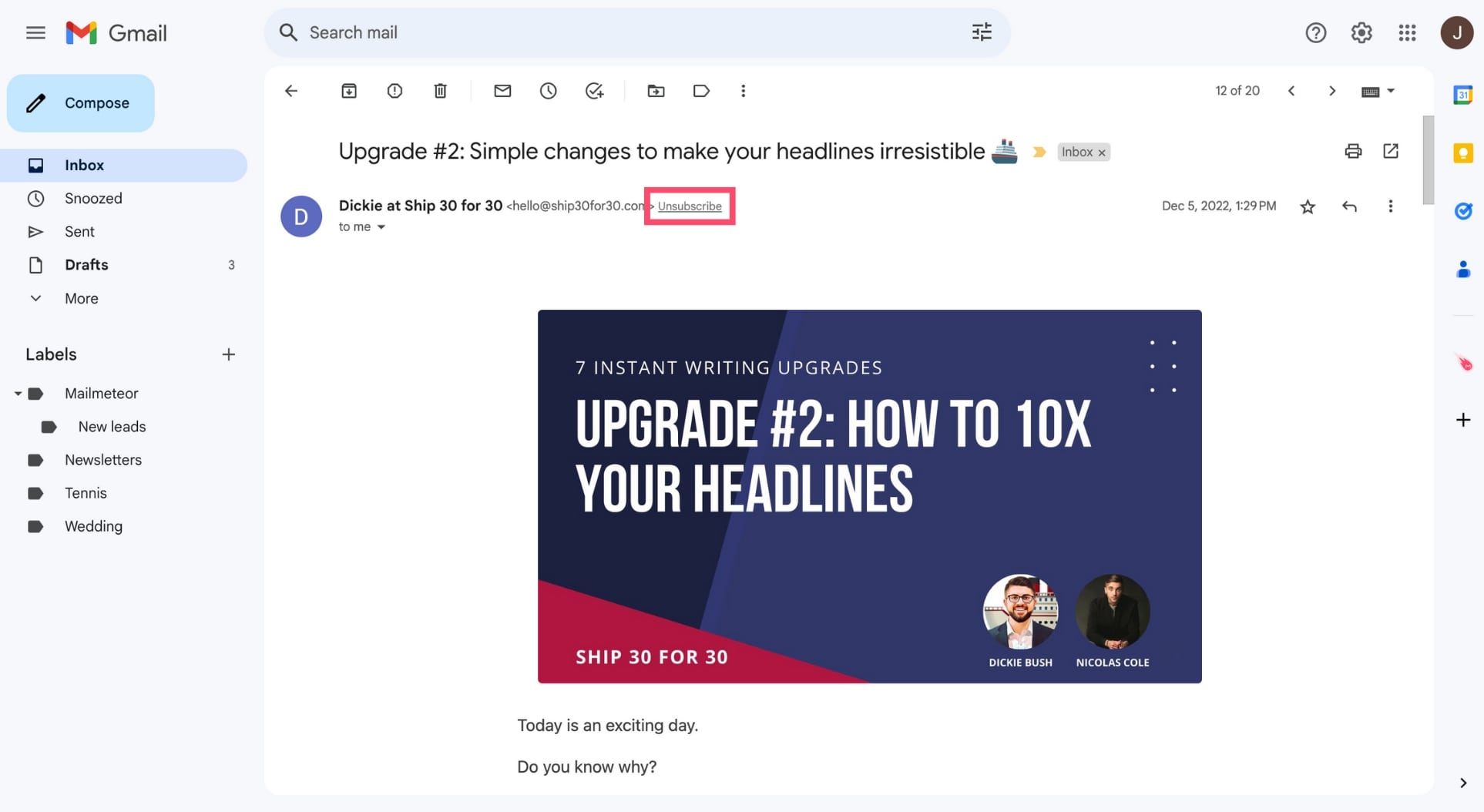
Step 4: To confirm, press the blue Unsubscribe button.
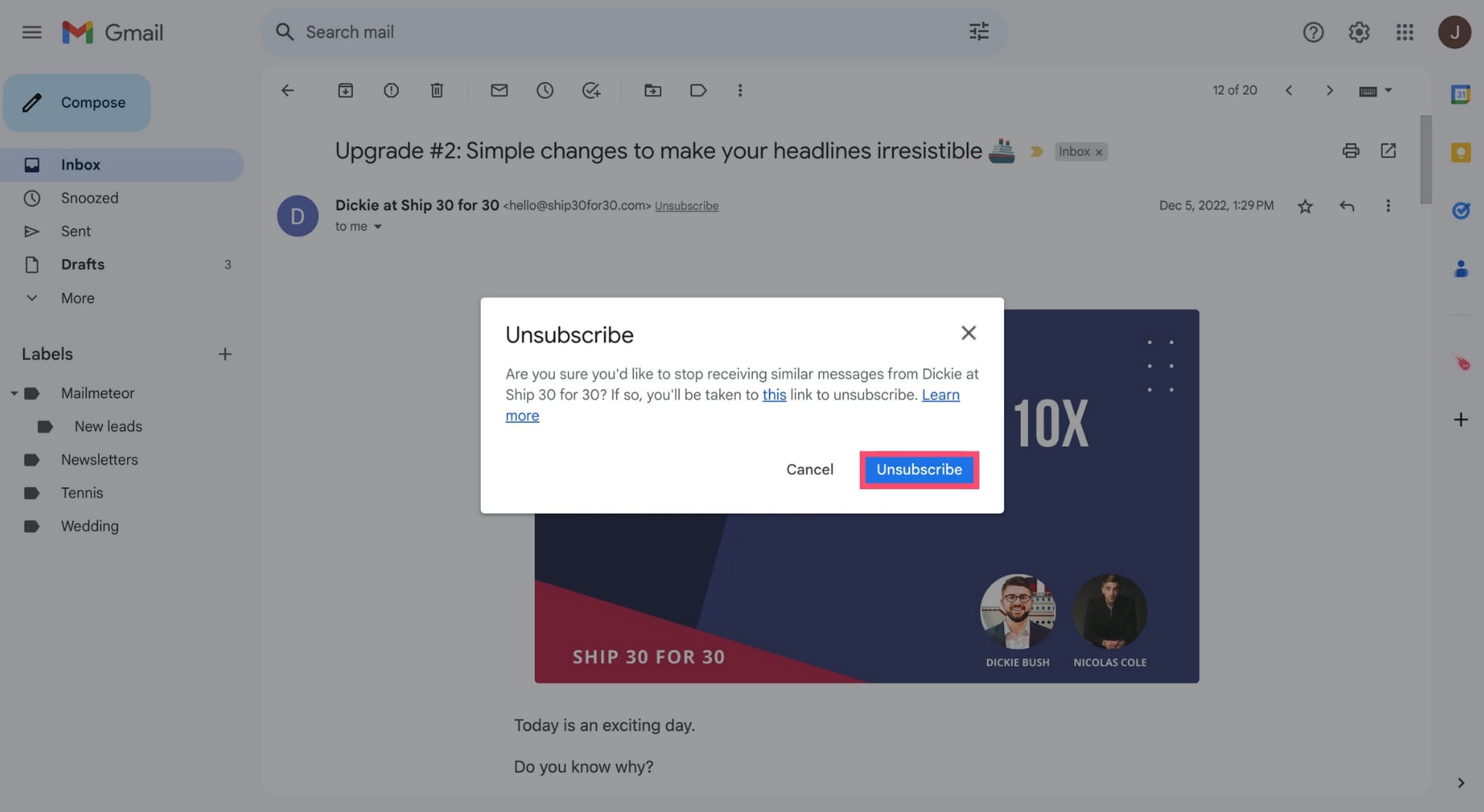
With this unsubscribe feature, you can opt out of unwanted emails without wasting time searching for the tiny unsubscribe links skulking at the bottom of most email footers.
However, this solution is far from perfect. It only works if the email contains an unsubscribe link. What’s more, if the link contains unusual wording or formatting then Gmail doesn’t always recognize it.
Lastly, in some cases, you’re still required to visit the link. This can be a problem if you’re trying to unsubscribe from a sender you’re not familiar with. What if the links lead to a malicious website?
When you click the unsubscribe link of a spam email, you’re pretty much confirming to the spammer that this is a working email address. Which can only lead to receiving even more spam messages.
Fortunately, there are (at least) 3 other ways to unsubscribe from mass emails. But before we review them, let’s see how you can leverage unsubscribe links in Microsoft Outlook and Yahoo Mail.
On Outlook
Microsoft Outlook also offers an easy way to manage your email subscriptions. Thanks to this handy feature, you can mass unsubscribe from promotional or newsletter emails. Here’s how to use it.
Step 1: Sign in to your Microsoft Outlook account.
Step 2: Click on the small gear icon at the top-right of your screen to open the Outlook settings.
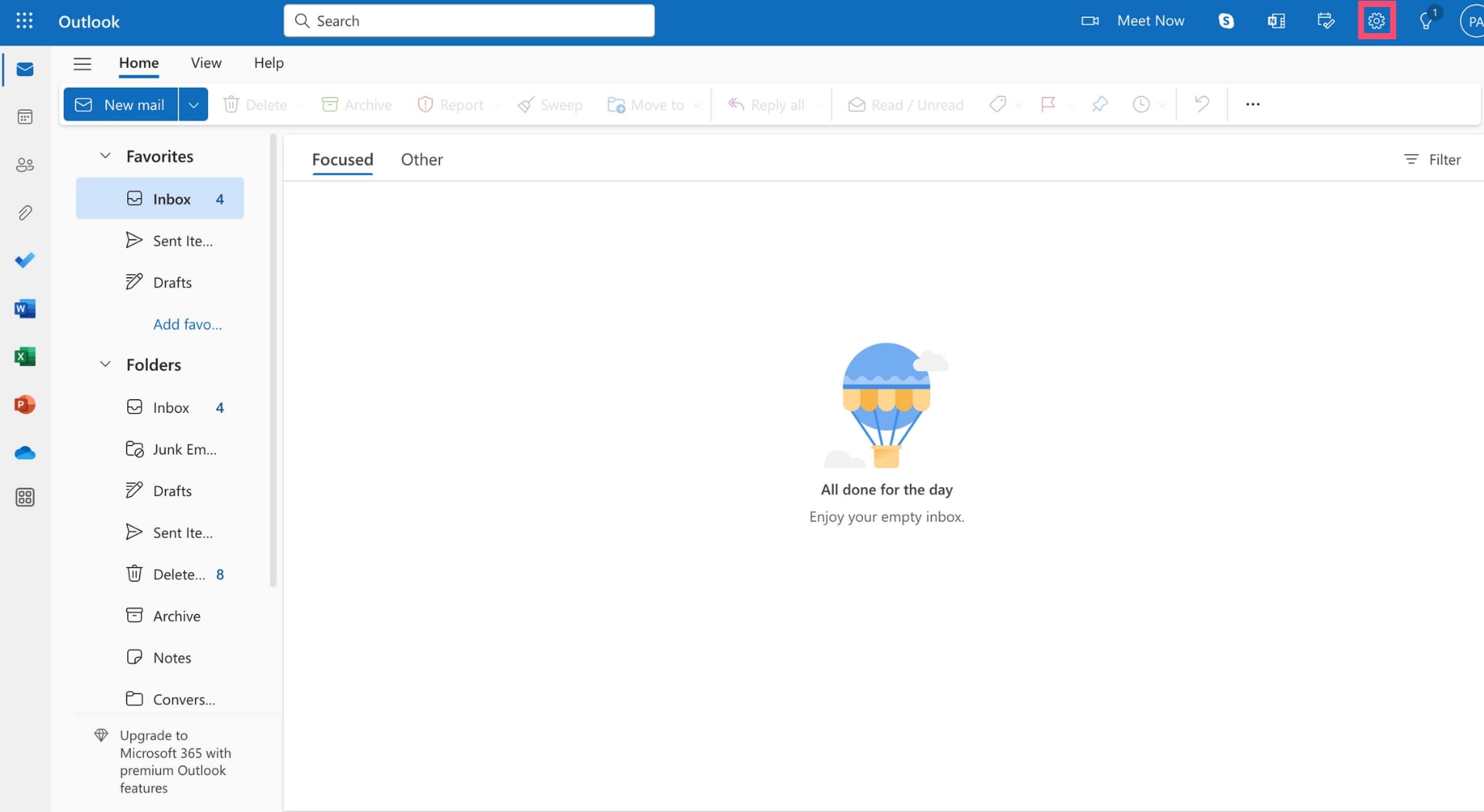
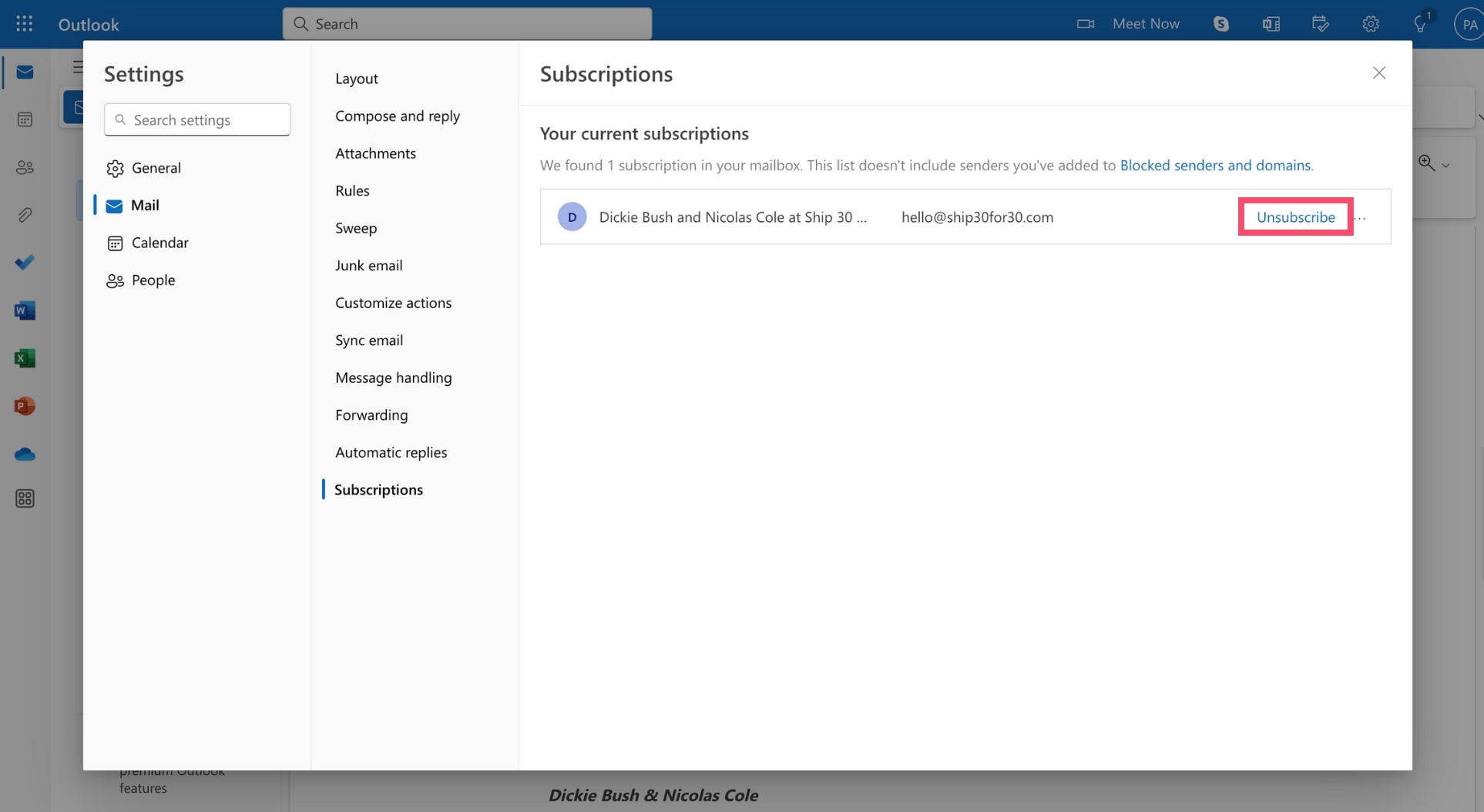
Step 3: Next, go to Subscriptions.
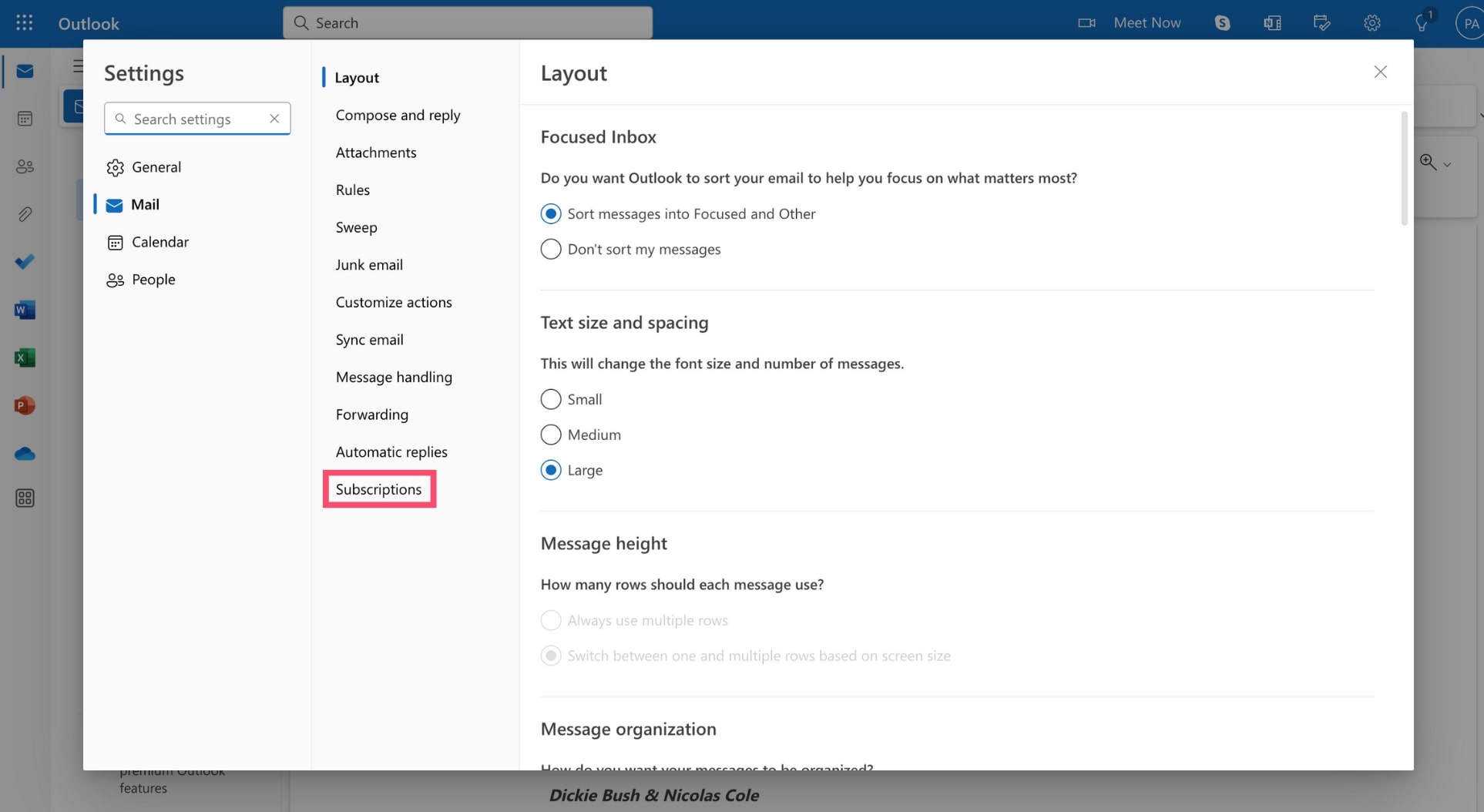
Step 4: From there, you can see all your current email subscriptions. Which is always helpful. Find the email list you want to unsubscribe from and click Unsubscribe to prevent them from sending you more emails.
Step 5: Lastly, press OK to confirm you wish to stop receiving messages from that email address on your Outlook account.
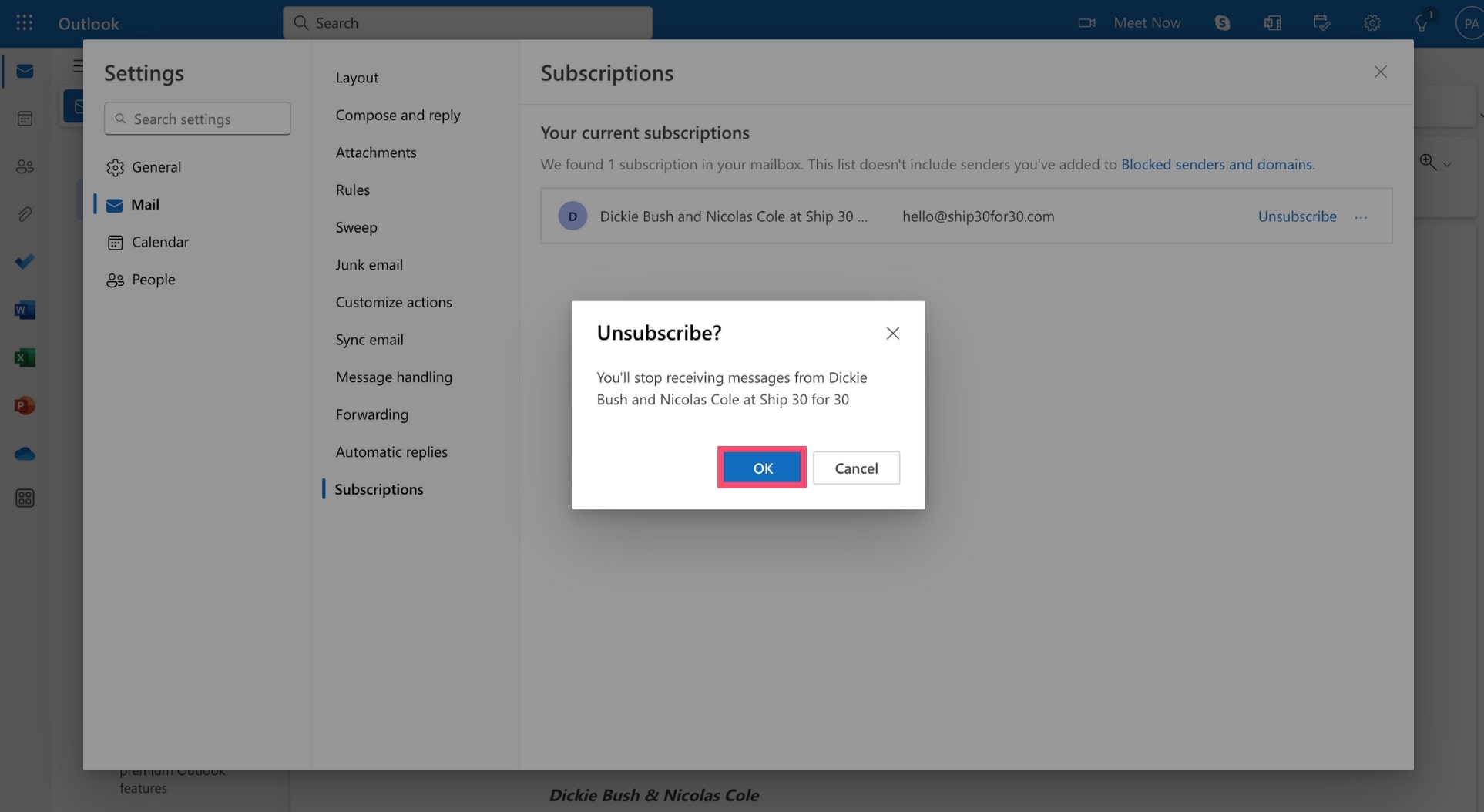
And that’s it. You’ve successfully unsubscribed from a mass email in Microsoft Outlook. Congrats! 🥳
On Yahoo Mail
You’re more of a Yahoo-lover? Don’t worry, we’ve got you covered. Here’s how to unsubscribe from unwanted messages in Yahoo Mail.
Step 1: Open Yahoo Mail.
Step 2: Go to Mails.
Step 3: In the left-side panel, click Subscriptions.
Step 4: Under Active, you’ll find all your ongoing email subscriptions. Locate the subscription you want to cancel. Step 5: Nearby, you’ll see an unsubscribe button. Click it and Yahoo will move this email conversation to the Unsubscribe folder.
Pretty easy, right? But Yahoo’s one-click unsubscribe feature doesn’t always work. In some cases, you’ll need to opt out from each email manually.
Method #2: Block an email address
Unsubscribe links are an easy way to indicate to the sender that you no longer wish to receive their emails. You should always add one to your own mass emails.
But what if the sender didn’t include an unsubscribe link? Or what if they keep emailing you after you’ve opted out from their mailing list?
In that case, you can take a more radical stance and block their email address. This will prevent them from emailing you ever again with that username.
Here’s how to block someone in Gmail. We’ve written a complete guide on that subject, make sure to check it out for more details :)
Step 1: Go to Gmail.
Step 2: Open an email from the sender you wish to block.
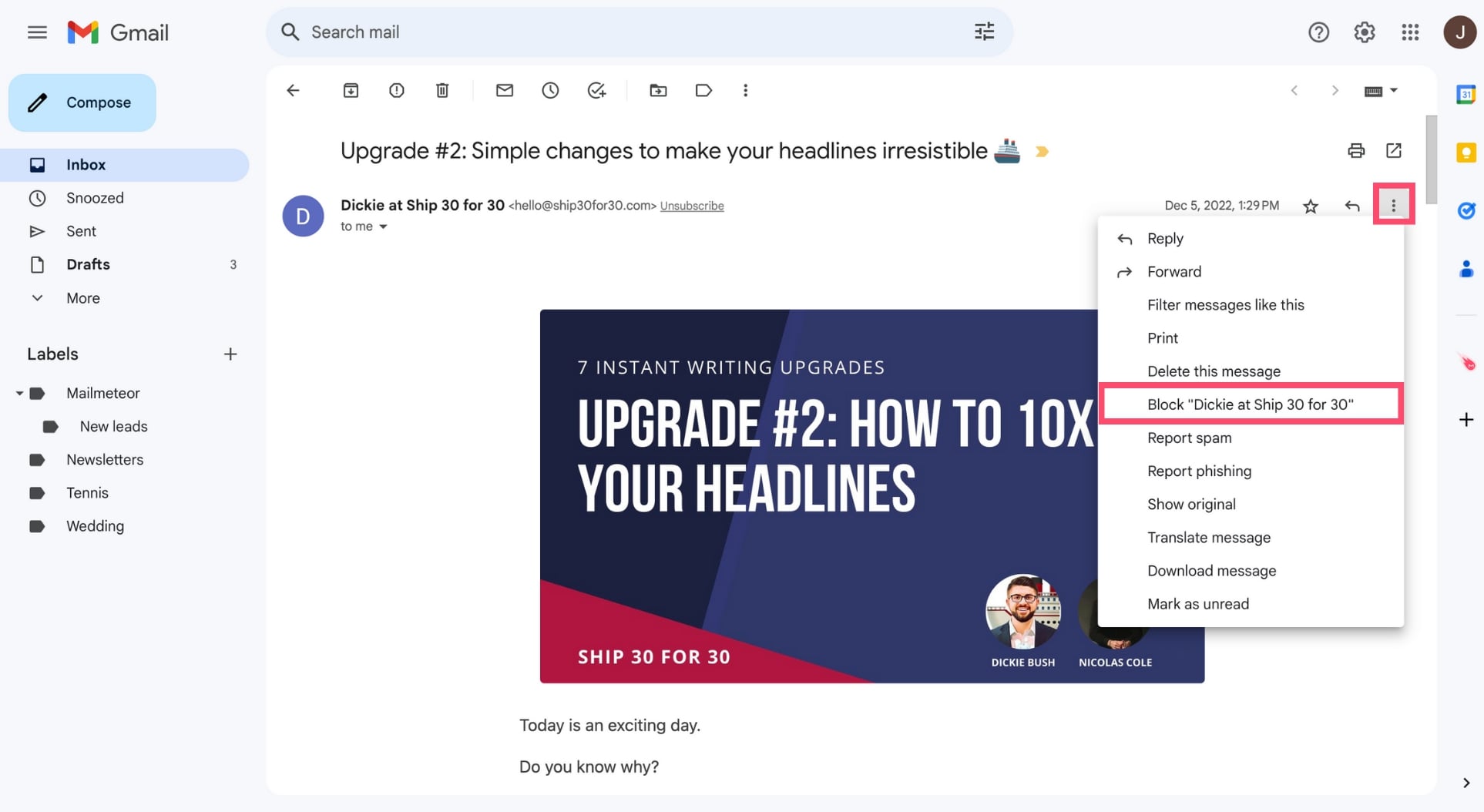
Step 3: Click on the three vertical dots and select Block this email address.
Step 4: To confirm, click Block. Gmail will then send all future messages from this address directly to your Spam folder.
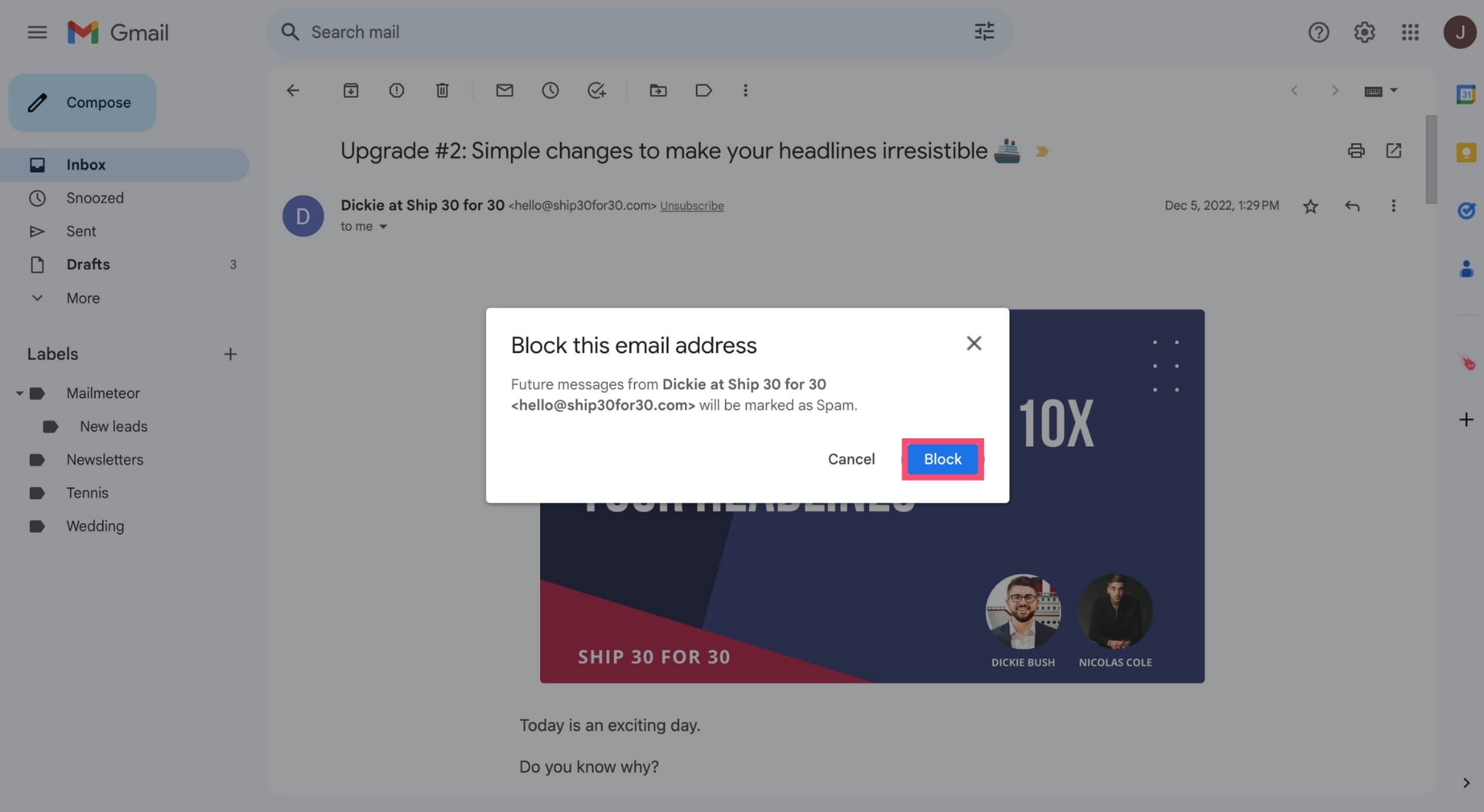
And voilà. This email address is now blocked. Your inbox is safe, well done! You can follow a similar process to block people on Outlook or Yahoo Mail.
Method #3: Leverage email filters
What if a company is sending you unsolicited messages from multiple email addresses at once?
Don’t worry, you don’t need to unsubscribe from each email manually or block each email address separately. This would take too much time.
Instead, you can simply create a new email rule. Here’s how to use the Gmail filters to get rid of unwanted mass emails
Step 1: Open Gmail.
Step 2: Next to the search bar, click Show search options.
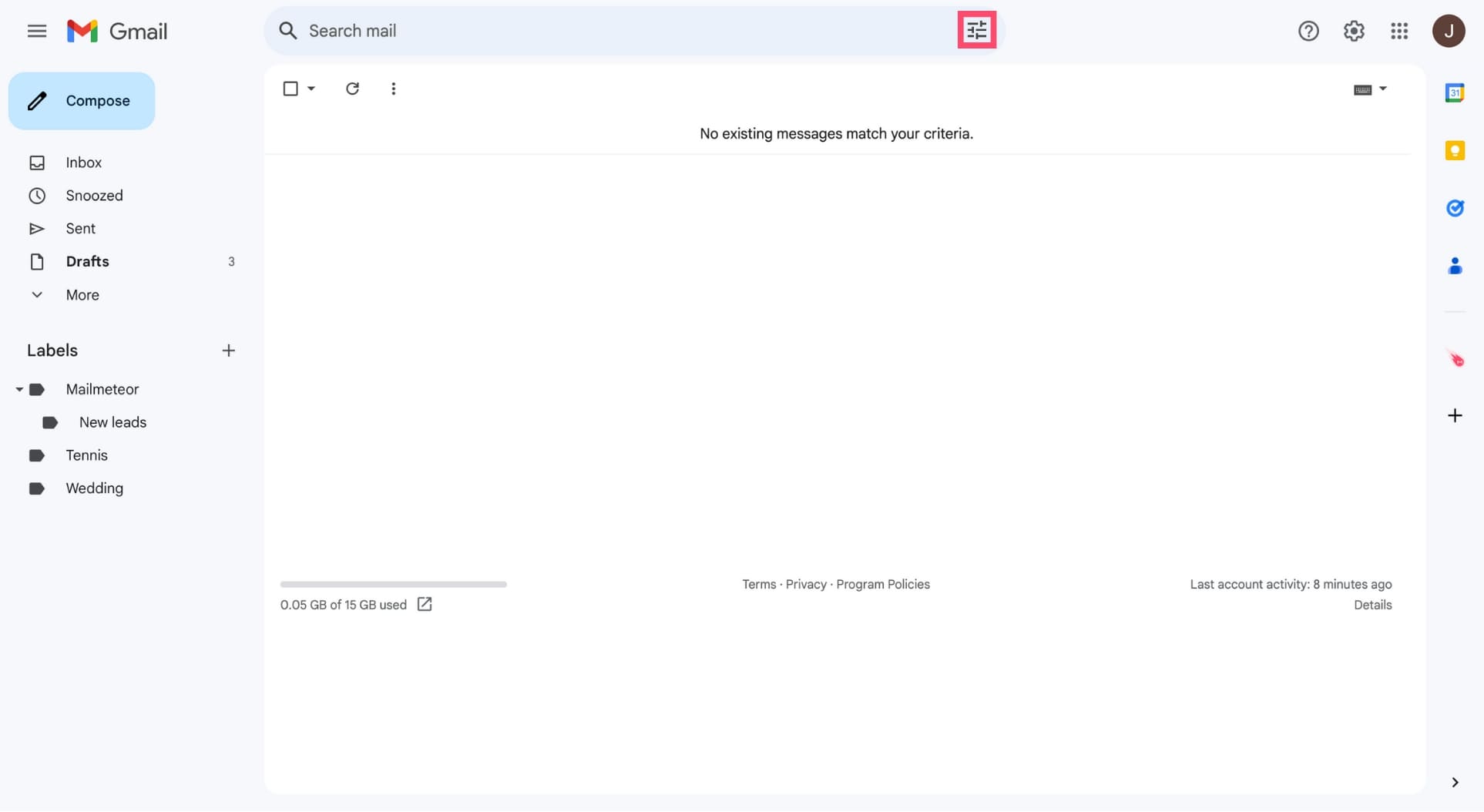
Step 3: In the From field, type *@domain.com. Make sure to replace the word domain used in this example with the actual domain name of the company you want to cast out of your inbox. Then click Create filter.
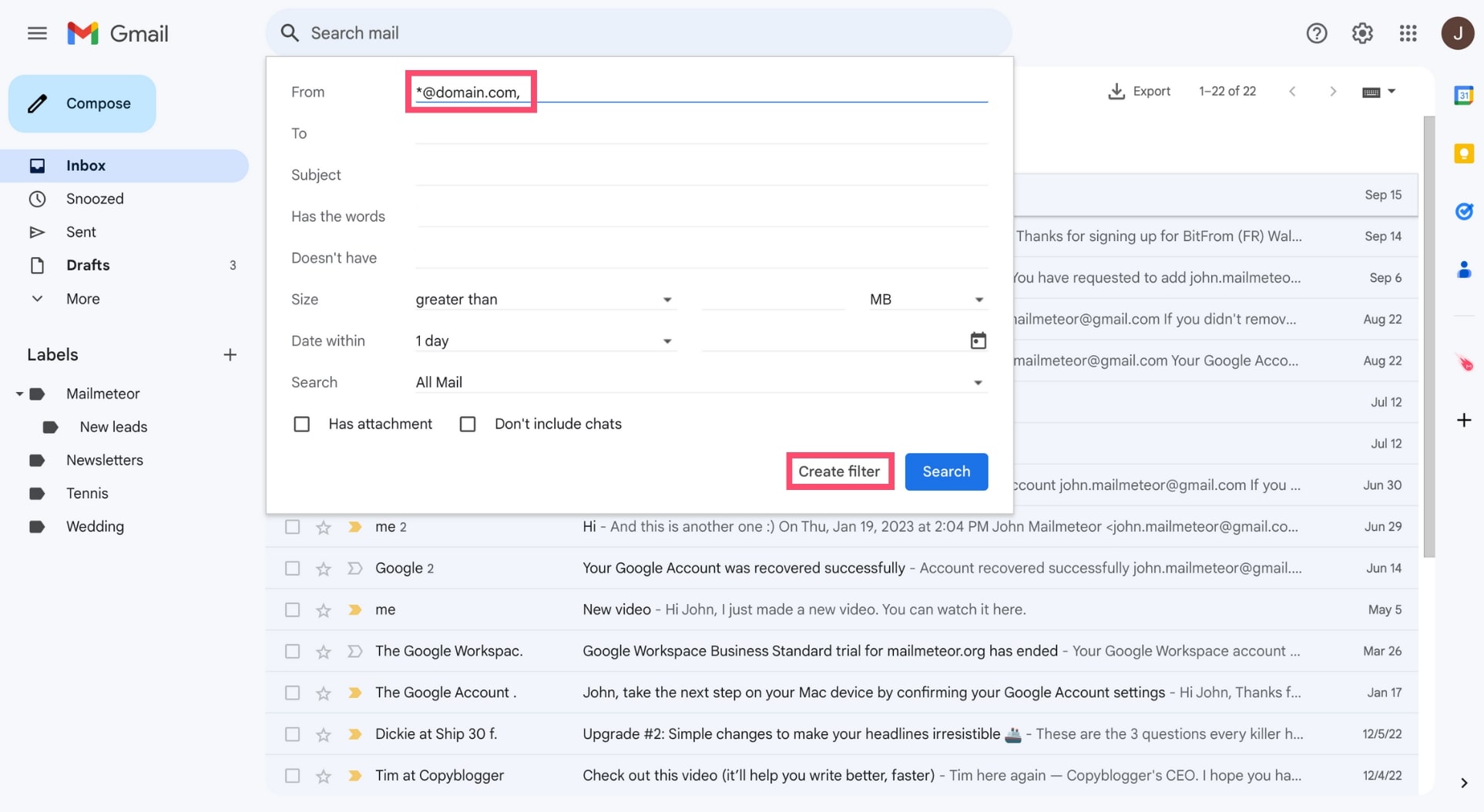
Step 4: Select Delete it. Then click Create filter.
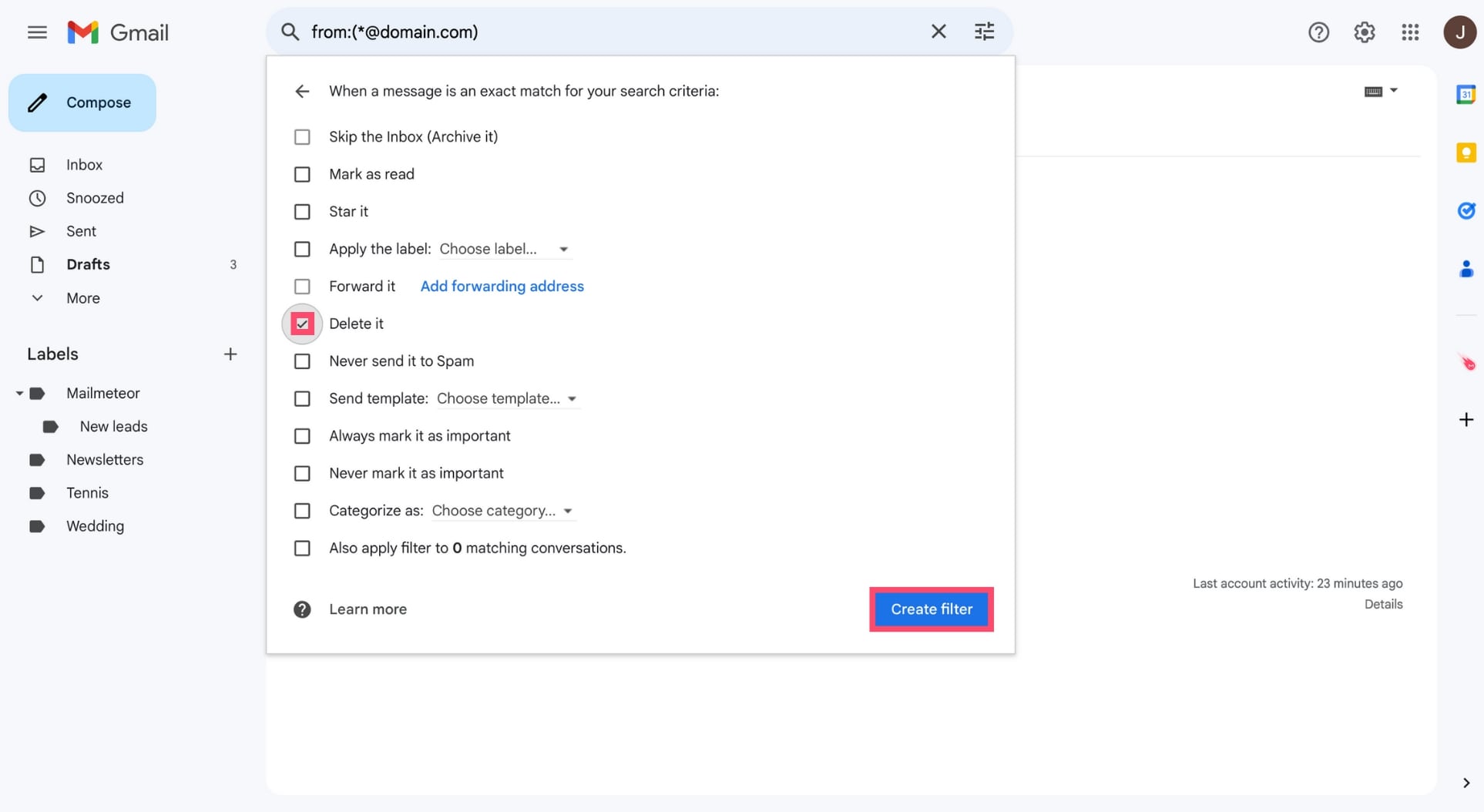
And you’re done. From this point on, Gmail will automatically delete any emails you receive from that company. Your inbox should be quieter now :)
Method #4: Try email unsubscribe services
But if you’ve ever been targeted by a spammer, you know that in most cases, they use multiple, random, disposable email addresses.
So it doesn’t matter if you unsubscribe from their email list, block their email address or filter out their domain name.
Because they’ll just create another account and start sending you messages from that email address.
In that case, or if the solutions listed above sound like too much work, you may want to try using an email unsubscribe service.
There are dozens of services like these out there. Among the most popular email unsubscribe services:
- Unroll.me – Great for quickly mass unsubscribing from multiple newsletters at once.
- Clean Email – Focuses more on inbox organization and bulk cleanup.
- SaneBox – Prioritizes filtering and smart inbox management.
- Leave Me Alone – Simple interface focused on privacy.
Each tool has a different approach depending on whether you want mass unsubscribe, automation, or inbox decluttering.
And many more. These services can do things for you, such as emailing a request to the sender to remove you from their mailing list.
They can also utilize the unsubscribe link or button (if there is one) in the emails you receive to save you some time.
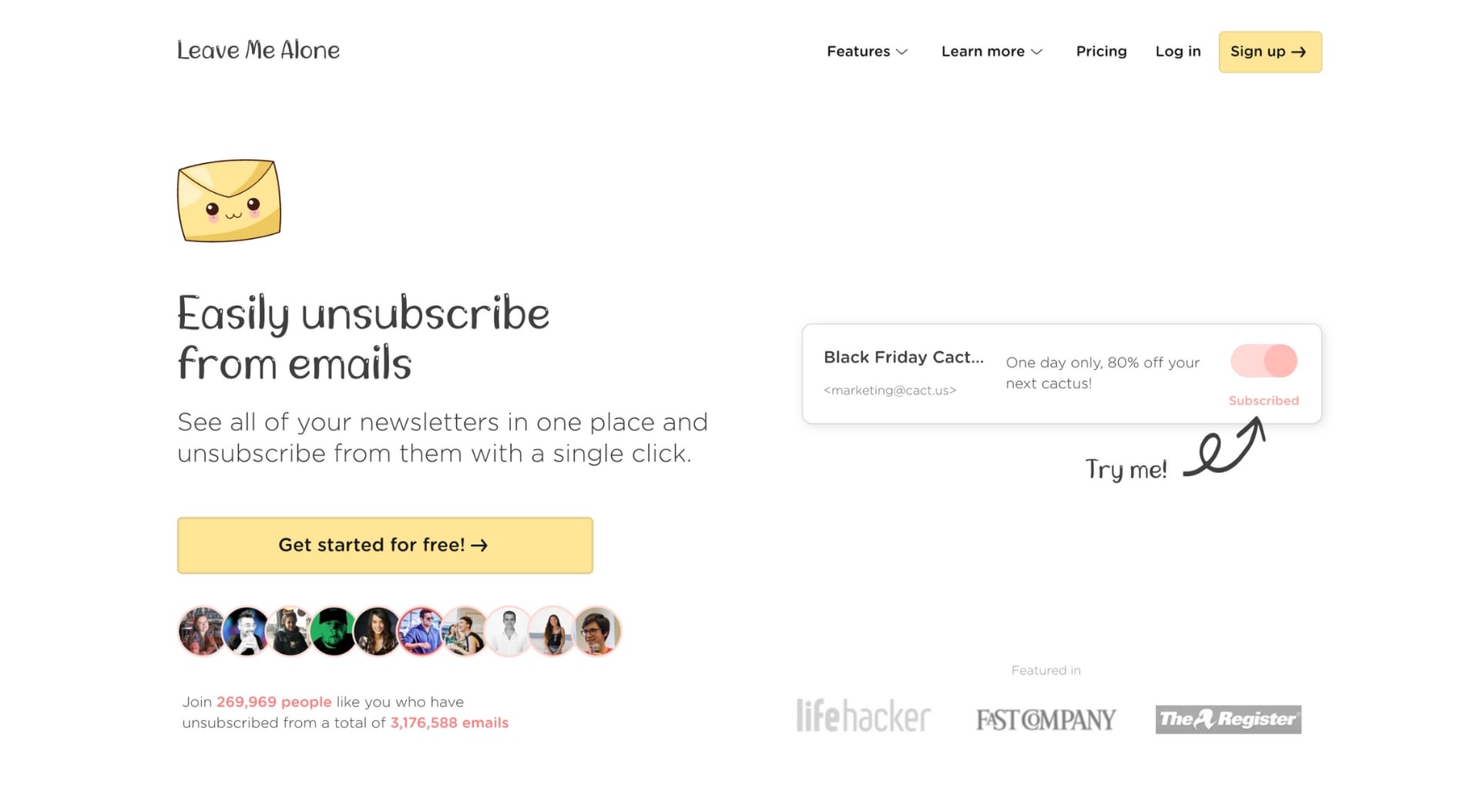
Alternatively, you can ask unsubscribe services to create inbox rules and send your unwanted messages to a specific folder or mass delete them.
Last but not least, these services can have their own private list of emailers that don’t honor unsubscribe requests and block them.
Why am I receiving so many bulk emails?
You may receive bulk emails because:
- You signed up for newsletters or promotional offers
- You made online purchases
- You downloaded gated content
- You entered giveaways or contests
- Your email address was shared with marketing partners
- Your address was scraped or added to unsolicited mailing lists
In many cases, you technically opted in — even if you don’t remember doing so. Over time, these subscriptions accumulate and result in email overload.
Frequently Asked Questions
Why am I subscribed to random emails?
If you’re receiving hundreds of random emails all of a sudden, your email is probably being attacked.
This technique is called email bombing. In essence, your email is signed up for multiple bulk emails without your consent.
The goal may be to extort money from you, prevent you from working normally, or distract you from another attack in progress.
But things don’t always go that bad. If you’re only receiving a few random emails here and there, there could be other explanations.
Maybe a company added you to their mailing list without your consent. Or maybe someone is using your address to access gated content without revealing their own email address.
How do I unsubscribe from bulk emails permanently?
To permanently unsubscribe from bulk emails:
- Use the official unsubscribe link.
- Use your email provider’s built-in unsubscribe feature.
- Block senders who ignore requests.
- Create filters to automatically delete emails from specific domains.
- Use an unsubscribe service for mass clean-up.
Keep in mind that some marketing emails may still slip through if companies use multiple sending addresses.
Are bulk emails the same as spam?
Not always. Bulk emails are legitimate marketing messages sent to many recipients at once. Spam emails, on the other hand, are unsolicited or malicious messages sent without proper consent. While all spam emails are bulk emails, not all bulk emails are spam.
Is it better to block or unsubscribe unwanted emails?
Blocking a sender will harm their deliverability and email reputation. So this shouldn’t be your first resort.
The proper way to opt out from unwanted email is to use the unsubscribe link or button if there is one.
However, if there is no easy way to unsubscribe from an email, or if the sender keeps messaging you long after you’ve unsubscribed, feel free to block them.
Can I mass unsubscribe from emails?
Most email platforms don’t have a built-in feature that lets you unsubscribe from multiple lists at once. So you have to unsubscribe from each email manually. But you can use third-party tools, such as Unroll.me to mass unsubscribe from emails.
Should you click unsubscribe on spam emails?
Be careful when unsubscribing from suspicious bulk emails. If the sender looks unfamiliar or the message seems malicious, clicking Unsubscribe may confirm that your email address is active — which can lead to more spam.
In that case, it’s safer to:
- Mark the email as Spam
- Block the sender
- Avoid clicking unknown links
How long does it take to stop receiving emails after unsubscribing?
Legitimate senders typically have up to 10 business days to honor unsubscribe requests. If you still receive emails after that, the sender may be ignoring your opt-out request. In that case, the fastest fix is to block the sender or create a filter to automatically delete or archive future emails.