Want to 10x your email productivity? In this quick guide, we’ll help you master the Gmail keyboard shortcuts. So that you can achieve more. In less time.
Email is a powerful tool to share ideas, generate revenues, and communicate with your friends and colleagues. But there’s a downside. Managing your emails takes A LOT of time. On average, employees spend 28% of their work time on email, according to research.
The good news is that, thanks to the Gmail keyboard shortcuts, you can easily improve your email productivity. If each shortcut you learn saves you 2 or 3 seconds per action, you’ll end up finishing your work day 10 to 15 minutes earlier than usual. And you’ll have no problem keeping your inbox clean and well-organized.
Here’s what we’ll cover:
- What are keyboard shortcuts in Gmail?
- How to turn on Gmail keyboard shortcuts
- The 50 best Gmail keyboard shortcuts
- How to customize your keyboard shortcuts
- How to find all the Gmail keyboard shortcuts
- Gmail shortcuts cheat sheet
Sounds good? Then let’s dive in.
What Are Keyboard Shortcuts in Gmail?
Let’s start with the basics. A keyboard shortcut is a key — or a combination of keys — that you can use to perform a specific action without using your mouse.
Keyboard shortcuts are a great way to improve your productivity, whether you’re working on a PC or a Mac.
You can, for example, select all the text on a page with your mouse. But it’s much quicker to press Ctrl+A (Windows) or ⌘+A (Mac).
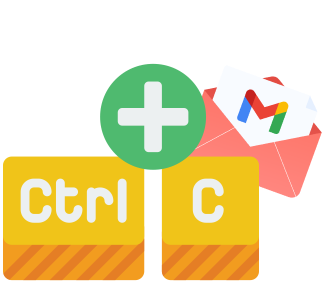
Similarly, you can right-click on a highlighted word to copy it. But using a keyboard shortcut such as Ctrl + C (Windows) or ⌘ + C (Mac) will save you a lot of time.
As one of the most popular email service providers (ESPs) in the world, Gmail comes with a wide range of built-in shortcuts designed to help you manage your inbox more efficiently. So make sure to give them a try :)
How to Turn on Gmail Keyboard Shortcuts
Before we can show you our favorite combinations, you’ll need to turn on the keyboard shortcuts in Gmail. Here’s how to do it ⤵️
- Sign in to your Gmail account.
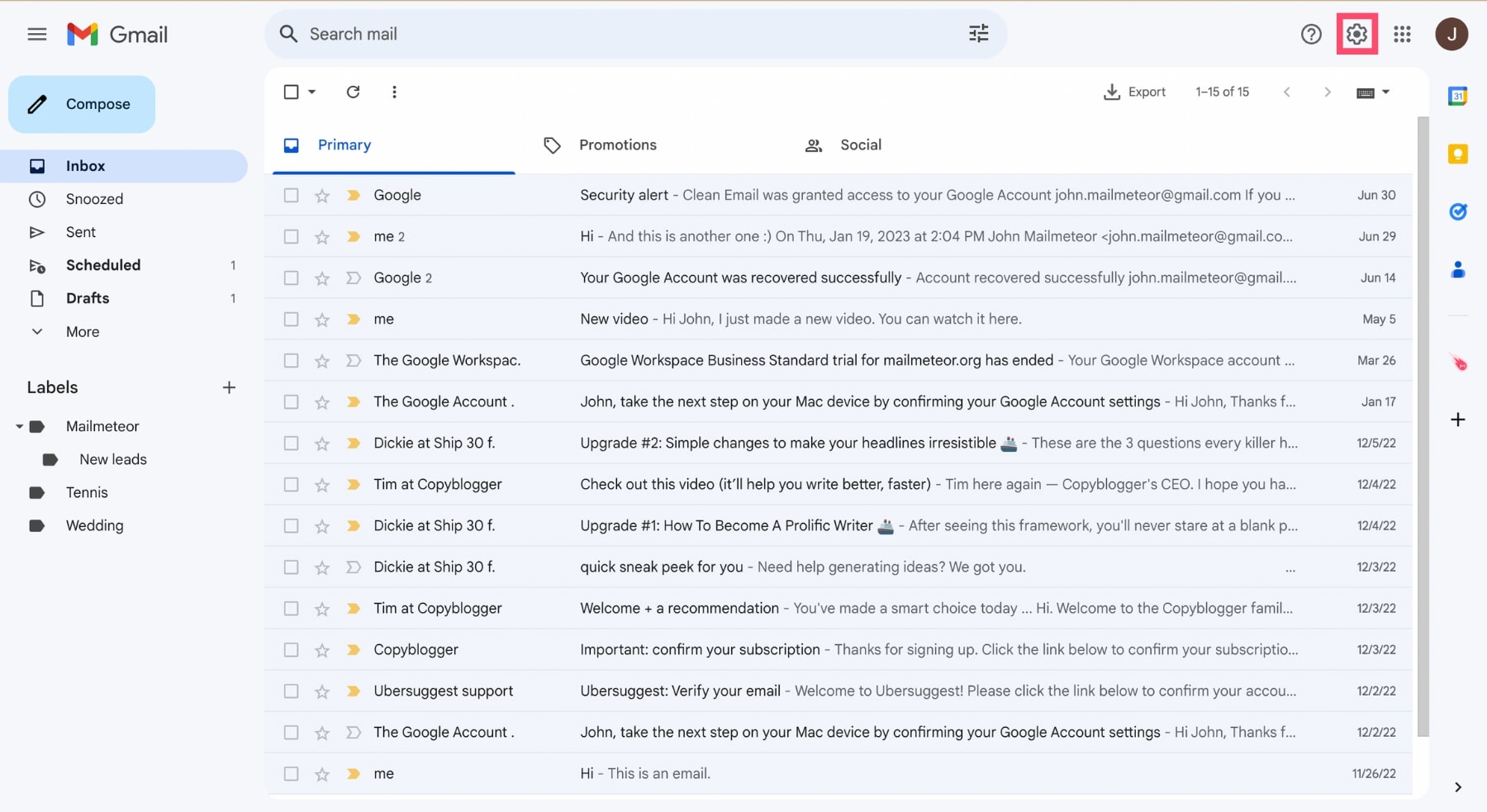
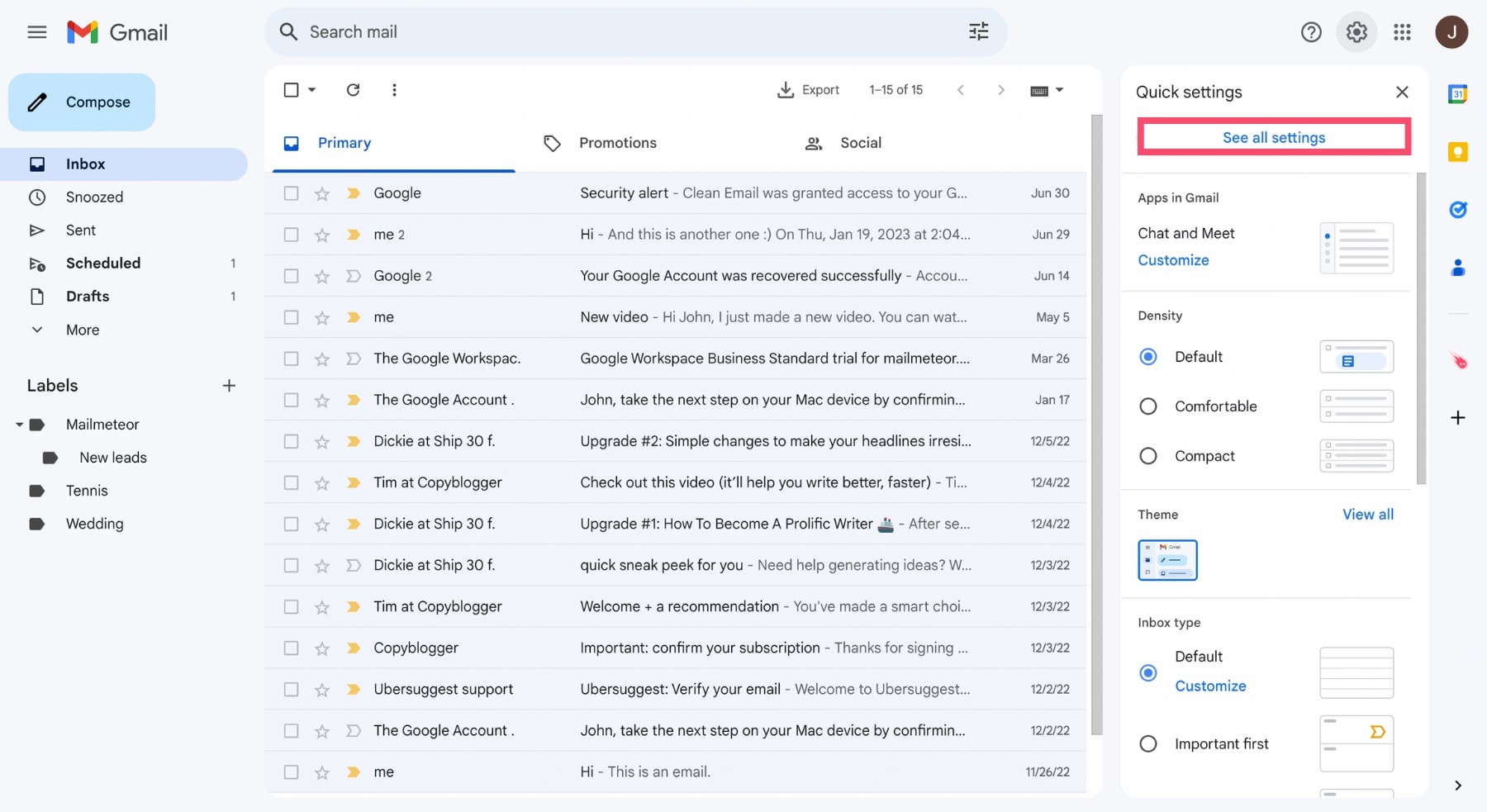
- Open the Gmail settings and click See all Settings.
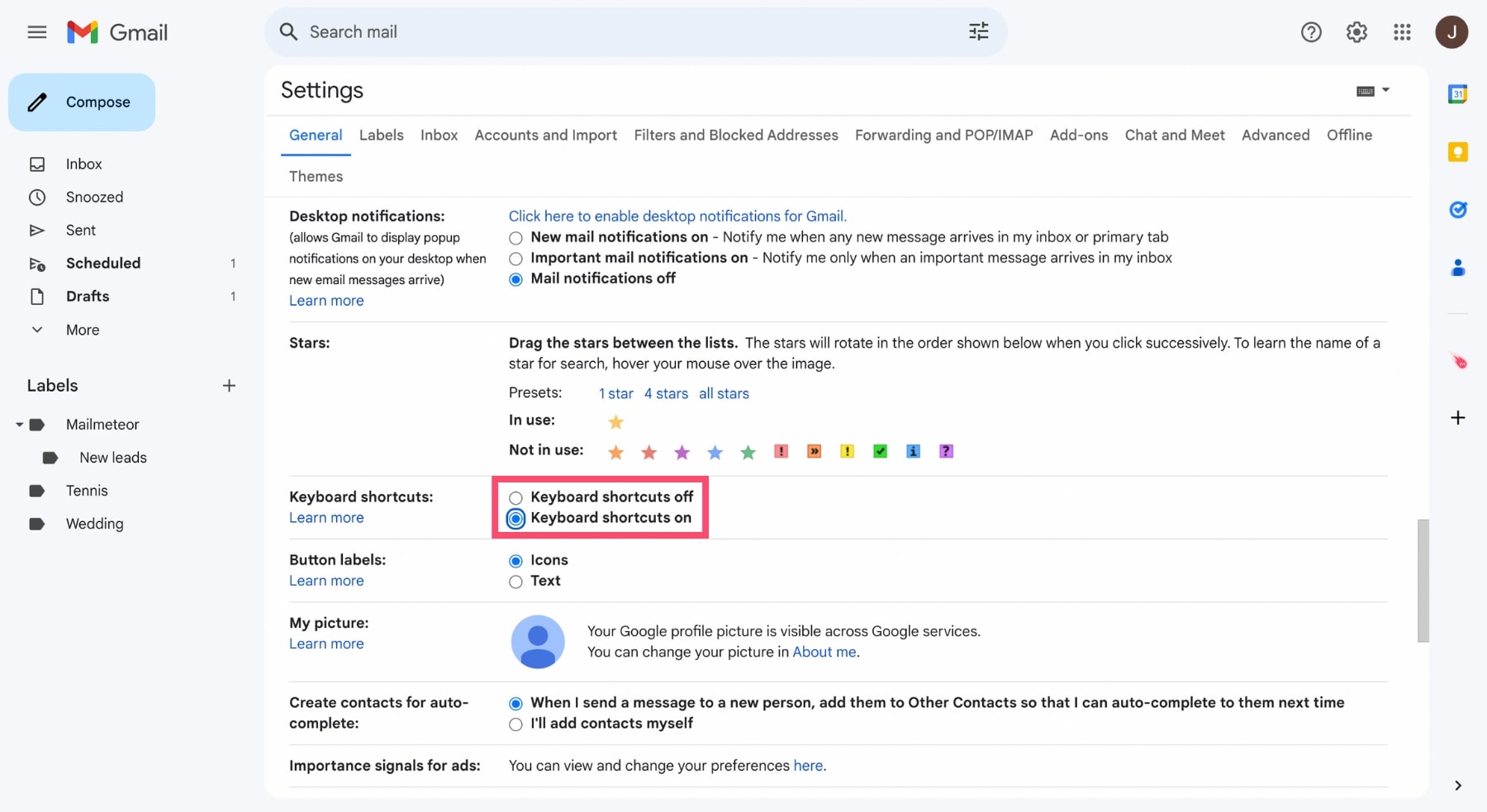
- Scroll down until you reach the Keyboard shortcuts section and select Keyboard shortcuts on.
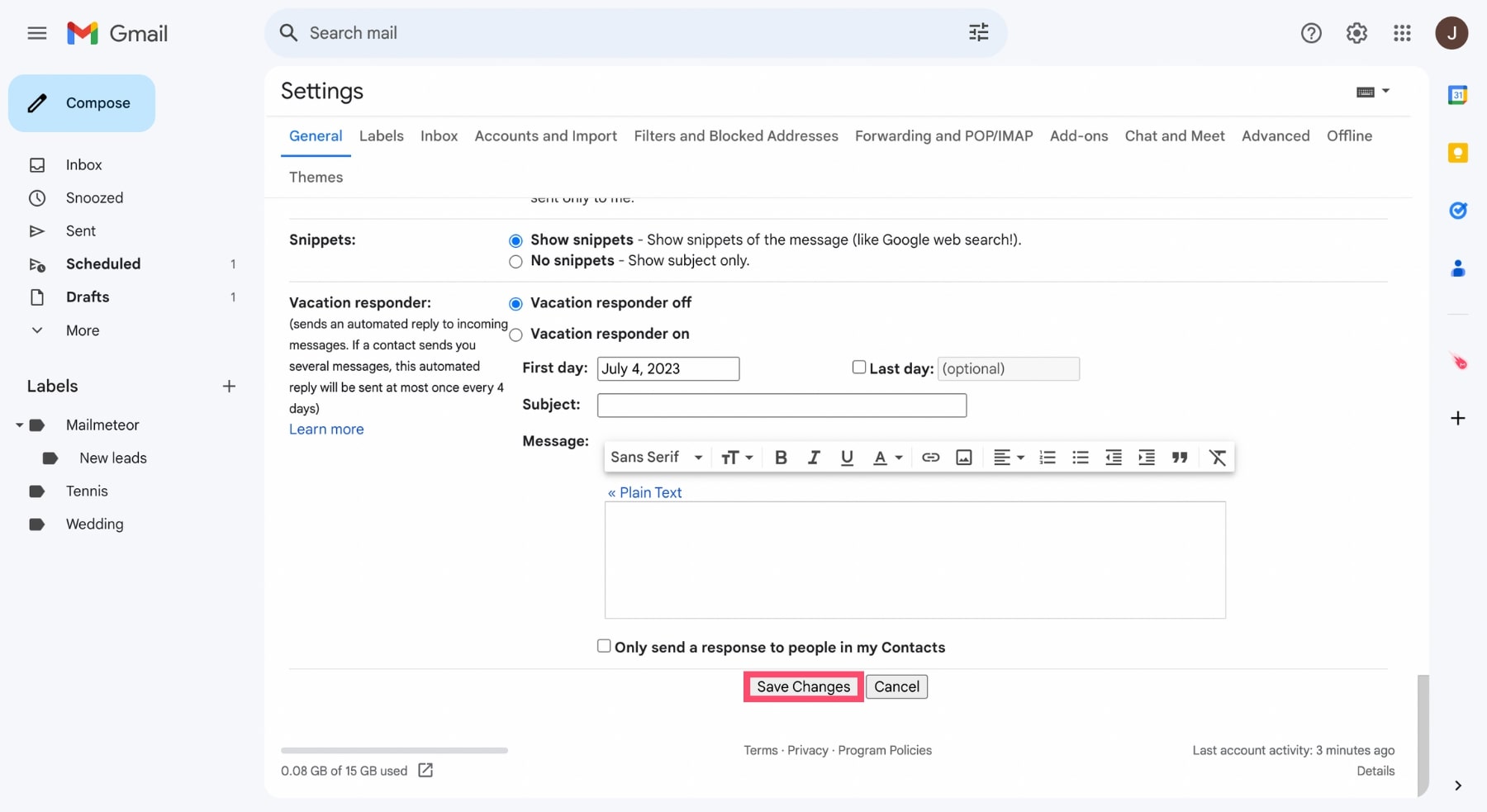
- At the bottom of the page, click Save Changes.
And voilà. Keyboard shortcuts are now enabled on your Gmail account. But there are dozens of them, and learning all of them might take a while — so let’s focus on the ones actually worth knowing.
The 50 Best Gmail Keyboard Shortcuts
We’ve grouped every shortcut by what you’re actually trying to do, so you can jump straight to the category you need.
Compose, Reply & Send
Compose — C: Opens a new compose window, twice as fast as clicking the button.
Reply — R: Replies to the sender of the email you’re currently viewing.
Reply all — Shift + R: Starts a response and automatically adds everyone from the original email to the “To” field.
Forward — F: Opens the forwarding screen so you can send the email to a new recipient.
Send — Ctrl + Enter (Windows) or ⌘ + Enter (Mac): Sends your email without touching the mouse.
Discard draft — Ctrl + Shift + D (Windows) or ⌘ + Shift + D (Mac): Deletes the message you’re currently composing.
Managing Your Inbox
Archive — E: Removes the selected email from your inbox without deleting it — you can still find it in “All Mail”.
Delete — #: Moves the selected email to Trash, where it stays for 30 days.
Report as spam — !: Flags a phishing attempt or unwanted email as spam.
Mute conversation — M: Archives any future replies to a thread automatically, so it stops cluttering your inbox without you missing it entirely in “All Mail.”
Mark as read — Shift + I: Marks selected emails as read.
Mark as unread — Shift + U: Marks selected emails as unread so they stand out in bold again.
Mark as important — +: Flags an email as important, adding it to Gmail’s importance markers.
Mark as not important — -: Removes the importance marker from a selected email.
Snooze — B: Temporarily removes an email from your inbox and brings it back at a time you choose.
Undo last action — Z: Reverses your last action — unsend, undelete, or unarchive a message.
Formatting Your Email
Add Cc recipients — Ctrl + Shift + C (Windows) or ⌘ + Shift + C (Mac): Adds a Cc field for people you want to keep in the loop.
Add Bcc recipients — Ctrl + Shift + B (Windows) or ⌘ + Shift + B (Mac): Adds a blind copy field — recipients won’t see each other’s addresses.
Insert a link — Ctrl + K (Windows) or ⌘ + K (Mac): Opens the “Edit Link” widget on your selected text.
Bold — Ctrl + B (Windows) or ⌘ + B (Mac): Bolds the selected text.
Italics — Ctrl + I (Windows) or ⌘ + I (Mac): Italicizes the selected text.
Underline — Ctrl + U (Windows) or ⌘ + U (Mac): Underlines the selected text.
Numbered list — Ctrl + Shift + 7 (Windows) or ⌘ + Shift + 7 (Mac): Converts your text into a numbered list.
Bulleted list — Ctrl + Shift + 8 (Windows) or ⌘ + Shift + 8 (Mac): Converts your text into a bulleted list.
Align left — Ctrl + Shift + L (Windows) or ⌘ + Shift + L (Mac): Left-aligns the selected text.
Align center — Ctrl + Shift + E (Windows) or ⌘ + Shift + E (Mac): Center-aligns the selected text.
Align right — Ctrl + Shift + R (Windows) or ⌘ + Shift + R (Mac): Right-aligns the selected text.
Remove formatting — Ctrl + \ (Windows) or ⌘ + \ (Mac): Strips all formatting from the selected text.
Decrease text size — Ctrl + Shift + - (Windows) or ⌘ + Shift + - (Mac): Shrinks the font size of selected text.
Increase text size — Ctrl + Shift + + (Windows) or ⌘ + Shift + + (Mac): Enlarges the font size of selected text.
Selecting & Reading Conversations
Select conversation — X: Selects a conversation so you can archive, delete, or move it.
Select all conversations — * then A: Selects every conversation on your current screen — great for bulk actions.
Deselect all conversations — * then N: Clears your current selection.
Select read conversations — * then R: Selects every conversation already marked as read.
Select unread conversations — * then U: Selects every unread conversation — pair it with “Mark as read” to clear clutter fast.
Open conversation — O or Enter: Opens the selected conversation and marks it as read.
Back to threadlist — U: Returns to the inbox list from an open conversation, faster than clicking the back button.
Newer conversation — K: Moves the selection up to a newer email in the list.
Older conversation — J: Moves the selection down to an older email in the list.
Expand entire conversation — ;: Expands every message within an open conversation thread.
Collapse entire conversation — :: Collapses every message within an open conversation thread.
Organizing with Labels & Folders
Open “Move to” menu — V: Opens a menu to move a conversation to an existing label or a new one.
Open “Label as” menu — L: Applies a label to the selected conversation without moving it out of the inbox.
Remove label — Y: Removes the current label from a selected conversation.
Jumping to a Specific View
Go to Inbox — G then I: Jumps straight back to your inbox from anywhere in Gmail.
Go to Sent messages — G then T: Opens your “Sent” folder.
Go to Drafts — G then D: Opens your “Drafts” folder.
Search mail — /: Jumps to the search bar so you can start typing your query immediately.
Open “more actions” menu — .: Opens the menu to mute, mark unread, or take other actions on an open email.
Open shortcut help — Shift + ?: Opens the full shortcut reference panel inside Gmail — more on this below.
How to Customize Your Keyboard Shortcuts in Gmail
Want more control over your Gmail keyboard shortcuts? Google gives you the possibility to change an existing shortcut. Here’s how to do it ⤵️
- Open Gmail and go to Settings > See all Settings.
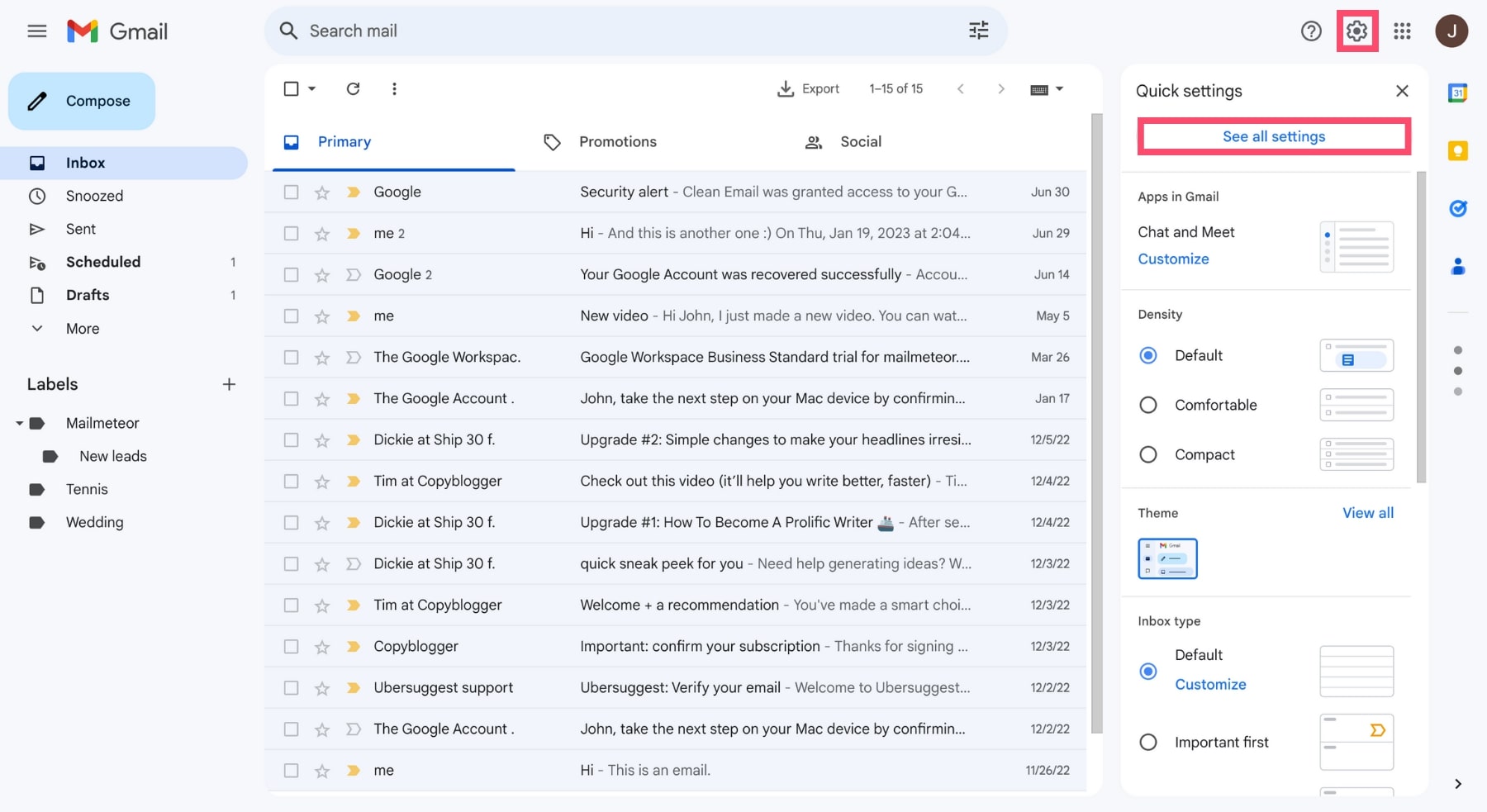
- Head over to the Advanced tab.
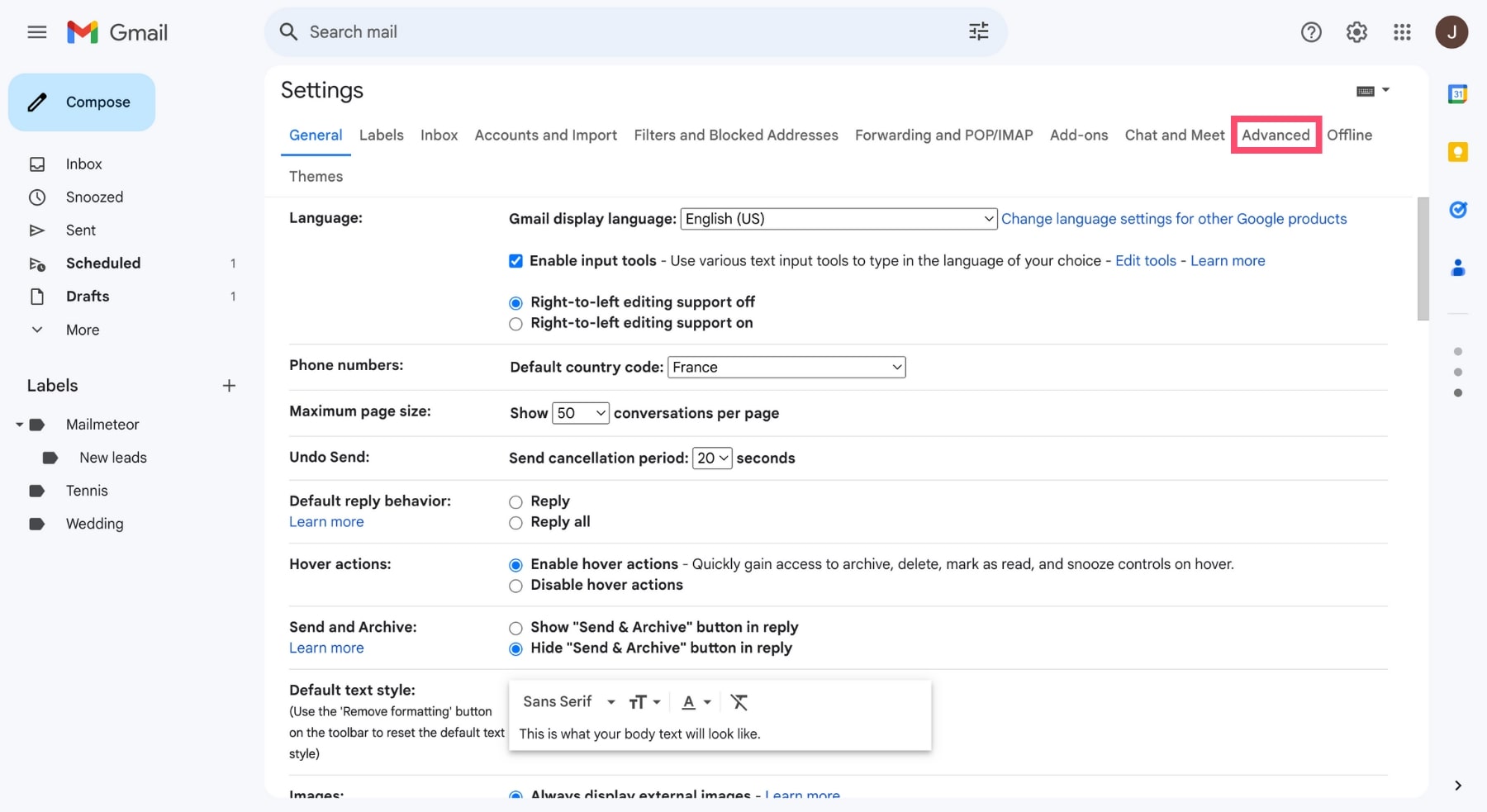
- Next to Custom keyboard shortcuts click Enable.
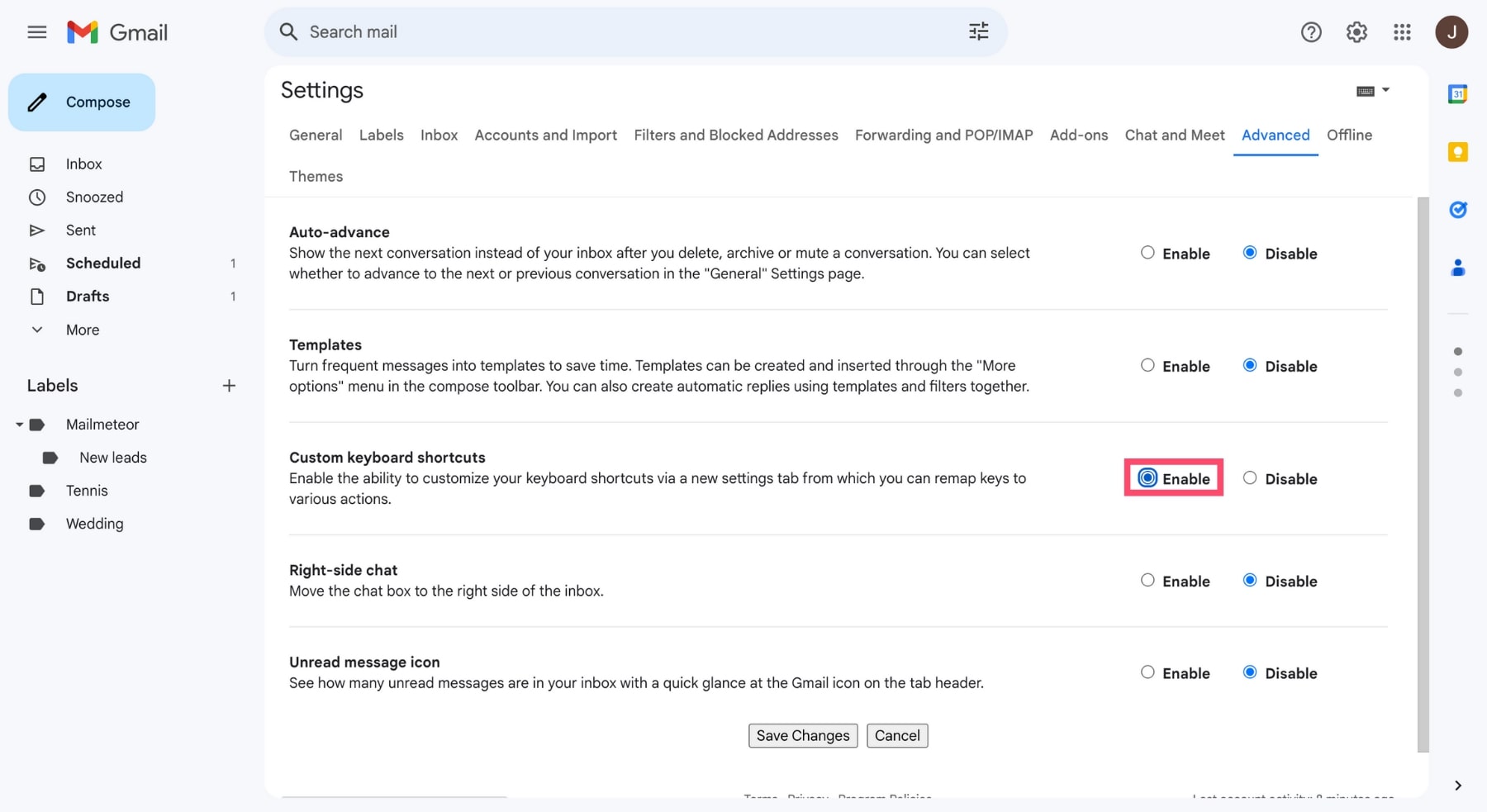
- Click Save changes.
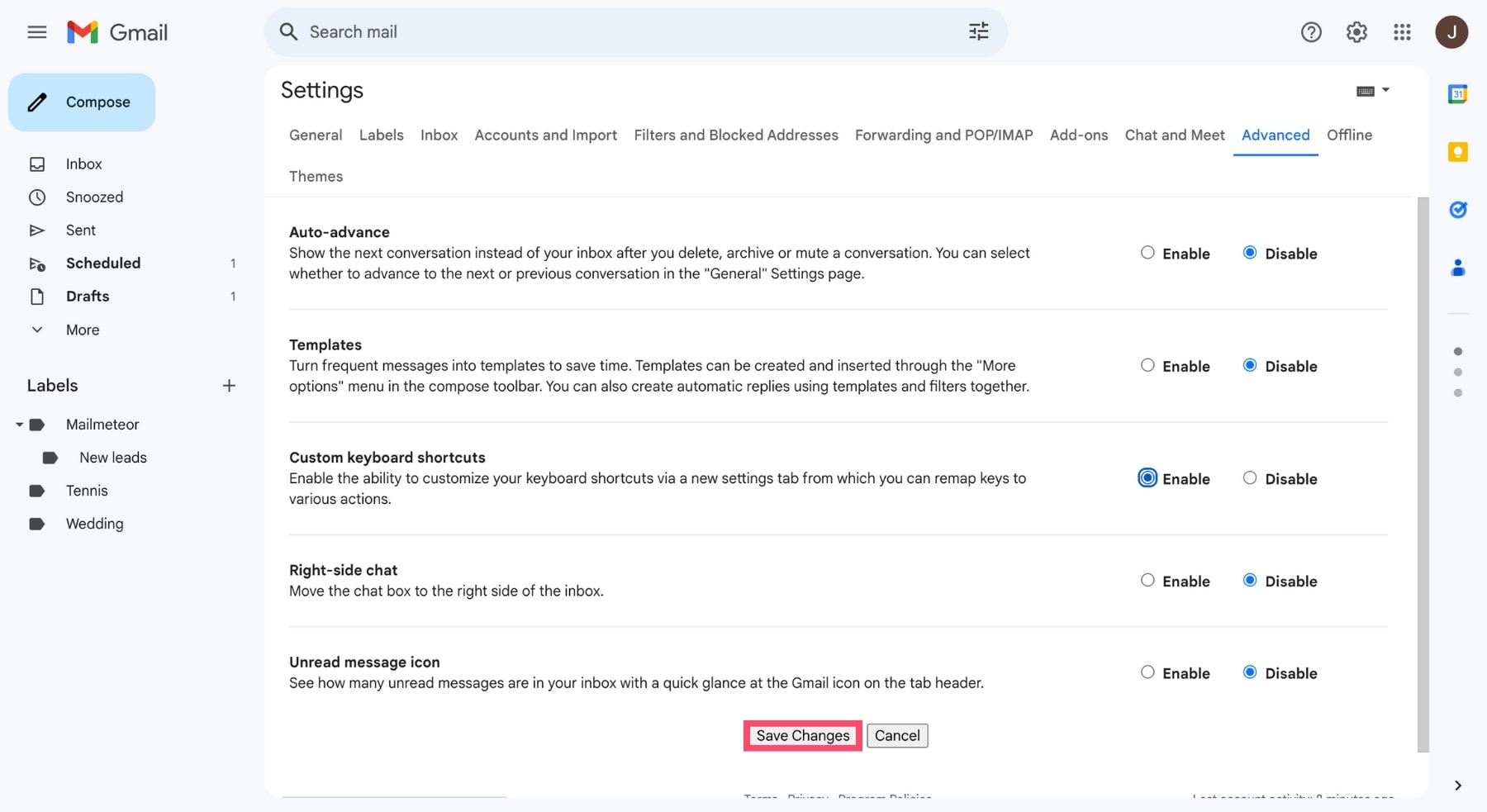
- Go back to Gmail settings — you’ll now see a new Keyboard shortcuts tab. Click on it.
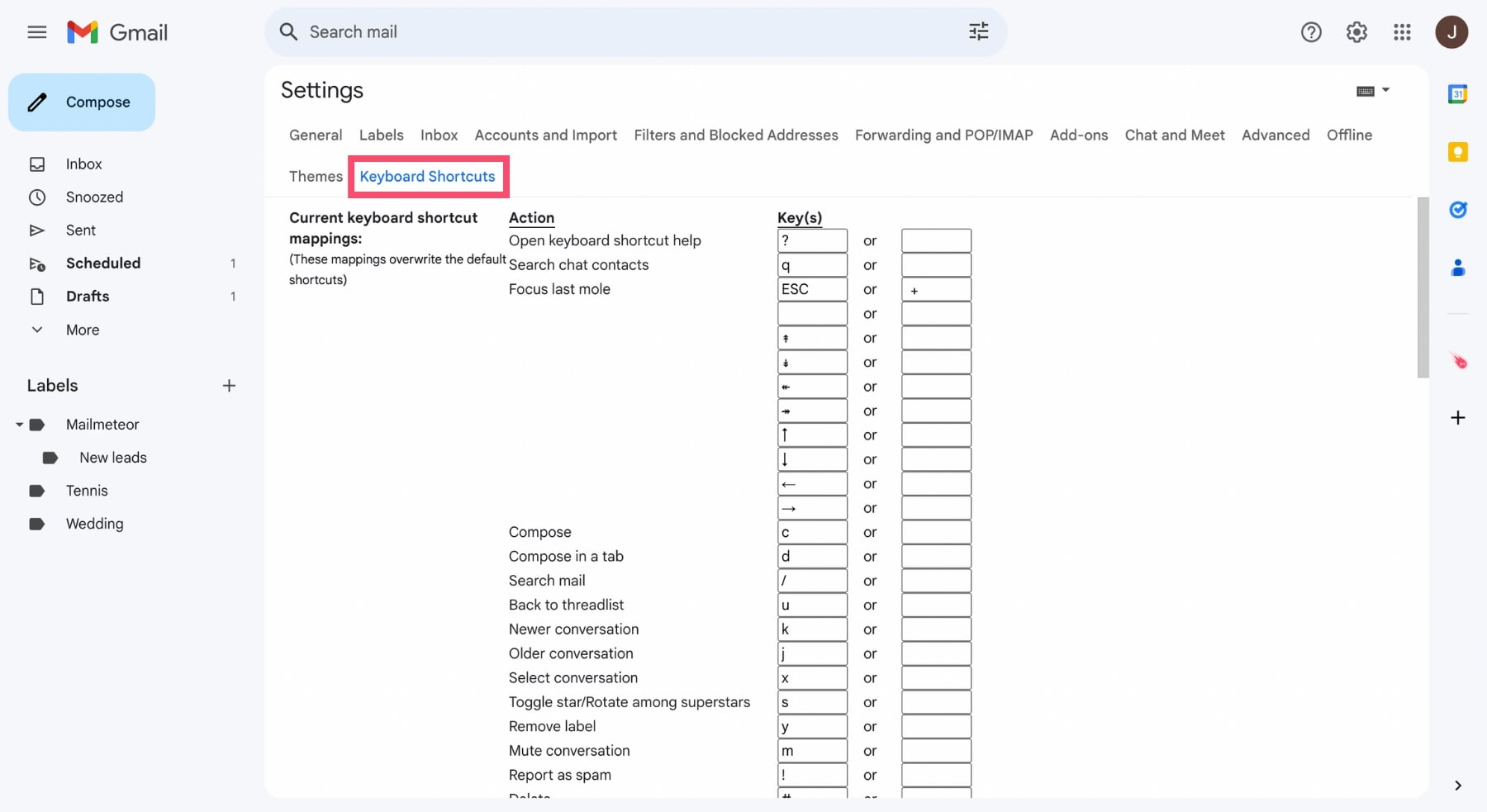
- Input your desired shortcut next to each action, then click Save Changes.
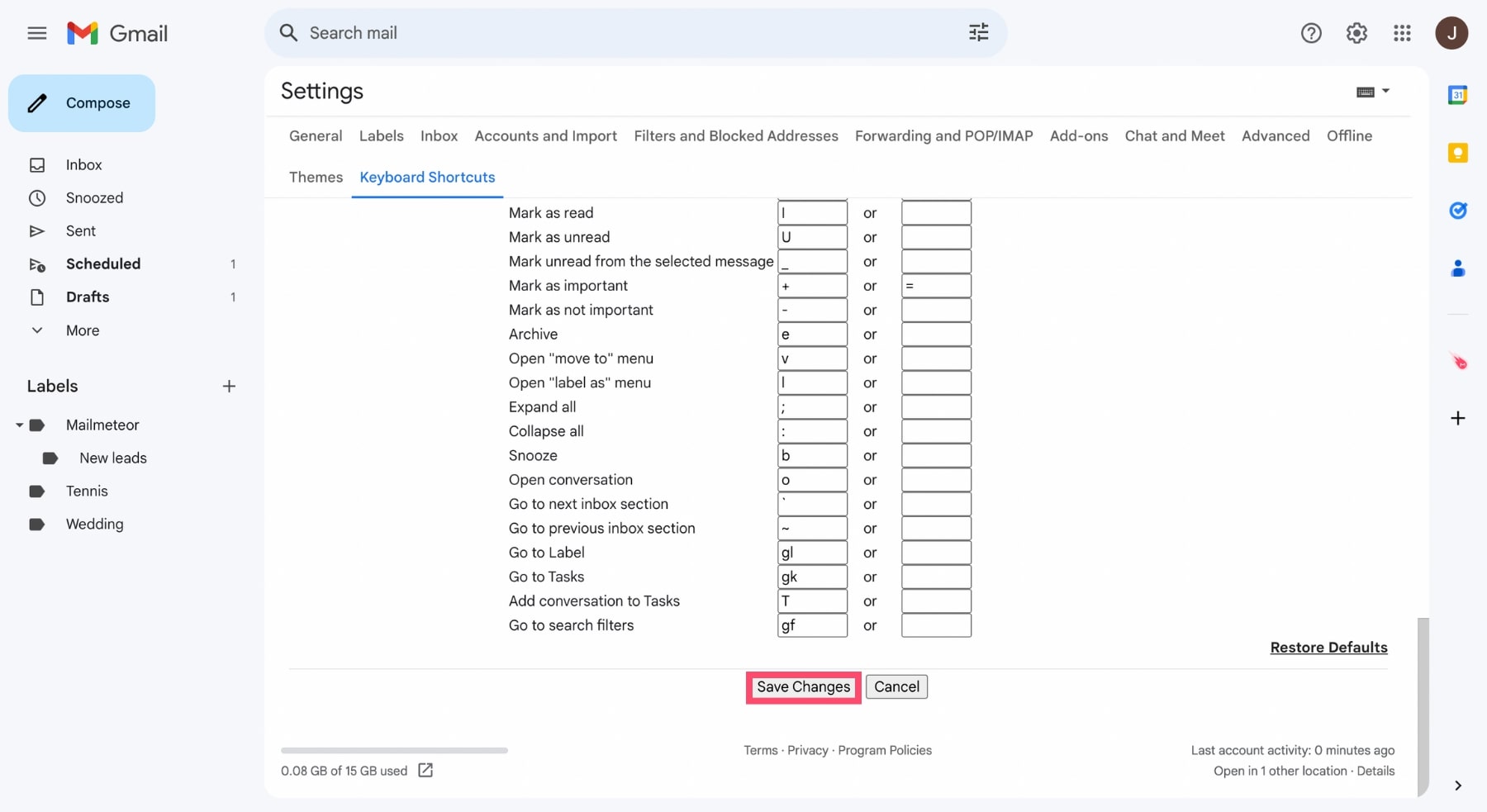
And voilà. Just keep in mind that you can’t bind the same key(s) to multiple actions.
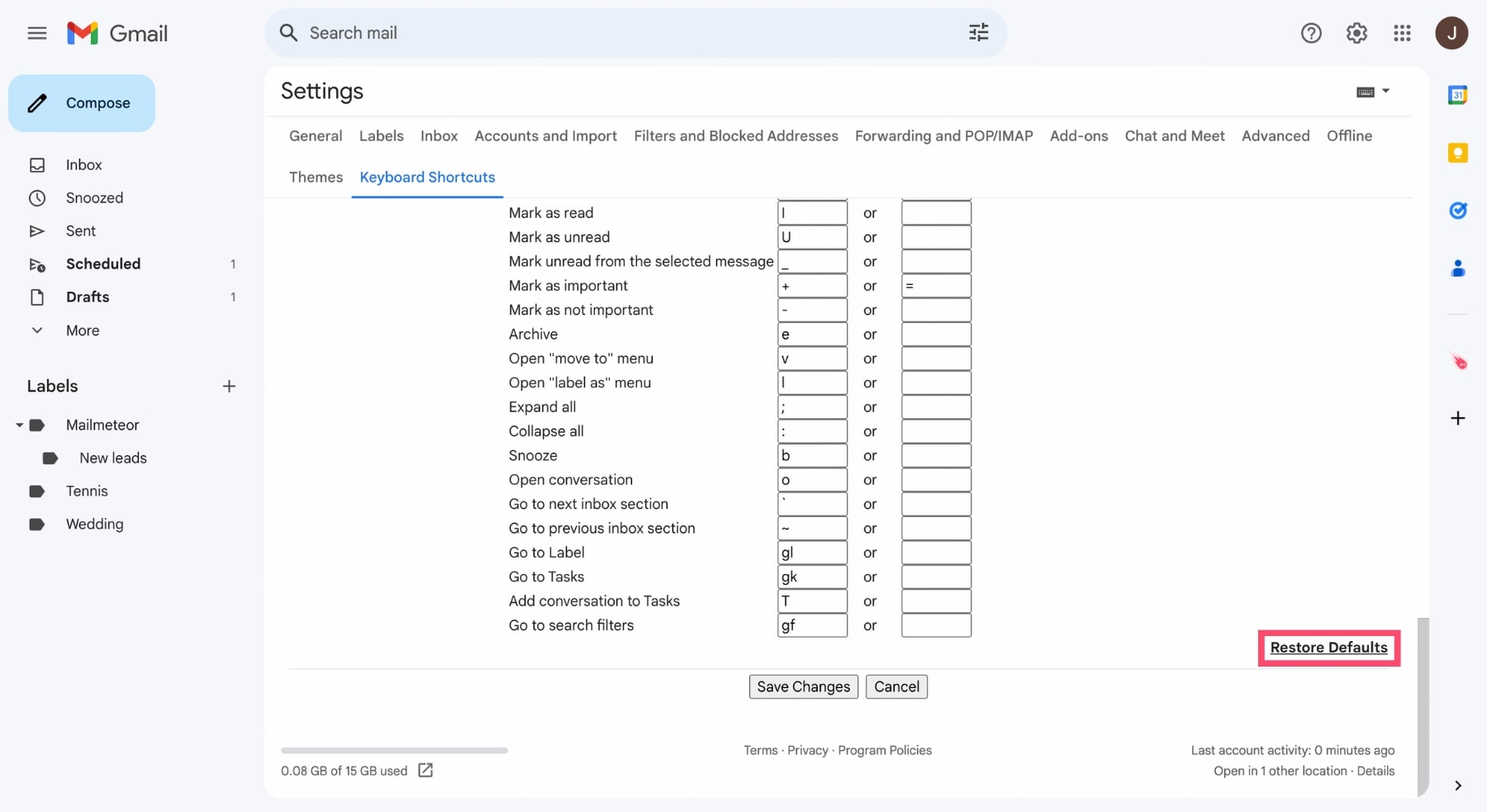
Made a mistake? No need to worry. You can reverse the changes you’ve just made by clicking Restore Defaults.
How to Find All the Gmail Keyboard Shortcuts
To view every Gmail keyboard shortcut, you’ll need… yup, you guessed it. Another shortcut.
Try pressing Shift + ? once you’ve turned on keyboard shortcuts in Gmail. A new window should appear.
Here’s what it looks like ⤵️
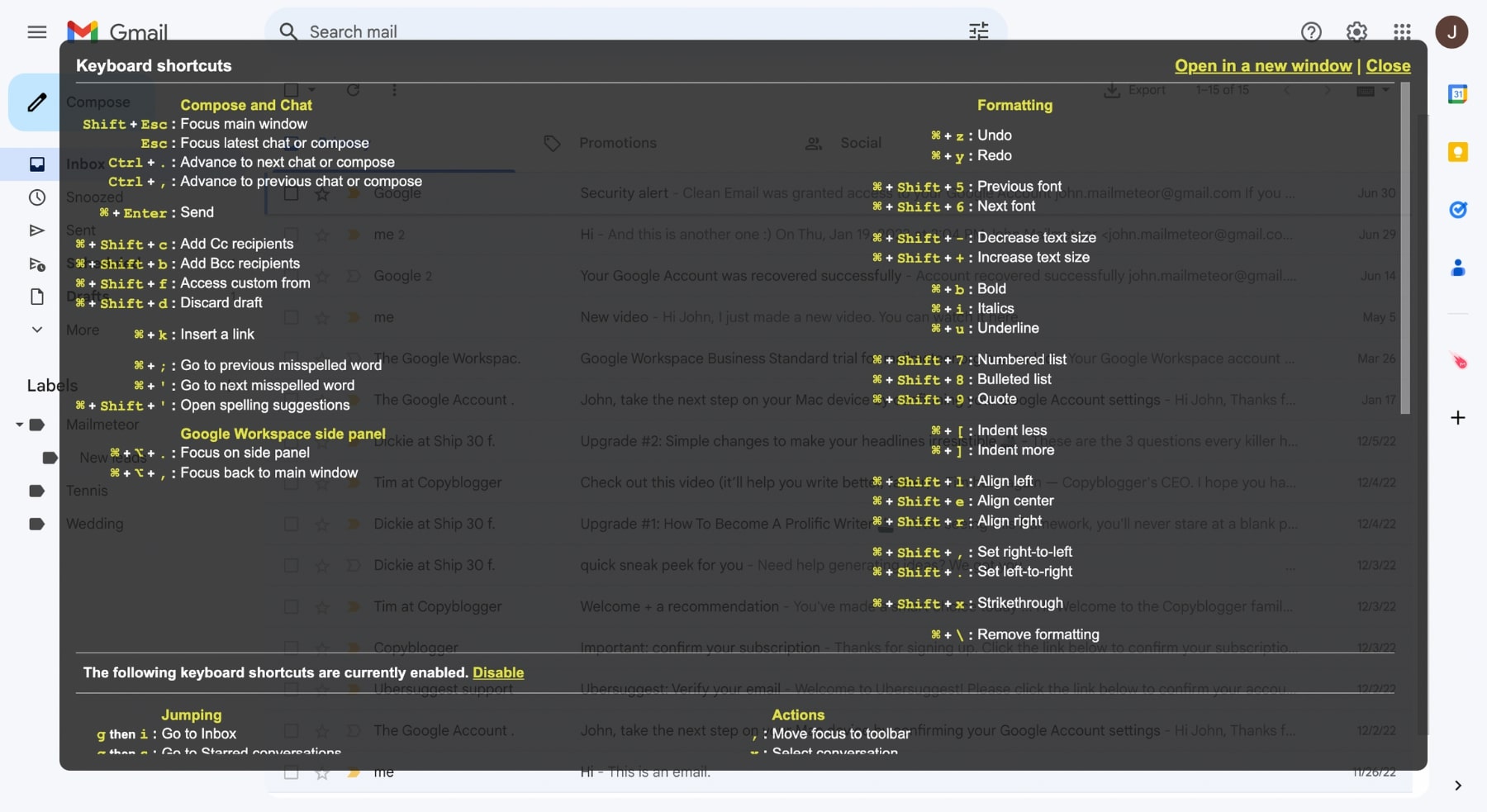
From there, you can see all the Gmail keyboard shortcuts and enable or disable specific groups of them.
Gmail Shortcuts Cheat Sheet
Alright, time to wrap it all up. We’ve prepared a cheat sheet to help you remember the most useful Gmail shortcuts.
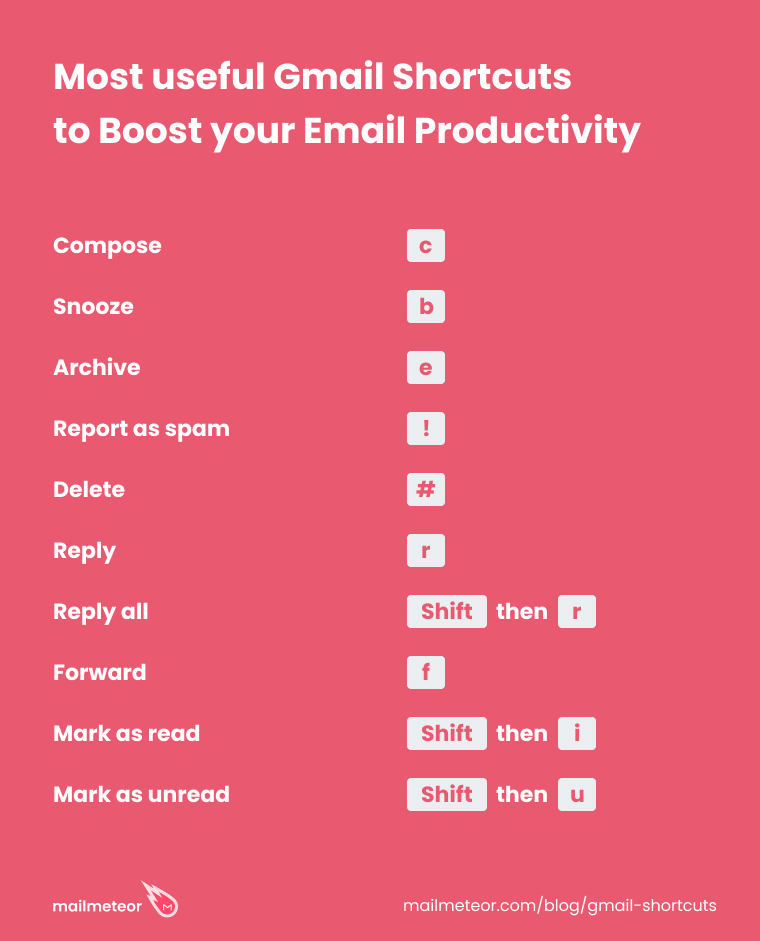
And if you’re looking for the full list, you can find it here ⤵️
| Gmail Keyboard Shortcut | On Windows | On Mac |
|---|---|---|
| Select conversation | x | x |
| Remove label | y | y |
| Archive | e | e |
| Report as spam | ! | ! |
| Delete | # | # |
| Mute conversation | m | m |
| Reply | r | r |
| Reply all | Shift + r | Shift + r |
| Forward | f | f |
| Undo last action | z | z |
| Mark as read | Shift + i | Shift + i |
| Mark as unread | Shift + u | Shift + u |
| Mark as important | + | + |
| Mark as not important | - | - |
| Expand entire conversation | ; | ; |
| Collapse entire conversation | : | : |
| Snooze | b | b |
| Send | Ctrl + Enter | ⌘ + Enter |
| Add Cc recipients | Ctrl + Shift + c | ⌘ + Shift + c |
| Add Bcc recipients | Ctrl + Shift + b | ⌘ + Shift + b |
| Discard draft | Ctrl + Shift + d | ⌘ + Shift + d |
| Insert a link | Ctrl + k | ⌘ + k |
| Decrease text size | Ctrl + Shift + - | ⌘ + Shift + - |
| Increase text size | Ctrl + Shift + + | ⌘ + Shift + + |
| Bold | Ctrl + b | ⌘ + b |
| Italics | Ctrl + i | ⌘ + i |
| Underline | Ctrl + u | ⌘ + u |
| Numbered list | Ctrl + Shift + 7 | ⌘ + Shift + 7 |
| Bulleted list | Ctrl + Shift + 8 | ⌘ + Shift + 8 |
| Align left | Ctrl + Shift + l | ⌘ + Shift + l |
| Align center | Ctrl + Shift + e | ⌘ + Shift + e |
| Align right | Ctrl + Shift + r | ⌘ + Shift + r |
| Remove formatting | Ctrl + \ | ⌘ + \ |
| Go to Inbox | g + i | g + i |
| Go to Sent messages | g + t | g + t |
| Go to Drafts | g + d | g + d |
| Search mail | / | / |
| Open Gmail keyboard shortcut help | ? | ? |
| Compose | c | c |
| Open “more actions” menu | . | . |
| Open “move to” menu | v | v |
| Open “label as” menu | l | l |
| Select all conversations | * + a | * + a |
| Deselect all conversations | * + n | * + n |
| Select read conversations | * + r | * + r |
| Select unread conversations | * + u | * + u |
| Open conversation | o | o |
| Back to threadlist | u | u |
| Newer conversation | k | k |
| Older conversation | j | j |
Use these Gmail keyboard shortcuts to achieve more. In less time. And watch your email productivity explode.
Ready to Save Even More Time in Gmail?
Shortcuts get you through your inbox faster — but if you’re still writing the same email over and over, or sending mass outreach through BCC, that’s where Mailmeteor comes in. Its Gmail extension has its own shortcut too:
✍️ Insert reusable templates with a keyboard shortcut, no digging through menus
📂 Sort your inbox automatically with AI-powered email categorization
🤖 Draft replies with AI so you’re editing a response instead of writing one from scratch
📬 Send personalized campaigns at scale with mail merge, straight from Gmail
🔁 Never miss a reply with automatic follow-ups
📊 Track opens to see exactly when your messages get read
Try Mailmeteor for Gmail today (it’s free!)
FAQs
How do I turn on keyboard shortcuts in Gmail?
Go to Settings > See all settings > General tab, scroll to Keyboard shortcuts and select Keyboard shortcuts on. Click Save Changes at the bottom of the page.
How do I create a custom Gmail shortcut?
Enable Custom keyboard shortcuts under Settings > Advanced save changes, then go to the new Keyboard Shortcuts tab in Settings to assign your own key to any action. You can’t bind the same key to two different actions.
What are the most important shortcut keys to learn first?
Start with the six that cover most of a normal workday: C (compose), R (reply), E (archive), # (delete), Z (undo), and Shift + ? (see the full shortcut list). Once those are automatic, layer in the selection shortcuts (* then U, * then A) for bulk cleanup.
Do Gmail keyboard shortcuts work on mobile?
Not on iPhone — Google doesn’t support them there at all. On Android and iPad, a limited set works, but only if you connect an external physical keyboard.
Do Gmail keyboard shortcuts work on Mac?
Yes. Every shortcut in this guide works on Mac — just swap Ctrl for ⌘ (Command). Single-key shortcuts like C, R, and E are identical on both platforms.