You need to send the same email to dozens, hundreds, or thousands of people. Maybe a product update for your customers, an invitation for your community, or a pitch for your prospects. Copying and pasting each message one by one isn’t an option. This would take ages. The good news? Gmail can handle mass sends.
You just need to pick the right method for your list size, and stay within Gmail’s daily sending limits. In this guide, we’ll show you three ways to send mass emails in Gmail — from the free BCC trick to fully personalized campaigns with follow-ups and tracking — plus how to send to large lists without getting blocked.
- BCC – add your recipients to the BCC field. Free and fast, but no personalization or tracking.
- Gmail's built-in mail merge – personalize emails with a Google Sheet, up to 1,500 recipients per day. Only available on some paid Google Workspace plans.
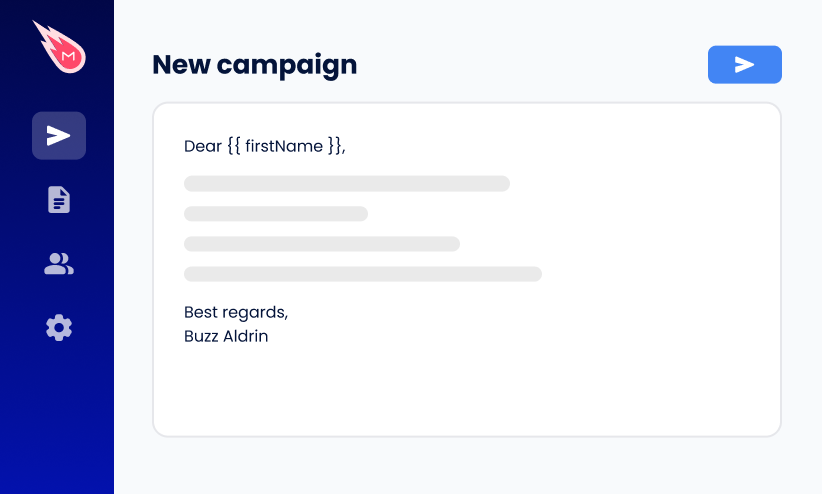
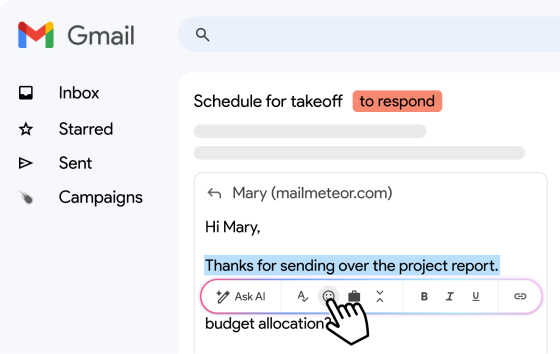
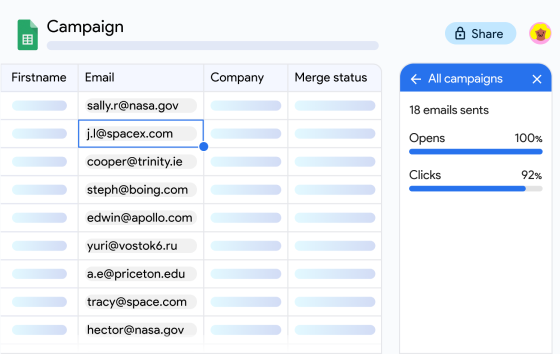
- Mailmeteor – send personalized mass emails from Google Sheets with any Gmail account, with follow-ups, tracking, and automatic scheduling across several days.
Here’s what we’ll cover:
- Gmail Sending Limits: How Many Emails Can You Send?
- Method 1: Send a Mass Email With BCC
- Method 2: Use Gmail’s Built-In Mail Merge
- Method 3: Send Personalized Mass Emails With Mailmeteor
- Which Method Should You Use?
- How to Send 10,000 Emails With Gmail
- How to Send Mass Emails Without Getting Blocked
Sounds good? Then let’s dive in.
Gmail Sending Limits: How Many Emails Can You Send?
Before you pick a method, check how much you can send. Gmail counts recipients, not messages: one email sent to 50 people counts as 50 toward your daily quota, whether they’re in the To, Cc, or Bcc field.
| Account type | Daily limit | Recipients per message |
|---|---|---|
| Free Gmail account | 500 recipients | 500 |
| Google Workspace (paid) | 2,000 messages | 2,000 (500 outside your organization) |
| Gmail’s built-in mail merge (Workspace) | 1,500 recipients | 1,500 |
If you go over your limit, Gmail blocks sending for up to 24 hours. Every method in this guide — including mail merge tools — sends through your Gmail account, so these limits always apply. Learn more in our guide to email sending limits.
Method 1: Send a Mass Email With BCC
The simplest way to send a mass email in Gmail is the BCC field. BCC stands for blind carbon copy: every recipient receives your email, but no one can see who else got it.
It’s free, it works with any Gmail account, and it’s perfect for a quick announcement to a small group.
How to Send a Mass Email in Gmail With BCC
- Click Compose in Gmail.
- Click Bcc on the right of the “To” field.
- Add your recipients’ email addresses in the Bcc field.
- Add your own address in the To field (optional, but it avoids an empty recipient line).
- Write your subject line and message.
- Click Send.
And that’s it. Each recipient gets your email without seeing the other addresses.
The Limits of the BCC Method
BCC works for the occasional group email, but it quickly shows its limits:
- No personalization: everyone gets the exact same message, without their name or any custom detail.
- No tracking: you can’t see who opened your email or clicked your links.
- Reply-all risk: if a recipient replies to all, the conversation can quickly get messy.
- Deliverability risk: a single email to hundreds of hidden recipients looks like bulk mail to spam filters.
- Manual work: adding recipients one by one takes time compared to sending from a spreadsheet.
If you want each recipient to get their own personalized email, use one of the next two methods.
Method 2: Use Gmail’s Built-In Mail Merge
Gmail has its own mail merge feature, which replaced the older “multi-send” mode. It sends a separate copy of your email to each recipient and lets you personalize it with their first name, last name, or any column from a Google Sheet.
There’s a catch: it’s only available on some paid Google Workspace plans, including Business Standard, Business Plus, Enterprise, Education Standard and Plus, and Workspace Individual. It isn’t available on free Gmail accounts or on the Business Starter plan.
How to Use Mail Merge in Gmail
- Click Compose in Gmail.
- Click the Use mail merge icon next to the “To” field.
- Add your recipients directly, or click Add from a spreadsheet to import them from Google Sheets.
- Write your email, typing @ to insert merge tags like @firstname.
- Click Continue.
- Preview your emails, then send them.
All done. Gmail sends each recipient their own copy and automatically adds an unsubscribe link at the bottom.
The Limits of Gmail’s Mail Merge
Gmail’s mail merge is a solid option if your plan includes it, but it has a few constraints:
- Paid plans only: you need an eligible Google Workspace subscription.
- Lower daily cap: you can send to up to 1,500 recipients per day with mail merge, inside your overall 2,000-message limit.
- No follow-ups: you can’t schedule automatic follow-ups for people who didn’t reply.
- No open or click tracking: you won’t know who engaged with your email.
- No multi-day scheduling: if your list is bigger than your quota, you have to split it and send it yourself over several days.
Method 3: Send Personalized Mass Emails With Mailmeteor
If you want personalization, tracking, and follow-ups — on any Gmail account, free or paid — a mail merge tool is the way to go. Mailmeteor is trusted by more than 7 million users, rated 4.9/5 across 10,000+ reviews, and recommended by Google for Google Workspace.
It works directly in Google Sheets and Gmail. Your spreadsheet holds your contact list, and Mailmeteor sends a personalized email to each row from your Gmail account. Here’s how ⤵️
-
Install Mailmeteor
Head to the Google Workspace Marketplace and install Mailmeteor.
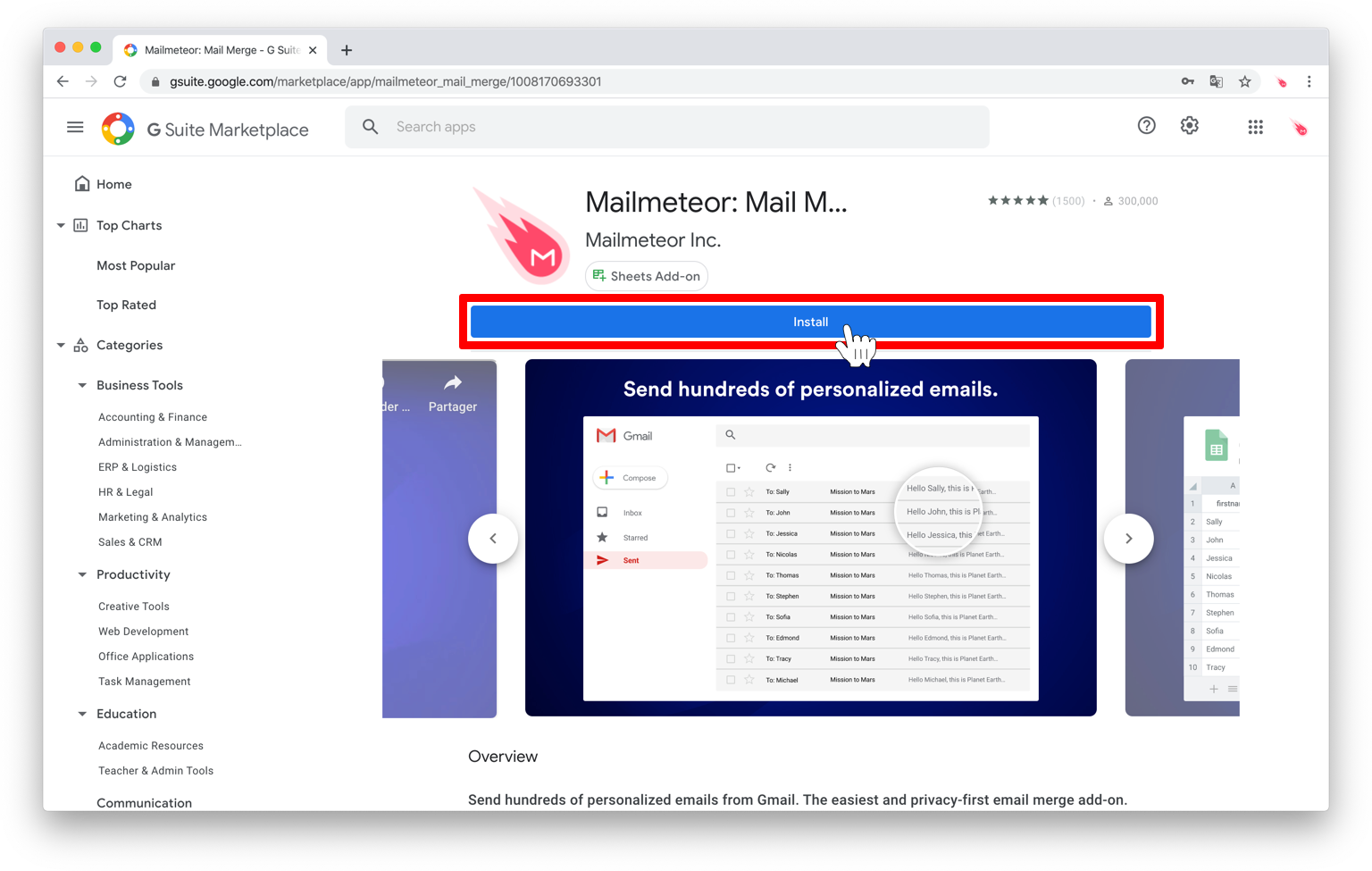
Then, choose the Gmail account you want to use with Mailmeteor, review the permissions, and click Allow.
If you’re a Google Workspace admin, you can install Mailmeteor for your entire organization. Click Domain install on the Google Workspace Marketplace page and accept the permissions.
-
Create your contact list in Google Sheets
Open Google Sheets and add your contacts’ email addresses in a column with a header like “email.”
Then add a column for each detail you want to personalize: first name, company, city, or anything else. You’ll be able to insert these columns into your email in the next steps.
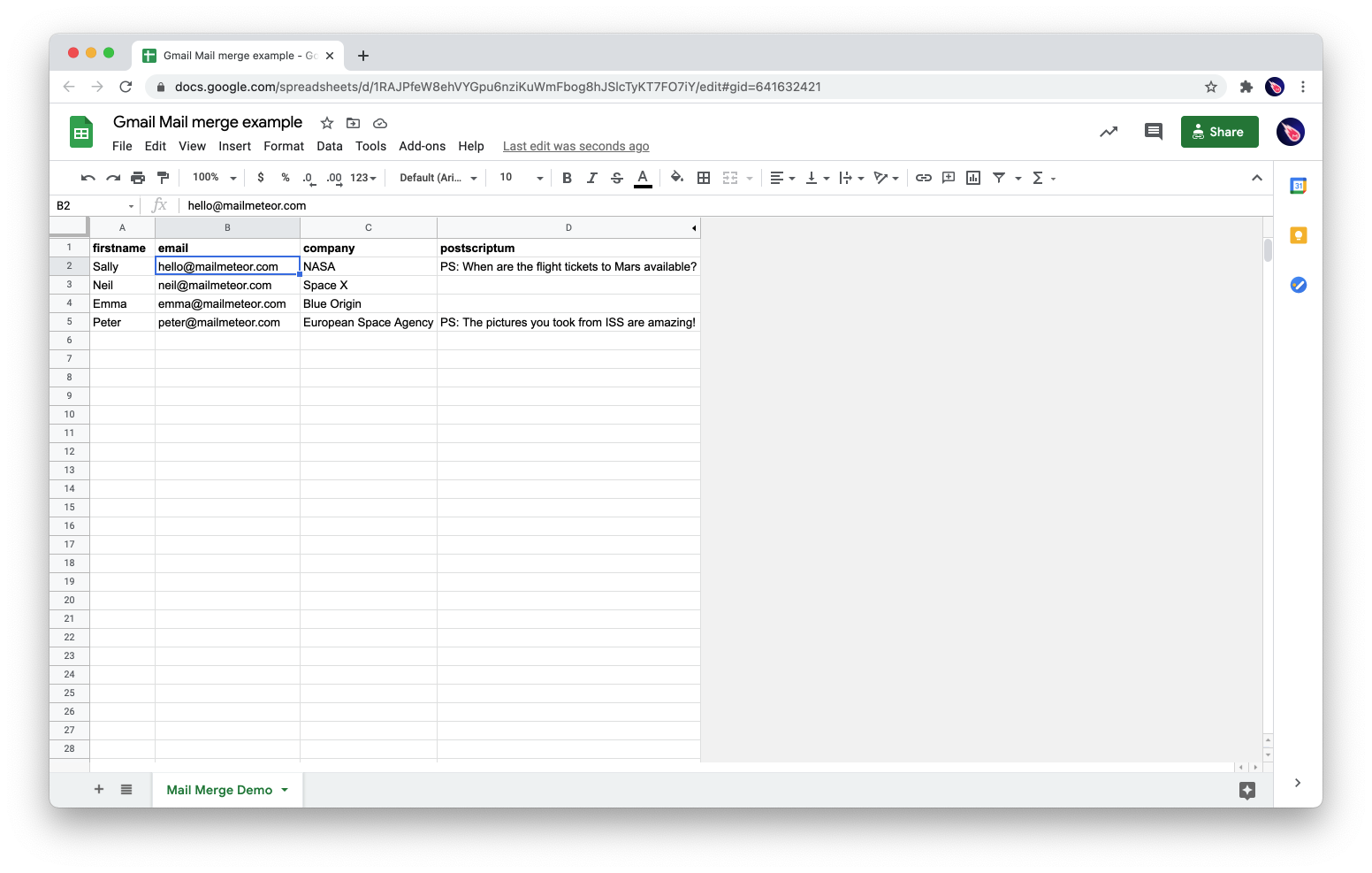
Get this contact list template in Google Sheets Pro tip: Your contacts are in Excel or a CSV file? In Google Sheets, click File > Import to bring them in.
-
Open Mailmeteor in Google Sheets

In the menu, go to Extensions > Mailmeteor > Open Mailmeteor. Then click Create a new template to write your email.
-
Write your personalized email

The Mailmeteor editor works like Gmail’s, so you can add links, lists, colors, and formatting as usual.
To personalize your email, insert the columns from your spreadsheet as variables in your subject line and message. Each recipient will see their own first name, company, or any other detail you added.
When you’re done, click Save template.
-
Preview your emails

Before sending, you can:
- Preview the email each recipient will get, to check your variables work as intended.
- Turn on tracking to see who opens your emails and clicks your links.
- Change the sender name that appears in your recipients’ inbox.
-
Choose how to send your campaign
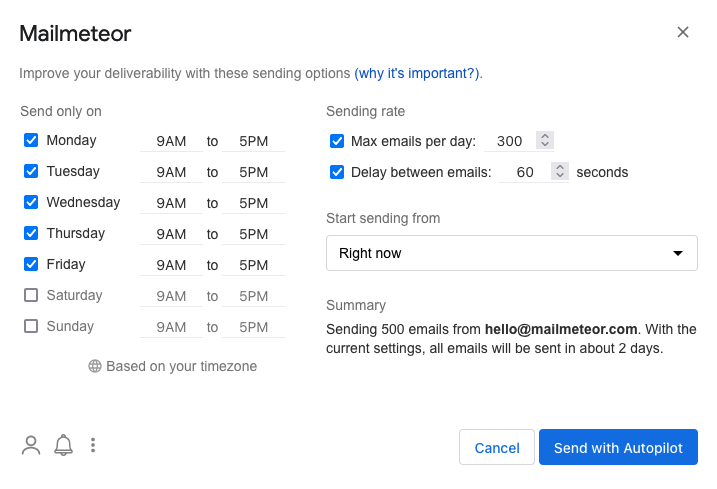
You can send your mass email right away, or schedule it for later. For larger lists, turn on Autopilot: Mailmeteor spreads your sending over the day — and over several days if needed — so you stay within your daily Gmail limit.
With Autopilot, you can:
- Choose how many emails to send each day.
- Set a delay between each email, so your sending looks like normal activity.
- Pick when to start, and which days and times your emails go out.
-
Send and track your emails
Click Send emails to launch your campaign.

And voilà. You can follow your campaign in real time from your spreadsheet or the Mailmeteor Dashboard: see who opened your email, who clicked, and who replied. You can also pause or cancel your campaign at any time.
Which Method Should You Use to Send Bulk Emails From Gmail?
Here’s how the three methods compare ⤵️
| BCC | Gmail mail merge | Mailmeteor | |
|---|---|---|---|
| Works with free Gmail | Yes | No | Yes |
| Personalization | No | Yes | Yes |
| Open and click tracking | No | No | Yes |
| Automatic follow-ups | No | No | Yes |
| Spreads sends over several days | No | No | Yes (Autopilot) |
| Price | Free | Included in eligible Workspace plans | Free plan (50 emails/day); paid from $4.99/month |
In short:
- Use BCC for a quick announcement to a small group of people who know each other.
- Use Gmail’s mail merge if your Workspace plan includes it and you only need basic personalization.
- Use Mailmeteor if you want personalization, tracking, and follow-ups on any Gmail account, or if your list is larger than your daily limit.
How to Send 10,000 Emails With Gmail
Gmail’s daily limits mean you can’t send 10,000 emails in one day from a single account. But you can send them over several days without lifting a finger.

With Mailmeteor’s Autopilot, you launch your campaign once, and Mailmeteor automatically sends your emails up to your daily limit, day after day, until everyone has received theirs:
- With a Google Workspace account (2,000 per day): a 10,000-email campaign takes about 5 days.
- With a free Gmail account (500 per day): the same campaign takes about 20 days.

The process is the same as above: install Mailmeteor, create your contact list, write your template, preview your emails, and turn on Autopilot before sending.
How to Send Mass Emails Without Getting Blocked
Sending a lot of emails from Gmail is one thing. Making sure they land in the inbox and that your account doesn’t get blocked is another. Here are the best practices to follow ⤵️
-
Warm up your account

A brand-new account that suddenly sends hundreds of emails looks suspicious to spam filters. Start with a small number of emails per day and increase your volume gradually over a few weeks. Mailmeteor’s built-in email warm-up can do this for you by exchanging emails with a network of real inboxes before your campaign starts.
-
Personalize your emails

Personalized emails get more opens and replies, and engagement is one of the signals Gmail uses to decide what’s wanted and what’s spam. At a minimum, use each recipient’s first name, and add a detail that shows why you’re writing to them.
-
Clean your contact list

Emails sent to addresses that no longer exist bounce back, and too many bounces hurt your sender reputation. Remove old or invalid addresses before you send. Mailmeteor’s BounceShield checks every address in your campaign and skips likely bounces automatically, and our free email checker lets you verify individual addresses.
-
Follow Google’s sender requirements
Google requires every sender to authenticate their emails and keep their spam complaint rate low. If you send from your own domain, set up SPF and DKIM (and DMARC if you send more than 5,000 emails a day to Gmail addresses). Always include a clear way to unsubscribe, and keep your spam complaint rate below 0.3%.
-
Review your email copy

Spam filters read your content too. Avoid misleading subject lines, all-caps text, and spam trigger words, and limit the number of links and images. Run your email through our free spam checker before you hit send.
-
Spread your sending over time

Sending hundreds of emails in a single blast is a red flag. Split large lists into smaller batches, or let Mailmeteor’s Autopilot spread your campaign across the day and over several days.
Want to go further? Read our guide to improving your Gmail deliverability.
Start Sending Personalized Mass Emails From Gmail
For a quick note to a small group, Gmail’s BCC field does the job. But as soon as you want each recipient to feel like you wrote to them personally — and see who opened, clicked, and replied — you need a mail merge tool.
That’s exactly what Mailmeteor was built for:
📬 Mail merge from Google Sheets, Gmail, Google Docs, Outlook, or Excel
✍️ Personalized emails using any column from your spreadsheet
⏰ Autopilot to spread large campaigns over several days and stay within Gmail’s limits
🔁 Automatic follow-ups for contacts who haven’t replied
📊 Real-time tracking of opens, clicks, and replies
🛡️ Email verification with BounceShield and built-in email warm-up
The free plan lets you send up to 50 emails per day, no credit card required. Try Mailmeteor for Gmail today (it’s free!) and send your first personalized mass email in minutes.
Frequently Asked Questions
What is a mass email?
A mass email, or bulk email, is the same message sent to many people at once — from a few dozen to several thousand. It’s commonly used for newsletters, announcements, event invitations, and sales outreach.
How many emails can I send at once in Gmail?
A free Gmail account can send to up to 500 recipients per day, and up to 500 recipients in a single email. A Google Workspace account can send up to 2,000 messages per day, with up to 2,000 recipients per email (500 of them outside your organization).
Can I send mass emails with a free Gmail account?
Yes. You can use the BCC field for small groups, or a mail merge tool like Mailmeteor to send personalized emails from Google Sheets. Gmail’s built-in mail merge isn’t available on free accounts, and you’ll be limited to 500 recipients per day.
How do I send a mass email in Gmail without showing all the addresses?
Add your recipients to the Bcc field instead of the To field, so nobody can see who else received your email. Or use a mail merge tool like Mailmeteor, which sends a separate email to each recipient, so there’s no shared recipient list at all.
How do I send personalized mass emails in Gmail?
Use a mail merge. If your Google Workspace plan includes it, Gmail’s built-in mail merge lets you insert first names and other details from a Google Sheet. On any Gmail account, free or paid, Mailmeteor lets you personalize every email with any column from your spreadsheet, and adds tracking and follow-ups.
How do I send more than 500 emails a day in Gmail?
Upgrade to Google Workspace to raise your limit to 2,000 messages per day. If your list is bigger than your daily limit, use Mailmeteor’s Autopilot to spread your campaign over several days automatically.
Is it legal to send mass emails from Gmail?
Yes, as long as you follow anti-spam laws like CAN-SPAM in the US and GDPR in Europe. Only email people who agreed to hear from you or have a legitimate reason to, identify yourself clearly, and give recipients an easy way to unsubscribe.