Most people won’t reply to your first email. Some won’t reply to your second. Chasing every one of them by hand doesn’t scale past a handful of contacts.
The problem? Gmail can schedule exactly one follow-up email. That’s it — no multi-step sequence, no “try again in three days if they don’t reply.”
Mailmeteor for Gmail fixes that. It’s a Chrome extension trusted by 7 million users that lets you build a complete sequence of emails, each one triggered by what your recipient does (or doesn’t do), directly from your Gmail account. Mailmeteor is recommended by Google Workspace and rated 4.9/5 across more than 10,000 reviews.
- Write your first email and add follow-up steps in the Mailmeteor Dashboard
- Set a condition for each follow-up, like if no reply or if not opened
- Personalize every email with mail merge tags pulled from a Google Sheet
- Import your recipients and send the whole sequence in one click
Here’s what we’ll cover:
- What an email sequence is (and how it’s different from a follow-up)
- Whether Gmail can send sequences on its own
- How to send an email sequence in Gmail
- Setting conditions for your follow-ups
- Personalizing each email in your sequence
- How many emails to include in your sequence
Sounds good? Then let’s dive in.
What Is an Email Sequence (And How Is It Different From a Follow-Up)?
An email sequence is a series of emails sent automatically to a recipient over several days or weeks. It’s used to follow up after a first email, nurture a new lead, or onboard a customer without manually tracking every conversation.
Sequences are sometimes confused with auto follow-ups, but they’re not quite the same thing:
- An email sequence is a fixed set of steps sent over time — email 1, then email 2 three days later, then email 3 a week after that. This is also called a drip campaign.
- An auto follow-up is a single conditional email, sent only if something happens (or doesn’t). For example: “send this follow-up only if the recipient hasn’t replied.”
With Mailmeteor, you can combine both in the same campaign — a multi-step sequence where every step also has its own condition.
Can Gmail Send Email Sequences on Its Own?
Not on its own. Gmail’s native tools let you schedule a single follow-up email, but they don’t support multi-step sequences or conditional triggers based on recipient behavior.
That’s the gap Mailmeteor for Gmail fills. It works from inside Gmail (no separate app to check) and lets you build sequences with as many steps as you need, each one triggered by opens, clicks, or replies.
How to Send an Email Sequence in Gmail
Here’s how to set up your first Gmail sequence using Mailmeteor ⤵️
-
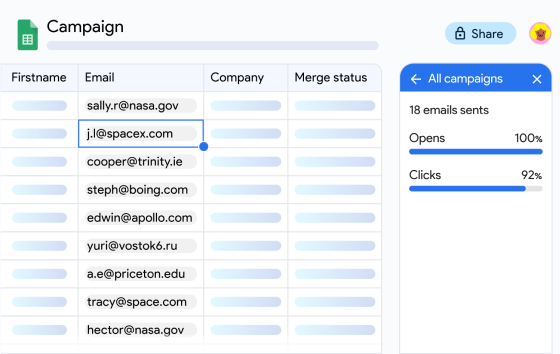
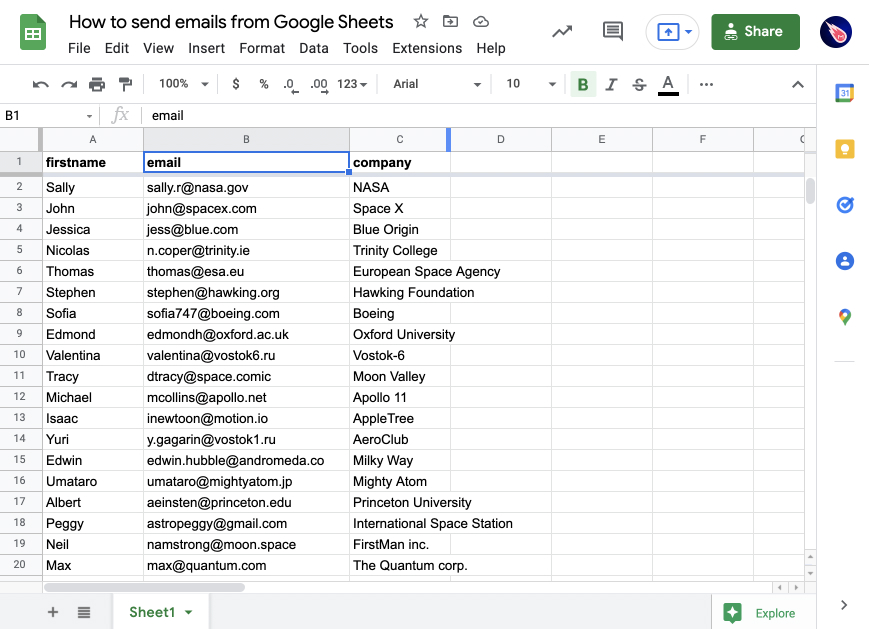
Add your recipients to a Google Sheet. Create a sheet with columns for name, email, and any other detail you want to personalize, like company or job title. A CSV file or a copy-and-paste list also works — see our guide on sending emails from Google Sheets if you want the full walkthrough.
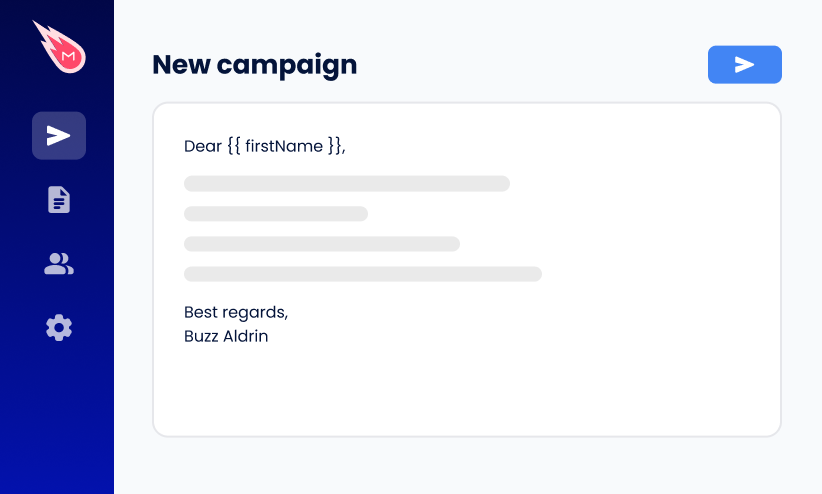
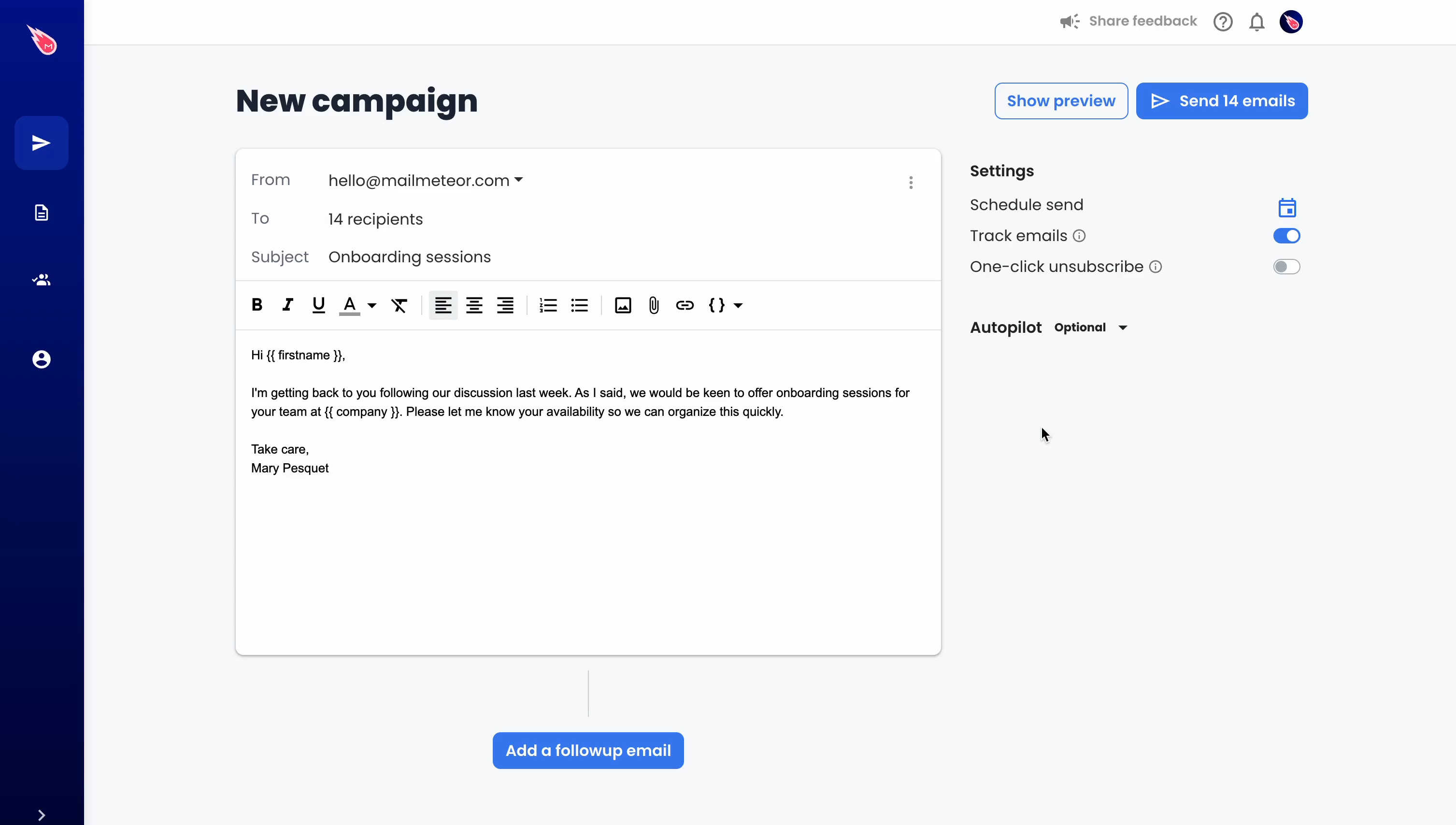
- Open the Mailmeteor Dashboard and click New campaign.
- Write your first email.
-
Click Add a follow-up email for each additional step in your sequence. There’s no limit to how many you can add.
- Set the condition and timing for each follow-up.
- Personalize your emails with mail merge tags pulled from your Google Sheet.
-
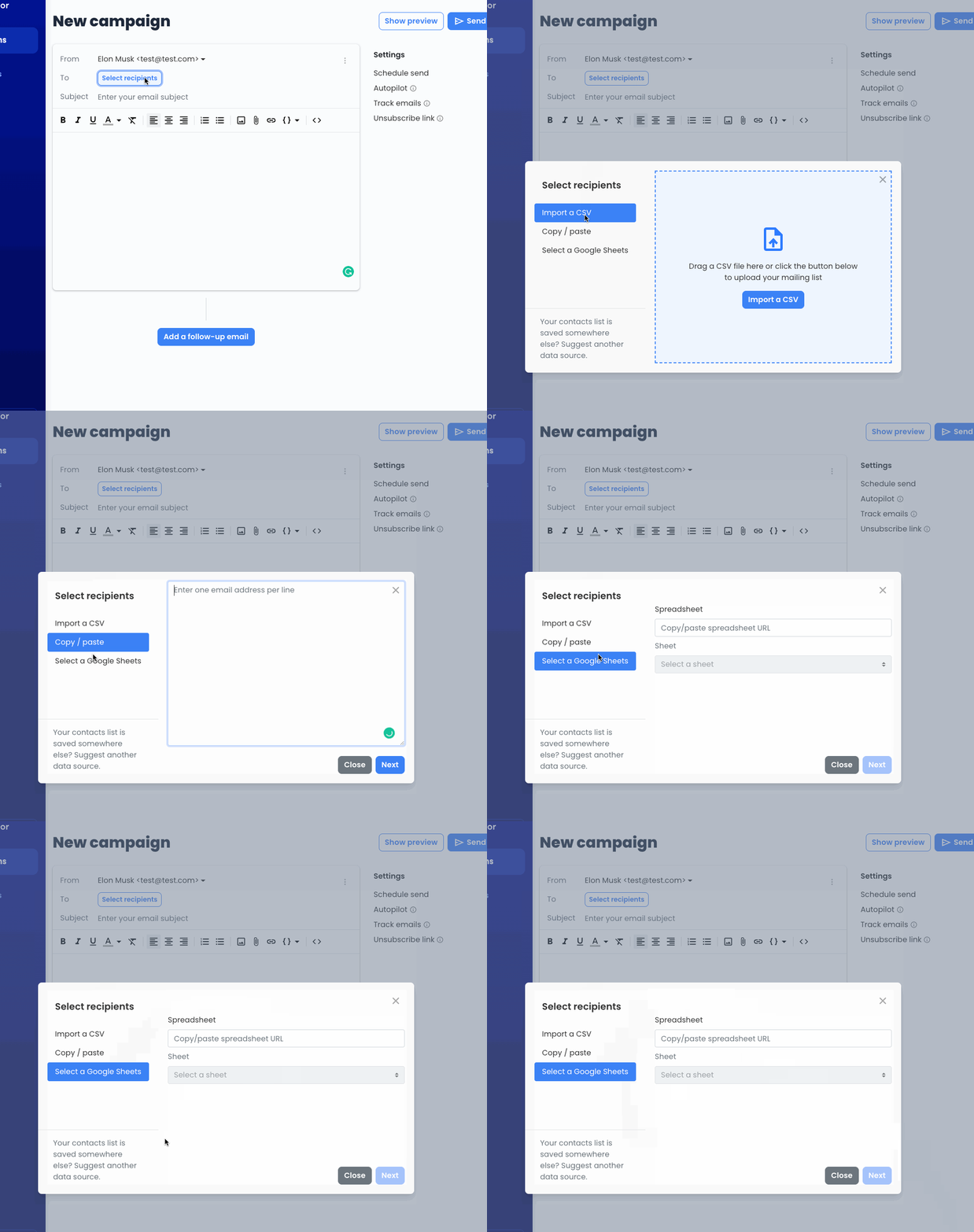
Import your recipients and click Send emails.
And voilà. Your Gmail email sequence is live, and Mailmeteor handles the rest.
Setting Conditions for Your Follow-Ups
Instead of sending every step no matter what, you can set a condition so a follow-up only goes out when it’s actually needed:
| Condition | What it does |
|---|---|
| If no reply | Sends the next email only if the recipient hasn’t replied |
| If no open | Sends the next email only if they haven’t opened the previous one |
| If no click | Sends the next email only if they haven’t clicked a link in the previous email |
| If click | Sends a follow-up only if they clicked a link |
| If open | Sends a follow-up only if they opened the previous email |
| No matter what | Sends regardless of any action |
You can also choose the interval between each step — after a few minutes, a few hours, or a few days. This is where most of the “sounding automated” problem comes from: space your follow-ups too close together and it feels like spam. Two to three days between steps is a reasonable default for most sequences, and you can set Mailmeteor to skip weekends so cold outreach doesn’t land in someone’s inbox on a Sunday.
Personalizing Each Email in Your Gmail Sequence
A sequence sent to twenty people should still feel like it was written for one person. Mailmeteor does this with mail merge tags pulled straight from the columns in your Google Sheet.
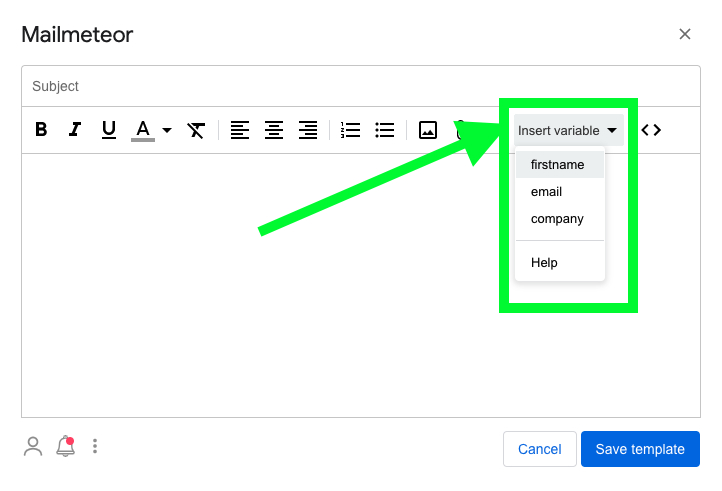
Add a tag in double curly brackets anywhere in your email, and Mailmeteor fills it in automatically for each recipient:
{{ firstname }}{{ company }}{{ jobtitle }}
You can also insert these tags from the editor by clicking Insert variable and picking a field from the dropdown, if you’d rather not type the brackets yourself.
How Many Emails Should Be in Your Gmail Sequence?
The sweet spot for a cold Gmail sequence is 3 to 5 emails.
While there is no hard technical limit, sending more than 5 to 7 emails in a single outreach sequence drastically increases your unsubscribe rates and spam complaints. If too many prospects mark your messages as spam, Gmail’s algorithms will flag your domain, damaging your sender reputation and landing your future emails straight into the promotions or spam folders.
If you are building your first sequence, a proven 3-step email drip campaign is the best place to start:
- Step 1: Initial Pitch (Day 1) – A highly personalized, concise email introducing your value proposition and a low-friction call to action (CTA).
- Step 2: Contextual Follow-Up (Day 3–4) – A gentle nudge sent in the same thread, adding a fresh piece of value (like a case study or helpful resource) without being pushy.
- Step 3: “Breakup” Email (Day 7–10) – A polite, final check-in letting them know you won’t take up any more of their time. Surprisingly, this often gets the highest response rate.
Cold Outreach vs. Email Nurture Sequences
The “3-to-5-step rule” applies specifically to cold sales outreach, where you are initiating contact with someone who doesn’t know you.
However, if you are running inbound sequences, the rules change:
| Sequence Type | Recommended Length | Goal |
|---|---|---|
| Cold Sales Outreach | 3–5 Emails | Get a reply or schedule a meeting. |
| User Onboarding | 5–10 Emails | Guide a new user through your software/product features. |
| Educational Drip | 5–7 Emails | Deliver value and build authority over a set period. |
| Long-Cycle Lead Nurture | Ongoing (Monthly/Bi-weekly) | Stay top-of-mind over a long buying cycle (e.g., real estate). |
Ready to Send Your Own Gmail Email Sequence?
A sequence is just one part of staying on top of your Gmail outreach. Once it’s running, Mailmeteor for Gmail can also help you write, personalize, and track every email you send — and combine your sequence with mail merge or a schedule send for even more control over when things go out.
🔁 Automatic follow-ups so no reply falls through the cracks
📬 Mail merge to personalize every email at scale
📊 Email tracking to see when your messages are opened
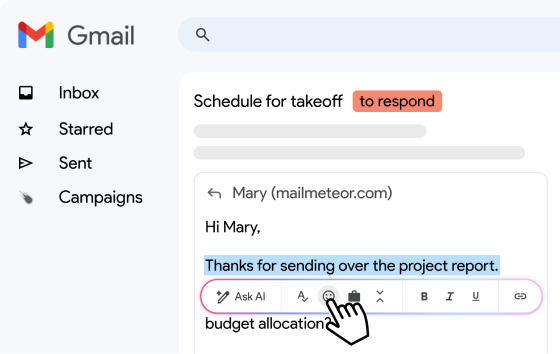
✍️ AI-powered drafting to write emails faster
⏰ Schedule send and Autopilot to control exactly when campaigns go out
Try Mailmeteor for Gmail today (it’s free!) and turn your next cold email into a full sequence in minutes.
Frequently asked questions about Gmail email sequences
Does Gmail have a built-in way to create a mail chain or sequence?
No. Gmail’s own scheduling tools only cover a single follow-up email. Anything with multiple steps or conditions needs an add-on like Mailmeteor for Gmail.
Can I send my follow-ups as replies in the same Gmail thread?
Yes. By default, Mailmeteor sends every follow-up in the same thread as your first email, so it reads like a normal Gmail conversation. If you’d rather start a new thread with a different subject line, you can change this from the campaign editor.
Can I stop or edit a sequence after it’s started?
Yes. Open the campaigns tab in the Mailmeteor Dashboard, find your active sequence, and you can pause, edit, or cancel it at any time — nothing sends once you’ve paused it.
How many emails can I send from Gmail in one day?
Gmail itself caps free accounts at 500 emails a day and Google Workspace accounts at 2,000. Mailmeteor’s paid plans let you send up to 2,000 emails a day from Gmail, so a sequence going out to a large list — like everyone in your company — may need to be split across a few days rather than sent all at once.
Will my sequence end up in spam or promotions?
It shouldn’t, since Mailmeteor sends through your own Gmail account rather than a third-party server — the same way a normal Gmail message does. Keeping your list warm, your content relevant, and your steps spaced a few days apart also helps avoid spam filters.
Can I add an unsubscribe link to my sequence?
Yes. When you set up your campaign, you can enable an unsubscribe link that appears at the bottom of every email, along with email tracking.